
Introduction
Groundwater is one of the most important water resources for industries, agriculture, commercial establishments, residential projects, and infrastructure facilities. Borewells are widely used to extract groundwater, but measuring the exact quantity of water being pumped is essential for responsible water management. A Digital water flowmeter for borewell provides an efficient and accurate way to monitor water flow and understand how much groundwater is being extracted.
Traditional water measurement methods may not provide continuous or accurate flow information. Digital flowmeters are designed to provide reliable flow measurement, easy monitoring, and better control over water consumption. They can help users record flow rates, identify changes in water usage, and support groundwater management programs.
Zestflow Meters Solutions provides water measurement and monitoring solutions designed for applications where accurate water-flow data is important. A digital flowmeter can be an effective solution for borewell applications where users need reliable data on water extraction.
What Is a Digital Water Flowmeter for Borewell?
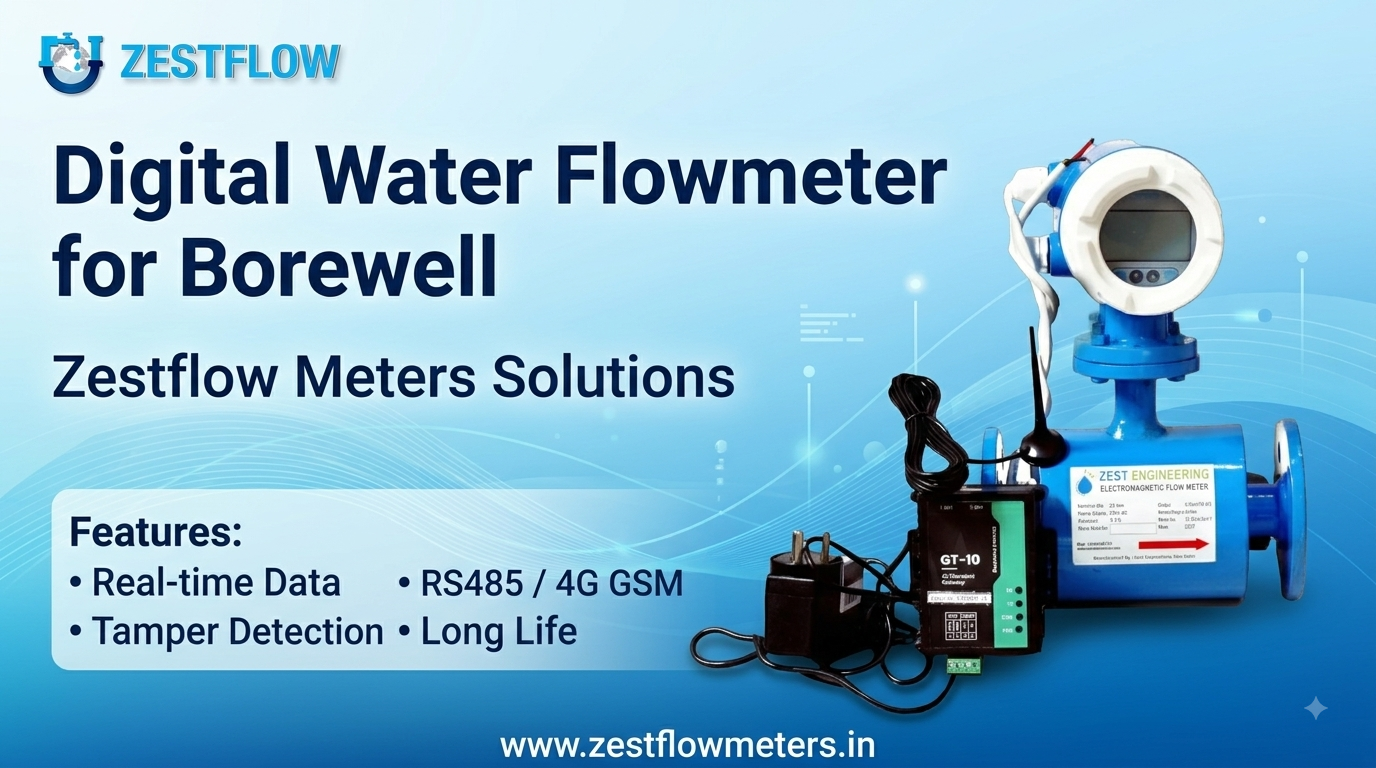
A digital water flowmeter for borewell is an electronic measuring instrument used to determine the quantity or flow rate of water passing through a borewell pipeline. Depending on the selected technology, the flowmeter can measure parameters such as instantaneous flow rate and cumulative water volume.
The measured information is displayed digitally, making it easier for operators to monitor water usage. Some advanced flowmeter systems can also support data logging, remote communication, telemetry, or integration with monitoring systems.
For borewell applications, the flowmeter is generally installed on the discharge pipeline connected to the pumping system. It measures the water flowing through the pipeline after groundwater is extracted from the borewell.
Why Is Borewell Water Flow Measurement Important?
Borewell water is often used continuously for industrial processes, irrigation, cooling systems, construction activities, commercial operations, and other applications. Without proper measurement, it can be difficult to determine the actual quantity of groundwater being extracted.
Accurate flow measurement helps organizations:
- Monitor groundwater extraction.
- Track daily and monthly water consumption.
- Improve water-use efficiency.
- Identify unusual water usage.
- Maintain water consumption records.
- Support groundwater management.
- Improve operational planning.
- Reduce unnecessary water wastage.
- Generate useful flow data for analysis.
- Support compliance and reporting requirements where applicable.
By installing a suitable digital flowmeter, organizations can move from estimated water consumption to measurable and recorded water usage.
How Does a Digital Water Flowmeter Work?
The working principle depends on the type of flowmeter selected. Different technologies are available for measuring water flow, including electromagnetic, ultrasonic, mechanical, and other flow measurement technologies.
An electronic flowmeter detects the movement of water through the pipeline and converts the measurement into a digital signal. The flow rate is then calculated and displayed on the instrument.
A typical digital borewell water flow measurement system may include:
1. Borewell pump
2. Delivery or discharge pipeline
3. Digital water flowmeter
4. Digital display
5. Power supply
6. Communication or data-logging system, if required
The flowmeter continuously measures the water passing through the pipeline and can provide both current flow information and cumulative volume, depending on the model and configuration.
Key Features to Look for in a Borewell Flowmeter
Selecting the correct digital flowmeter is important for obtaining reliable measurements. Before purchasing a flowmeter for a borewell application, consider the following features.
1. Accurate Flow Measurement
Accuracy is one of the most important factors. A suitable meter should provide consistent measurement across the expected operating range.
2. Digital Display
A clear digital display allows operators to easily read flow rate and totalized water consumption.
3. Total Flow Measurement
A totalizer can record cumulative water volume. This is particularly useful for tracking daily, weekly, monthly, or long-term groundwater extraction.
4. Reliable Construction
The flowmeter should be suitable for the operating environment and water conditions. Proper material selection can help improve service life.
5. Easy Installation
The selected meter should match the pipeline size and installation requirements. Correct installation is essential for accurate measurement.
6. Data Logging
For applications requiring detailed monitoring, data logging can provide historical information about water usage.
7. Communication Options
Advanced systems may support communication technologies that allow measured data to be transferred to a monitoring platform or control system.
8. Low Maintenance
A flowmeter with appropriate technology and installation can reduce maintenance requirements and provide dependable operation.
Advantages of Using a Digital Water Flowmeter for Borewell
Installing a digital flowmeter on a borewell pipeline can provide several practical advantages.
- Accurate Groundwater Monitoring
A digital meter allows users to measure the quantity of water being pumped instead of relying on estimates.
- Better Water Management
Recorded water-flow information helps organizations understand their consumption patterns and identify opportunities to reduce unnecessary usage.
- Real-Time Monitoring
Digital displays can provide current flow information, allowing operators to monitor the pumping system during operation.
- Cumulative Water Measurement
Totalized flow data helps users determine how much water has been extracted over a particular period.
- Improved Operational Control
Flow information can help operators detect abnormal flow conditions and take corrective action.
- Useful Data for Reporting
Recorded flow data can be useful when organizations need to prepare internal water consumption reports or maintain operational records.
- Support for Sustainable Groundwater Use
Measuring groundwater extraction is an important part of responsible water-resource management. Flow data provides a measurable basis for monitoring usage.
Applications of Digital Borewell Water Flowmeters
A digital water flowmeter for borewell can be used in a wide range of applications.
- Industrial Borewells
Factories and industrial facilities often depend on groundwater for production, processing, cooling, cleaning, and other operations. Flowmeters help monitor the quantity of water consumed.
- Agricultural Irrigation
Farmers and agricultural projects can use water-flow measurement to understand irrigation consumption and improve water-use efficiency.
- Commercial Buildings
Hotels, malls, offices, educational institutions, and other commercial facilities may use borewell water for different requirements. Flow measurement can help track consumption.
- Residential and Housing Projects
Large residential developments may use borewell systems for water supply. A flowmeter can provide information about groundwater extraction.
- Construction Projects
Construction sites sometimes use borewell water for various activities. Monitoring water flow can help maintain better control over consumption.
- Water Treatment Systems
Borewell water may be supplied to water treatment or filtration systems. Measuring incoming water flow can help operators monitor system performance.
- Groundwater Monitoring Projects
Organizations involved in groundwater management can use digital flow measurement systems to collect useful water extraction data.
How to Choose the Right Digital Water Flowmeter for Borewell
The correct flowmeter depends on several technical and application-specific factors.
- Determine Pipeline Size
The flowmeter should be selected according to the actual pipeline diameter. Installing an incorrectly sized meter can affect performance and measurement accuracy.
- Check Expected Flow Range
Determine the minimum, normal, and maximum flow rates of the borewell pumping system. The selected meter should operate effectively across the expected range.
- Understand Water Quality
Water quality can influence the selection of flowmeter technology. Consider factors such as suspended particles, conductivity, temperature, and other characteristics.
- Consider Installation Conditions
Available straight pipe length, installation orientation, accessibility, and surrounding conditions should be considered before installation.
- Decide on Monitoring Requirements
If basic measurement is required, a local digital display may be sufficient. If remote monitoring is required, consider a model with suitable communication and data-logging capabilities.
- Evaluate Power Availability
Check whether the installation location has a reliable electrical supply or whether another suitable power arrangement is required.
- Consider Maintenance and Service
Choose a solution that can be properly installed, calibrated, inspected, and serviced when required.
Maintenance of a Borewell Digital Flowmeter
Regular maintenance can help maintain reliable operation. The maintenance schedule depends on the flowmeter technology and operating conditions.
Basic maintenance practices may include:
- Checking the display and readings.
- Inspecting electrical connections.
- Checking the pipeline for leakage.
- Reviewing abnormal flow readings.
- Keeping the meter installation area clean.
- Checking communication systems where applicable.
- Performing calibration or verification as recommended.
- Inspecting the system after major pipeline or pump modifications.
Keeping records of maintenance and flow readings can also help identify changes in system performance.
Why Choose Zestflow Meters Solutions?
Zestflow Meters Solutions focuses on water measurement and monitoring solutions for applications where reliable flow data is important. A borewell flow measurement system should be selected according to the pipeline, flow conditions, water characteristics, installation environment, and monitoring requirements.
Zestflow Meters Solutions can help customers identify a suitable flow measurement solution based on their application requirements. From basic digital flow measurement to advanced monitoring requirements, selecting the right configuration is essential for achieving dependable results.
Before purchasing a Digital water flowmeter for borewell, users should discuss their application requirements, pipeline size, expected flow rate, installation conditions, and required communication features with a qualified supplier.
Conclusion
Accurate groundwater measurement is becoming increasingly important for industries, agriculture, commercial facilities, infrastructure projects, and other borewell users. A Digital water flowmeter for borewell provides a practical way to measure water flow, monitor consumption, maintain records, and improve water-management practices.
Instead of relying only on estimated water consumption, users can obtain measurable flow information through a properly selected and installed digital flowmeter. Features such as digital display, totalized flow measurement, data logging, and communication capabilities can further improve monitoring depending on the application.
Zestflow Meters Solutions offers water measurement and monitoring solutions for different applications. By selecting the right flowmeter according to pipeline size, flow rate, water characteristics, and monitoring requirements, users can establish a more reliable and efficient borewell water measurement system.