
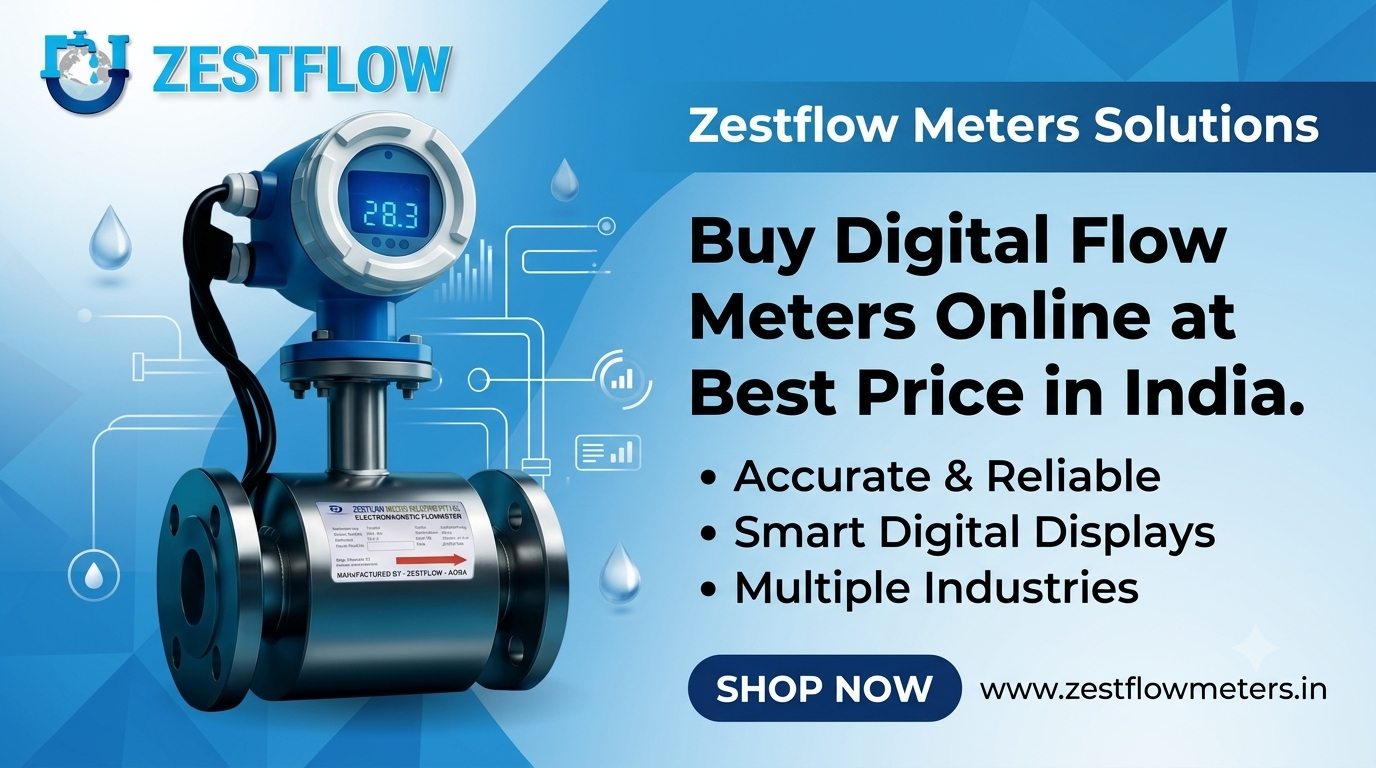
Buy Digital Flow Meters Online in India | Zestflow Meters Solutions
Introduction
Accurate flow measurement is essential for industries that need to monitor, control, and manage the movement of liquids and gases. From water treatment plants and manufacturing facilities to agriculture, chemical processing, and industrial automation, a reliable flow meter helps businesses measure flow accurately and improve operational efficiency.
With the increasing demand for smart and precise measurement instruments, digital flow meters have become a popular choice across India. Unlike traditional mechanical meters, modern digital flow meters can provide clear readings, better accuracy, easy monitoring, and compatibility with different industrial systems.
Zestflow Meters Solutions provides flow measurement solutions designed for industrial and commercial applications where dependable performance and accurate measurement are important.
What Is a Digital Flow Meter?
A digital flow meter is an electronic measuring instrument used to determine the flow rate of a liquid or gas passing through a pipeline. The measured information is displayed digitally, making it easier for operators to monitor flow values.
Depending on the technology used, digital flow meters can measure flow using electromagnetic, ultrasonic, vortex, turbine, or other measurement principles.
A digital flow meter may display information such as:
- Instantaneous flow rate
- Totalized flow
- Flow direction
- Measurement units
- Alarm conditions
- Process parameters
Many modern flow meters can also communicate with control systems through available output options, making them suitable for industrial automation and process monitoring.
Why Choose Digital Flow Meters?
Digital flow meters offer several advantages over conventional flow measurement devices. Their electronic display and advanced measurement technology make them useful in applications where accurate and convenient monitoring is required.
1. Accurate Flow Measurement
Accuracy is one of the primary reasons industries choose digital flow meters. A properly selected and installed meter can provide dependable flow measurements, helping businesses monitor water, chemicals, process fluids, and other media.
Accurate measurement is particularly important when flow data is used for billing, process control, resource management, or production monitoring.
2. Easy-to-Read Digital Display
Digital flow meters generally feature a clear electronic display. Operators can quickly check the measured flow without manually interpreting mechanical scales.
Depending on the model, the display may provide instantaneous flow rate as well as cumulative flow volume.
3. Better Process Monitoring
Industrial processes often require continuous monitoring of fluid movement. Digital flow meters allow operators to observe flow conditions and identify unusual changes.
A sudden increase or decrease in flow can indicate issues such as:
- Pipeline blockage
- Leakage
- Pump problems
- Valve malfunction
- Process changes
Early identification of these issues can help reduce downtime and maintenance costs.
4. Compatibility with Automation Systems
Many digital flow meters can be integrated with industrial control and monitoring systems using suitable output signals. This makes them useful for automated plants and smart monitoring applications.
Depending on the model, communication and output options may include pulse, analog, relay, or digital communication interfaces.
5. Reduced Manual Monitoring
Traditional measurement methods may require operators to manually record readings. Digital flow meters can make this process easier, particularly when integrated with data logging or telemetry systems.
This can improve record-keeping and reduce the possibility of manual reading errors.
Types of Digital Flow Meters
Different flow measurement technologies are suitable for different industrial conditions. Before purchasing a digital flow meter, it is important to understand which technology best matches your application.
- Electromagnetic Flow Meters
Electromagnetic flow meters, also known as magmeters, are commonly used for conductive liquids. They work using electromagnetic measurement principles and generally have no moving parts inside the measuring tube.
They are widely used for applications involving:
- Water
- Wastewater
- Industrial process liquids
- Chemical solutions
- Slurries
Their lack of moving components can help reduce mechanical wear.
- Ultrasonic Flow Meters
Ultrasonic flow meters use sound waves to determine fluid velocity and calculate flow. They are available in inline and clamp-on configurations depending on the application.
Ultrasonic technology is useful when businesses require non-invasive or flexible flow measurement solutions.
- Turbine Flow Meters
Turbine flow meters use a rotating turbine inside the flow path. The rotational speed is related to the fluid velocity and is used to calculate flow.
They can be used in applications where relatively clean fluids and suitable operating conditions are available.
- Vortex Flow Meters
Vortex flow meters detect vortices created when fluid passes around a specially designed obstruction. They can be suitable for measuring liquids, gases, and steam in various industrial processes.
The correct meter depends on the process fluid, pressure, temperature, flow range, and installation conditions.
Applications of Digital Flow Meters in India
Digital flow meters are used across a wide range of industries because fluid flow measurement is an important part of process management.
- Water and Wastewater Treatment
Water treatment facilities use flow meters to measure water entering and leaving different stages of treatment. Accurate flow data helps operators manage water distribution and treatment processes.
- Agriculture and Irrigation
Flow measurement can help monitor water consumption in irrigation systems. Digital flow meters can provide useful information for managing water resources and improving irrigation efficiency.
- Manufacturing Industries
Manufacturing plants often use water, chemicals, oils, and other process fluids. Flow meters help monitor the movement of these fluids throughout production systems.
- Chemical Industries
Chemical processing requires careful control of fluid quantities. A suitable digital flow meter can help monitor process flow and maintain consistent operating conditions.
- Pharmaceutical Industry
Pharmaceutical production requires controlled and measurable processes. Flow measurement instruments can support water and process-fluid monitoring where appropriate.
- Food and Beverage Industry
Water and liquid ingredients are used throughout food and beverage production. Flow meters can help monitor fluid movement and support process consistency.
- HVAC and Cooling Systems
Industrial cooling systems use water and other fluids for temperature management. Flow meters can help monitor circulation and identify potential flow problems.
Key Factors to Consider Before Buying a Digital Flow Meter
Choosing a flow meter based only on price may result in poor performance if the device is unsuitable for the application. Consider the following factors before purchasing.
1. Types of Fluid
Identify whether you need to measure water, wastewater, chemicals, oil, steam, gas, or another medium. Different flow meter technologies work better with specific fluids.
2. Flow Range
Determine the minimum, normal, and maximum expected flow rate. Selecting a meter with the appropriate measuring range is essential for reliable readings.
3. Pipe Size
The pipeline diameter should be considered when selecting an inline flow meter. The meter connection and installation requirements should match the existing piping system.
4. Operating Pressure
Check the maximum and normal operating pressure of the pipeline. The selected flow meter should be appropriate for the process conditions.
5. Temperature
Process temperature can affect meter selection. Always verify the instrument’s operating temperature range before installation.
6. Accuracy Requirements
Different applications have different accuracy requirements. Determine how precise the measurement needs to be before selecting a model.
7. Output and Communication
If the meter will be connected to a PLC, SCADA, telemetry system, or other monitoring platform, check the available output and communication options.
8. Installation Conditions
Consider available straight pipe length, flow direction, accessibility, grounding requirements where applicable, and other installation factors. Correct installation is essential for dependable measurements.
Benefits of Purchasing Digital Flow Meters Online
Online purchasing provides convenient access to a wide range of measurement products. Buyers can compare specifications, technologies, features, and prices before making a decision.
When looking for the best digital flow meter, do not focus only on the lowest price. Compare:
- Measurement technology
- Accuracy
- Flow range
- Pipe size compatibility
- Display features
- Output options
- Materials and construction
- Operating conditions
- Warranty and support
- Supplier experience
Why Choose Zestflow Meters Solutions?
Zestflow Meters Solutions focuses on providing reliable flow and water measurement solutions for industrial and commercial applications.
The right flow meter is not simply the one with the lowest purchase price. It should provide suitable measurement performance, compatibility with the process, dependable construction, and appropriate technical features.
Zestflow Meters Solutions can help businesses evaluate flow measurement requirements and identify solutions based on application parameters such as fluid type, pipeline size, flow range, pressure, temperature, and monitoring requirements.
For organizations that require dependable flow measurement for water management, industrial processes, infrastructure, and monitoring applications, selecting the right measurement technology is an important step toward better process control.
How to Maintain a Digital Flow Meter
Proper maintenance can help maintain measurement performance and extend equipment life.
Some general maintenance practices include:
1. Inspect the meter and connections regularly.
2. Check for leakage around pipeline connections.
3. Keep electrical connections protected from moisture where required.
4. Verify readings against known reference conditions when necessary.
5. Follow the manufacturer’s installation and maintenance instructions.
6. Check signal and communication connections in automated systems.
7. Keep records of inspections and calibration activities where applicable.
The exact maintenance requirements depend on the type of flow meter and process conditions.
Common Mistakes to Avoid When Buying a Flow Meter
Several common mistakes can affect flow measurement performance.
- Choosing Only on Price
The cheapest meter may not provide the required accuracy, durability, or compatibility. Always compare technical specifications before purchasing.
- Ignoring the Fluid Properties
Fluid conductivity, viscosity, density, temperature, and the presence of suspended particles can influence which flow technology is appropriate.
- Selecting the Wrong Flow Range
A meter should be selected according to actual process conditions. A poorly matched flow range can result in unsatisfactory measurement performance.
- Neglecting Installation Requirements
Even a high-quality flow meter may not perform correctly if installed improperly. Follow the manufacturer’s installation recommendations.
- Not Considering Future Requirements
If your facility plans to add automation, remote monitoring, or telemetry later, consider whether the selected flow meter can support the required outputs or communication interfaces.
Conclusion
Digital flow meters are valuable instruments for industries that require accurate and dependable fluid flow measurement. From water treatment and irrigation to manufacturing, chemical processing, HVAC, and industrial automation, the right flow meter can support better process monitoring and resource management.
When you plan to Buy Digital Flow Meters Online at Best Price in India, compare products according to technical specifications rather than focusing only on purchase price. Fluid type, flow range, pipe size, pressure, temperature, accuracy, communication requirements, and installation conditions should all be considered before selecting a meter.
With the right measurement technology and proper installation, a digital flow meter can become an important part of an efficient monitoring and control system. Zestflow Meters Solutions can help businesses identify suitable flow measurement solutions based on their specific application requirements.