AMR SMART Water Meter: Transforming Water Management with Smart Metering Technology
Introduction
Water is one of the most valuable resources for homes, businesses, industries, municipalities, and infrastructure projects. As water demand continues to increase, traditional methods of measuring and monitoring consumption are becoming less efficient. Manual meter reading requires time, manpower, and regular site visits, while conventional water meters provide limited information about consumption patterns.
Modern AMR SMART Water Meter technology provides a smarter approach by enabling automated meter reading and remote collection of water consumption data. These systems help utilities, industries, property managers, and other users improve measurement accuracy, reduce manual intervention, identify unusual consumption, and make better decisions based on water usage data.
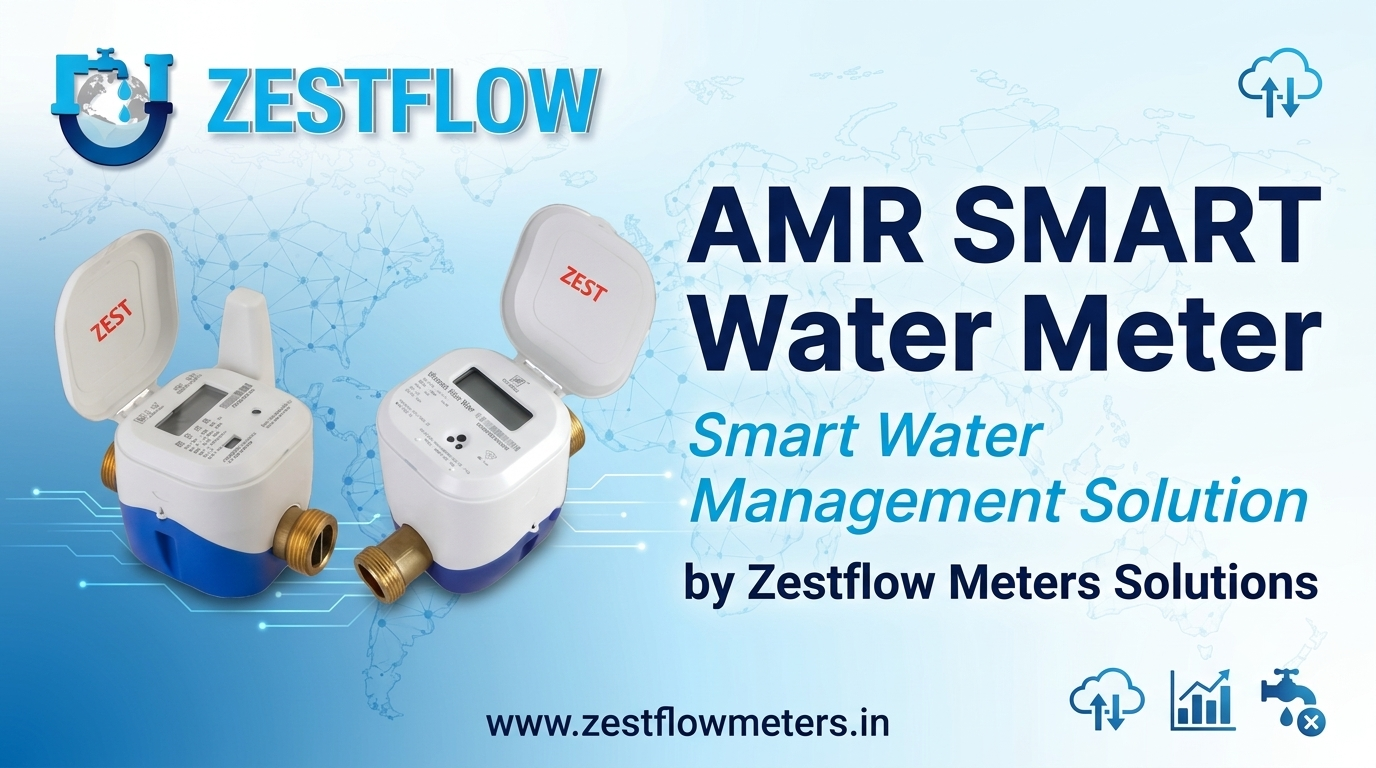
Zestflow Meters Solutions offers advanced water measurement and monitoring solutions, including AMR water meters designed to support modern water management requirements. Zestflow’s AMR system is designed for automated readings, remote monitoring, and data transmission, helping organizations move toward more efficient water management.
What Is an AMR SMART Water Meter?
AMR stands for Automatic Meter Reading. An AMR water meter is a metering system that enables water consumption information to be collected automatically instead of requiring a person to physically visit every meter.
A typical AMR solution combines a water meter with communication technology that transfers consumption data to a central system. Depending on the system configuration, communication can use technologies such as RF, cellular networks, or other wireless communication methods.
The primary objective is simple: measure water consumption accurately and make the information available remotely.
Zestflow’s AMR water meter solution is designed to support automated reading and remote data collection. Its system can collect consumption information and transmit readings to an online platform, allowing utilities and customers to monitor usage more efficiently.
Why Is Smart Water Metering Important?
Water management is no longer limited to simply measuring how much water passes through a pipeline. Organizations increasingly need information about when water is consumed, how much is being consumed, and whether consumption patterns indicate a potential problem.
Traditional manual readings can make this process difficult because personnel must physically access individual meters. This can increase operating costs and introduce the possibility of human reading errors.
Smart metering can automate much of this process.
An AMR SMART Water Meter can help organizations:
- Automate water meter reading
- Reduce manual data collection
- Improve consumption monitoring
- Support more efficient billing
- Identify unusual water usage
- Assist with leak detection
- Reduce operational expenses
- Improve water conservation
- Create better consumption records
- Support smart-city and digital infrastructure initiatives
How Does an AMR SMART Water Meter Work?
The basic working principle of an AMR water metering system involves several stages.
1. Water Flow Measurement
The water meter measures the quantity of water passing through the pipeline. The metering mechanism records the cumulative consumption.
2. Data Collection
The meter or connected register stores consumption information. Depending on the system, readings may be collected at predetermined intervals.
3. Wireless Communication
The collected information is transmitted through an appropriate communication technology. Zestflow’s AMR solution can use communication methods such as cellular or RF technology depending on the system configuration.
4. Remote Monitoring
The transmitted information can be made available through an online platform or centralized monitoring system.
5. Analysis and Decision-Making
Water managers can use consumption information to understand usage patterns, investigate abnormal readings, and improve water distribution and resource planning.
Key Features of an AMR SMART Water Meter
Choosing the right smart water meter requires consideration of accuracy, communication, installation, durability, and data accessibility.
Automated Meter Reading
The most important advantage of AMR technology is automated reading. Instead of relying completely on manual readings, water consumption data can be collected remotely.
Remote Data Transmission
AMR systems can transmit meter readings to a central location, reducing the need for frequent physical meter inspections.
Battery-Powered Operation
Zestflow’s AMR water meter solution features a battery-powered design intended for long-term operation. The company states that the battery inside the register can last up to 20 years under normal operating conditions. Actual service life can vary according to operating conditions and configuration.
Leak and Unusual Usage Identification
Regular consumption data can make it easier to identify unusual usage patterns. Unexpected increases in consumption can prompt further investigation and potentially help identify leaks.
Tamper Monitoring
Smart water metering systems can provide additional data that helps utilities investigate potential tampering or irregular consumption.
Easy Installation
Zestflow states that its AMR meters are designed for installation on existing water lines, which can help simplify deployment in suitable applications.
Remote Accessibility
Remote access to water consumption information allows utilities and users to review data without requiring physical access to individual meters.
Benefits of Using an AMR SMART Water Meter
1. Reduces Manual Meter Reading
One of the biggest benefits of AMR technology is reduced dependence on manual meter reading. Meter data can be collected remotely, helping organizations reduce the time and manpower required for routine readings.
2. Improves Operational Efficiency
Automated readings can streamline water management operations. Instead of spending resources collecting basic meter readings, staff can focus on analysis, maintenance, customer service, and infrastructure management.
3. Supports Accurate Billing
Reliable consumption information is important for billing. Automated meter reading can reduce the risk of errors associated with manually recording meter values.
4. Helps Detect Water Leakage
Unusual consumption patterns can indicate a possible leak. Early identification can help reduce unnecessary water loss and prevent potentially higher water costs.
5. Supports Water Conservation
When users have access to consumption information, they can better understand their water usage. This information can encourage more responsible consumption and support conservation programs.
6. Enables Better Infrastructure Planning
Historical water consumption data can help organizations understand demand patterns. This can support planning for pipelines, storage systems, pumping infrastructure, and future water requirements.
7. Reduces Operational Costs
Automating routine meter reading can reduce expenses associated with manual site visits, reading collection, and administrative processing.
8. Supports Smart City Development
Smart water meters can form part of a larger smart-city infrastructure. Connected water measurement systems can provide valuable data for digital utilities and resource-management platforms.
Applications of AMR SMART Water Meters
An AMR SMART Water Meter can be useful across various applications.
- Residential Buildings
Apartment complexes and residential communities can use smart water metering to monitor individual or common water consumption.
- Commercial Buildings
Shopping centers, offices, hotels, and commercial properties can monitor water usage and identify unusual consumption.
- Industrial Facilities
Industries often use significant quantities of water for processing, cooling, cleaning, and other operations. Automated monitoring can help industrial users understand consumption and improve resource efficiency.
- Municipal Water Distribution
Municipalities and water utilities can deploy AMR systems to streamline meter reading and improve consumption data collection.
- Smart Cities
Smart water meters can become part of a connected infrastructure where water consumption data is integrated with other utility and monitoring systems.
- Institutional Buildings
Hospitals, schools, universities, government facilities, and large campuses can benefit from centralized water consumption monitoring.
AMR SMART Water Meter and IoT Water Management
AMR and IoT-based water management are closely related but are not necessarily identical.
An AMR system primarily focuses on automating meter reading and transmitting consumption information.
An IoT water management system can go further by connecting meters, sensors, cloud platforms, dashboards, and other devices into a broader monitoring ecosystem.
Zestflow also offers IoT-based water-meter solutions capable of communicating with sensors and other devices using technologies such as GPRS and Modbus RS-485, depending on the system configuration.
This creates opportunities for more advanced applications involving:
- Remote monitoring
- Data analytics
- Sensor integration
- Cloud connectivity
- Automated alerts
- Infrastructure monitoring
- Predictive maintenance
Why Choose Zestflow Meters Solutions?
Choosing the right supplier is important when implementing a smart water metering project. Zestflow Meters Solutions provides a broad range of measurement and instrumentation products, including AMR water meters, digital water flow meters, electromagnetic flow meters, IoT-based water meters, ultrasonic flow meters, and other measurement solutions.
The company focuses on precision measurement, automation, customized engineering, technical support, and water-management applications.
Zestflow’s AMR water meter solution is designed to provide automated readings, remote monitoring, and data transmission for modern water-management requirements.
Before selecting a meter, customers should consider factors such as:
- Pipeline size
- Required flow range
- Installation conditions
- Communication requirements
- Power availability
- Data reporting frequency
- Environmental conditions
- Integration requirements
- Required accuracy
- Monitoring platform
Selecting a solution based on the actual application helps ensure reliable long-term performance.
Factors to Consider Before Buying an AMR SMART Water Meter
Before purchasing an AMR SMART Water Meter, evaluate the complete application rather than selecting a meter based only on price.
- Pipeline Size
The meter should be compatible with the existing pipeline diameter.
- Flow Range
The expected minimum, normal, and maximum flow rates should be considered.
- Communication Technology
Select the appropriate communication method according to network availability and project requirements.
- Installation Environment
Indoor, outdoor, underground, and industrial environments may require different protection and installation considerations.
- Data Requirements
Determine how frequently readings need to be collected and whether real-time, periodic, or daily information is required.
- Software Integration
For larger projects, confirm whether the metering system needs to integrate with an existing monitoring platform, billing software, SCADA system, or other digital infrastructure.
- Maintenance
Consider battery life, accessibility, service requirements, and availability of technical support.
The Future of Smart Water Metering
Water management is becoming increasingly data-driven. As cities, industries, and utilities look for ways to reduce water losses and improve operational efficiency, connected metering technologies are likely to become increasingly important.
Future smart water systems may combine AMR meters with IoT connectivity, advanced analytics, artificial intelligence, automated alerts, and predictive maintenance.
Instead of simply knowing how much water has been consumed, organizations can increasingly use data to understand consumption behavior, identify potential problems, forecast demand, and optimize infrastructure.
This shift from manual measurement to connected water intelligence can help create more efficient and sustainable water-management systems.
Conclusion
An AMR SMART Water Meter offers a practical way to modernize water measurement and management. By combining accurate water measurement with automated data collection and remote communication, AMR technology can reduce manual work, improve consumption visibility, support billing, and help identify unusual water usage.
For residential communities, commercial buildings, industries, municipalities, and smart-city projects, smart water metering can provide the information needed to manage water resources more efficiently.
Zestflow Meters Solutions provides AMR water meters and other advanced measurement technologies designed to support modern water-management applications. With the right meter, communication technology, and monitoring platform, organizations can move toward more efficient, data-driven, and sustainable water management.