
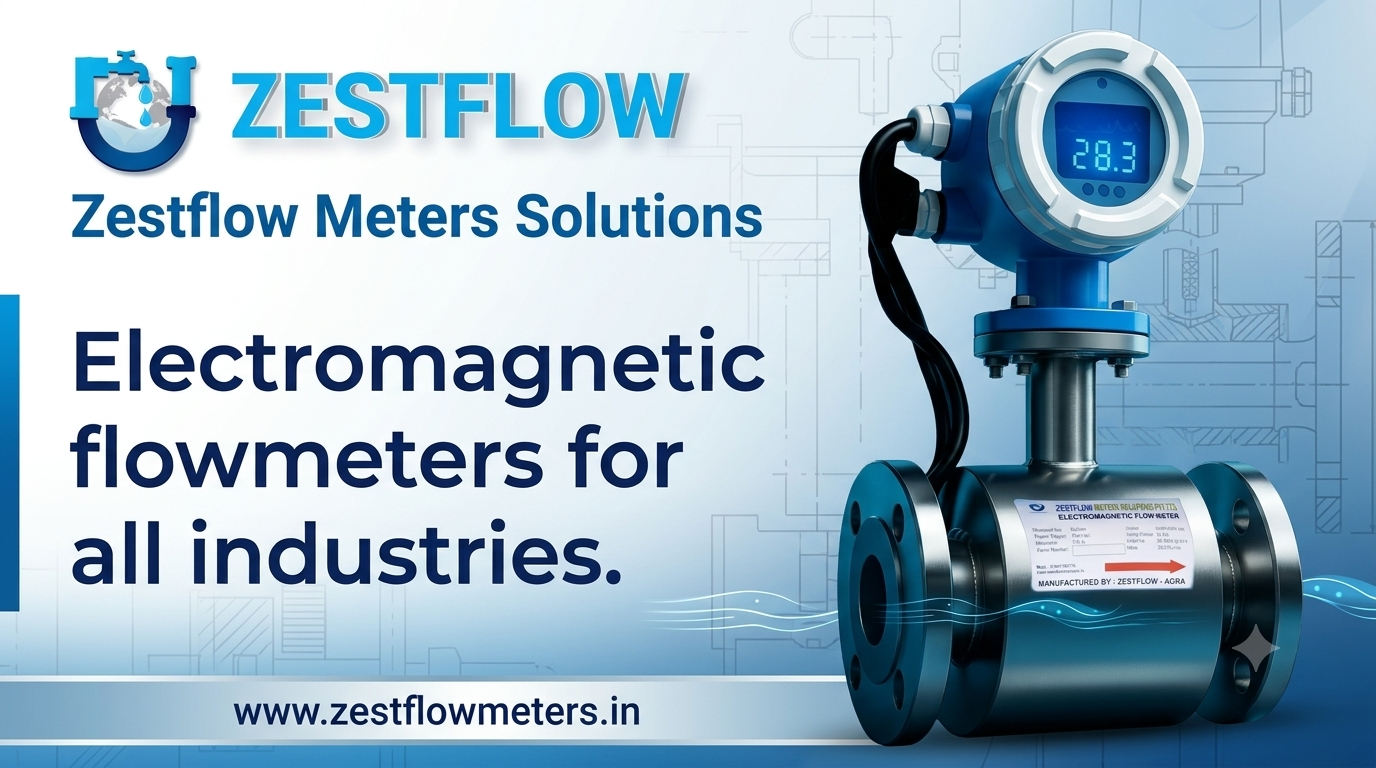
Electromagnetic Flowmeters for Industries: A Complete Guide to Industrial Flow Measurement
Accurate flow measurement plays an important role in modern industrial operations. Industries dealing with water, chemicals, wastewater, liquids and other conductive fluids require reliable instruments to monitor flow rates and maintain efficient processes. Whether it is a manufacturing plant, water treatment facility, chemical processing unit or pharmaceutical company, proper flow measurement helps improve productivity and control operating costs.
One of the most widely used technologies for industrial liquid measurement is the electromagnetic flowmeter. These instruments are designed to measure the flow of electrically conductive liquids without using moving mechanical components inside the measuring tube. Their operating principle, measurement reliability and low maintenance requirements make them suitable for a wide range of industrial applications.
Zestflow Meters Solutions provides flow measurement and monitoring solutions designed to support different industrial requirements. Electromagnetic flowmeters are an important choice for businesses looking to improve liquid measurement, water management and process monitoring.
In this blog, we will discuss the working principle, features, benefits, applications and selection factors of electromagnetic flowmeters for industries.
What Are Electromagnetic Flowmeters?
An electromagnetic flowmeter, also known as a magnetic flowmeter or mag meter, is an industrial instrument used to measure the flow rate of electrically conductive liquids through a pipeline.
It operates according to Faraday’s Law of Electromagnetic Induction. When a conductive liquid passes through a magnetic field, it generates an electrical voltage. This voltage is proportional to the velocity of the liquid flowing through the pipe.
The flowmeter uses electrodes to detect the generated voltage. Its transmitter processes the signal and calculates the liquid flow rate, which can be displayed digitally or transferred to an external monitoring system.
Unlike traditional mechanical flowmeters, electromagnetic flowmeters do not have turbines, gears or other moving components inside the measuring tube. This design helps reduce mechanical wear and makes them suitable for continuous industrial applications.
How Do Electromagnetic Flowmeters Work?
Understanding the working principle of electromagnetic flowmeters helps industries select the right measurement technology.
The operation is based on three main processes.
1. Generation of a Magnetic Field
Electromagnetic coils inside the flowmeter generate a magnetic field across the measuring tube. When an electrically conductive liquid passes through this magnetic field, an electrical voltage is produced.
2. Detection of Electrical Voltage
Electrodes installed inside the measuring tube detect the voltage generated by the moving liquid. The voltage level depends on the velocity of the liquid passing through the flowmeter.
3. Signal Processing and Flow Measurement
The transmitter receives the electrical signal from the electrodes and converts it into flow information. The measurement can be displayed as an instantaneous flow rate or total liquid volume.
This measurement technology allows industries to monitor liquid movement without introducing mechanical obstructions into the pipeline.
Important Features of Electromagnetic Flowmeters for Industries
Electromagnetic flowmeters offer several features that make them suitable for industrial environments.
1. Accurate Flow Measurement
These instruments provide reliable measurement of conductive liquids when correctly selected, installed and calibrated. They help industries monitor liquid consumption and maintain better process control.
2. No Moving Mechanical Parts
The measuring tube does not contain moving mechanical components. This reduces mechanical wear and helps minimise maintenance requirements.
3. Low Pressure Loss
Electromagnetic flowmeters generally have an unobstructed measuring tube. As a result, they create very little additional pressure loss in the pipeline.
4. Wide Industrial Applications
They can measure different conductive liquids, including water, wastewater, chemical solutions, sludge and suitable industrial slurries.
5. Digital Monitoring
Depending on the model, electromagnetic flowmeters can provide digital displays and signal outputs for integration with industrial automation and monitoring systems.
6. Different Sizes and Configurations
These instruments are available in different pipeline sizes, liner materials, electrode materials and transmitter configurations to meet specific industrial requirements.
Applications of Electromagnetic Flowmeters in Different Industries
Electromagnetic flowmeters are used across various industrial sectors where accurate measurement of conductive liquids is required.
1. Water and Wastewater Treatment Industry
Water treatment plants require continuous monitoring of water movement during different treatment stages. Electromagnetic flowmeters help measure raw water intake, treated water distribution and wastewater discharge.
They are also suitable for sewage and effluent measurement when the liquid meets the instrument’s conductivity requirements.
Common applications include:
Raw water measurement.
Treated water monitoring.
Sewage flow measurement.
Effluent treatment plants (ETP).
Sewage treatment plants (STP).
Industrial wastewater management.
2. Chemical Processing Industry
Chemical manufacturing facilities handle different conductive liquids, including acids, alkalis and chemical mixtures. Accurate measurement is essential for controlling liquid transfer and maintaining consistent production processes.
Electromagnetic flowmeters can be used for compatible chemical applications. Selecting the correct liner and electrode materials is important to ensure resistance against corrosion and chemical reactions.
3. Pharmaceutical Industry
The pharmaceutical industry requires reliable measurement instruments for water processing, liquid transfer and production operations.
Electromagnetic flowmeters can support suitable conductive liquid applications. For hygienic processes, manufacturers should consider appropriate material compatibility, sanitary connections and cleaning requirements.
4. Food and Beverage Industry
Food and beverage manufacturing involves the movement of water, juices, dairy products and other conductive liquids. Flow measurement helps maintain production consistency and monitor liquid consumption.
Electromagnetic flowmeters can be used in suitable applications involving conductive food liquids. Hygienic design and cleanability should be considered when selecting an instrument.
5. Power Generation Industry
Power generation facilities use water for cooling, treatment and other industrial operations. Flowmeters help monitor water circulation and improve process management.
Electromagnetic flowmeters are useful for compatible applications involving cooling water, treated water and wastewater.
6. Pulp and Paper Industry
Paper manufacturing involves water, pulp mixtures and liquids containing fibres. Conventional mechanical instruments may face challenges in applications involving suspended solids.
Electromagnetic flowmeters are suitable for compatible conductive pulp and slurry applications because they have no moving obstructions inside the measuring tube.
7. Mining and Mineral Processing Industry
Mining facilities transport water, mineral mixtures and slurry through industrial pipelines. These processes require instruments capable of handling demanding operating conditions.
Electromagnetic flowmeters with suitable abrasion-resistant liners and compatible electrode materials can be used for appropriate slurry measurement applications.
Benefits of Using Electromagnetic Flowmeters in Industrial Applications
Selecting the right flow measurement instrument can improve industrial operations in several ways.
1. Improved Process Efficiency: Accurate flow information helps operators monitor liquid movement and maintain consistent production processes.
2. Reduced Maintenance Requirements: The absence of moving components inside the measuring tube reduces mechanical wear.
3. Better Water Management: Industries can measure water consumption, distribution and discharge more effectively.
4. Suitable for Different Liquids: Compatible models can measure water, wastewater, chemicals and certain industrial slurries.
5. Easy Automation Integration: Depending on the model, available output options can support integration with PLC, SCADA and other monitoring systems.
6. Continuous Flow Monitoring: Digital measurement helps operators monitor flow conditions during industrial operations.
7. Flexible Installation Options: Different configurations are available to support various pipeline arrangements and installation requirements.
How to Choose the Right Electromagnetic Flowmeter for Your Industry
Choosing an appropriate electromagnetic flowmeter requires understanding the application’s technical requirements.
Consider these important factors before purchasing:
Pipeline Diameter: Select the correct flowmeter size according to the pipeline dimensions and required flow range.
Liquid Conductivity: Confirm that the liquid meets the minimum conductivity requirement of the selected instrument.
Flow Rate: Check minimum, normal and maximum flow rates.
Operating Temperature: Ensure that the flowmeter materials are suitable for the liquid temperature.
Operating Pressure: Select a model compatible with the pipeline pressure.
Liner Material: Choose an appropriate liner according to chemical compatibility and operating conditions.
Electrode Material: Consider corrosion resistance and the properties of the liquid being measured.
Installation Requirements: Check pipeline orientation, grounding, straight pipe lengths and full-pipe conditions.
Communication Options: Identify whether the application requires 4–20 mA, pulse, RS485 or another communication option.
Maintenance and Calibration: Consider inspection requirements and calibration support.
A proper technical evaluation helps businesses select the right instrument for dependable flow measurement.
Different Types of Electromagnetic Flowmeters
Electromagnetic flowmeters are available in different configurations depending on installation requirements.
Inline Electromagnetic Flowmeters
These instruments are installed directly into the pipeline. They are commonly used in water treatment plants, manufacturing facilities and industrial processing systems.
Remote-Type Electromagnetic Flowmeters
In remote-type flowmeters, the sensor and transmitter are installed separately. This configuration can be useful when the measurement location and display location need to be different.
Compact-Type Electromagnetic Flowmeters
Compact electromagnetic flowmeters have the sensor and transmitter integrated into a single assembly. They provide a convenient installation option where sufficient space and suitable environmental conditions are available.
The selection depends on pipeline design, installation conditions and monitoring requirements.
Importance of Proper Installation and Maintenance
Correct installation is important for obtaining reliable flow measurement results.
The flowmeter should be installed according to the manufacturer’s guidelines. The pipeline should remain full during normal operation, and appropriate grounding and bonding arrangements should be maintained.
Incorrect installation, air pockets, electrical interference and improper grounding can affect measurement performance.
Regular maintenance should include:
Inspecting electrical connections.
Checking electrode conditions.
Verifying grounding arrangements.
Reviewing transmitter settings.
Checking the measuring tube when necessary.
Following recommended calibration schedules.
Proper installation and preventive maintenance help maintain reliable instrument performance.
Why Choose Zestflow Meters Solutions?
Zestflow Meters Solutions focuses on industrial flow measurement and monitoring requirements for different applications. Industries need measurement instruments that match their pipeline specifications, liquid properties and operating conditions.
Electromagnetic flowmeters are an important solution for businesses that require reliable measurement of conductive liquids in water treatment, wastewater management, manufacturing and other industrial sectors.
When selecting a flow measurement instrument, it is important to evaluate the application carefully. Pipeline size, flow range, liquid conductivity, pressure, temperature and output requirements all influence the selection process.
Zestflow Meters Solutions aims to support industrial customers in identifying suitable flow measurement solutions for their operational requirements.
Whether your requirement involves industrial water measurement, wastewater monitoring or process liquid measurement, selecting the right instrument can help improve operational efficiency.
Future of Electromagnetic Flowmeters in Industrial Automation
Industrial automation is changing the way businesses monitor and control their operations. Modern facilities increasingly depend on digital instruments to collect process data and improve decision-making.
Electromagnetic flowmeters with suitable digital outputs and communication options can be integrated with PLC, SCADA and industrial monitoring systems.
These capabilities help businesses monitor liquid flow, track consumption and identify unusual changes in operating conditions.
With increasing attention towards water conservation, industrial automation and process efficiency, electromagnetic flowmeters will continue to play an important role in suitable industrial liquid measurement applications.
Conclusion
Electromagnetic flowmeters are an important part of modern industrial measurement systems. Their working principle, unobstructed measuring tube, and ability to measure different conductive liquids make them suitable for numerous industrial applications.
From water and wastewater treatment to chemical processing, pharmaceutical manufacturing, food production, mining, and agriculture, these instruments help businesses monitor liquid flow and improve process control.
Selecting the right electromagnetic flowmeter requires careful consideration of application requirements, pipeline specifications, and operating conditions.
Zestflow Meters Solutions aims to provide suitable flow measurement solutions for industrial customers. If you are looking for electromagnetic flowmeters for industries, explore the available solutions and contact Zestflow Meters Solutions for product information and application-related assistance.