
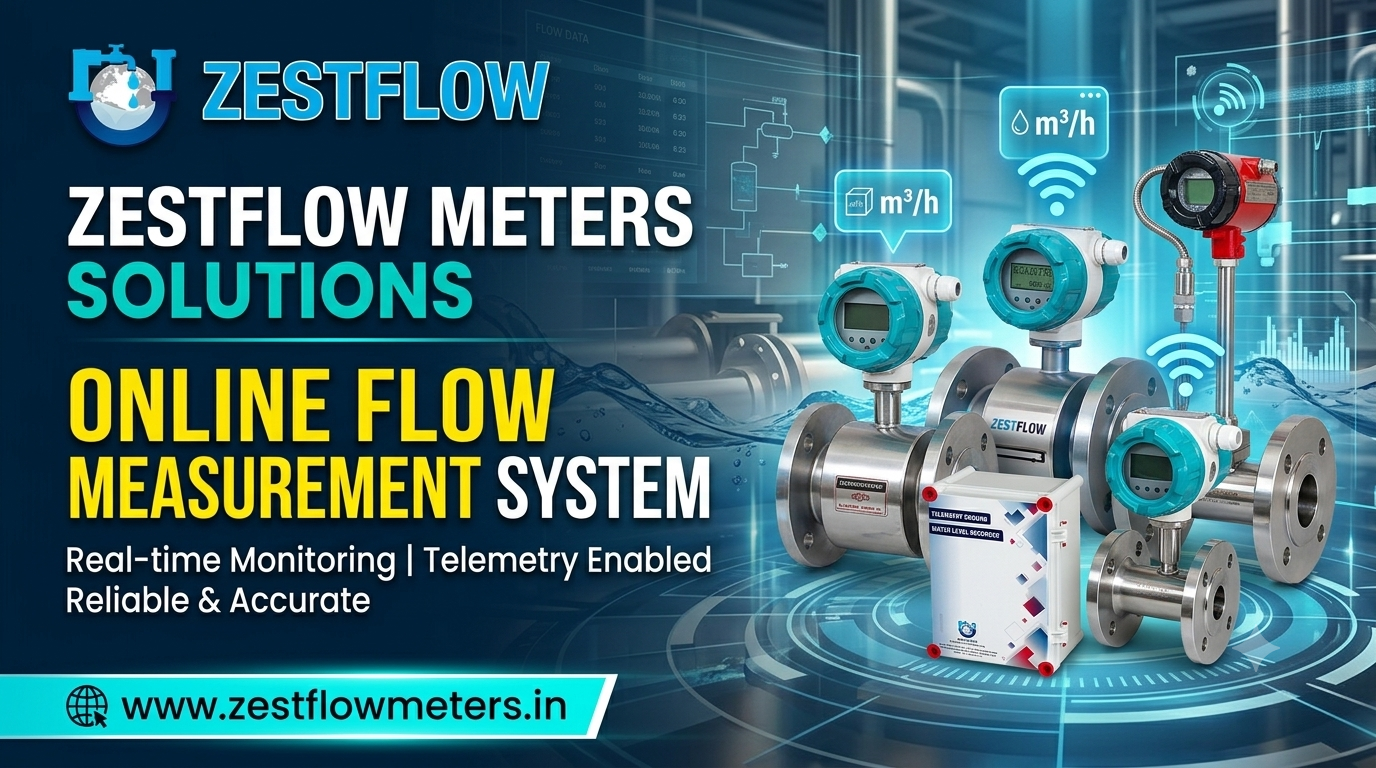
Online Flow Measurement System for Accurate Industrial Water Monitoring
Water measurement is an important part of industrial operations, water distribution, wastewater treatment, manufacturing, and resource management. Industries need accurate flow data to understand water consumption, monitor pipelines, improve process efficiency, and maintain better control over their operations. A modern online flow measurement system helps businesses monitor the movement of water and other compatible liquids continuously without relying on manual readings at regular intervals.
With increasing demand for water conservation, automation, and smart monitoring, industries are moving towards digital flow measurement solutions. These systems provide reliable flow information that can support operational decisions, detect unusual flow conditions, and improve water management practices.
Zestflow Meters Solutions provides flow measurement solutions designed for industrial, commercial, water supply, and process applications. By selecting the right flow measurement technology, businesses can improve measurement accuracy, reduce monitoring efforts, and make their water management systems more efficient.
What Is an Online Flow Measurement System?
An online flow measurement system is a device or integrated setup that continuously measures the flow of liquid through a pipeline and displays or transmits measurement data in real time. Unlike traditional manual measurement methods, online systems allow operators to monitor flow without repeatedly visiting the measurement location.
Depending on the meter technology, the system can measure flow rate, total liquid volume, and other flow-related parameters. Data may be displayed on a digital screen, transferred to a control room, or integrated with automation systems such as PLC, SCADA, BMS, or remote monitoring platforms.
Online flow measurement systems are commonly used in:
Industrial water supply systems
Wastewater treatment plants
Manufacturing facilities
Irrigation networks
Cooling water systems
Chemical processing plants
Commercial water distribution
Effluent treatment plants (ETP)
Sewage treatment plants (STP)
These systems help industries understand water usage and maintain better control over liquid flow across different stages of their operations.
Why Industries Need Online Flow Monitoring
Industries often manage multiple pipelines, tanks, production units, water treatment processes, and utility systems. Without reliable measurement, it becomes difficult to determine how much water is being consumed, transferred, or discharged.
An online flow measurement system helps address these challenges by providing continuous measurement information. Operators can check flow conditions, compare consumption between different sections, and identify unusual changes in flow.
Some of the major reasons industries use online flow monitoring include:
1. Continuous Flow Monitoring
Continuous monitoring allows operators to observe liquid movement throughout the day. This helps identify variations in flow and understand the operating condition of pipelines and connected equipment.
2. Better Water Consumption Management
Industries can monitor water usage at different points to understand consumption patterns. This information helps identify areas where water-saving measures can be introduced.
3. Reduced Manual Readings
Digital flow measurement systems minimize the need for repeated manual inspection and reading collection. Operators can access data directly from the display or connected monitoring systems.
4. Improved Process Control
Accurate flow readings are useful in maintaining consistent liquid supply during manufacturing, treatment, cooling, dosing, and other industrial processes.
5. Early Detection of Flow Abnormalities
Sudden changes in flow may indicate leakage, blockage, valve issues, process changes, or unexpected water consumption. Continuous monitoring can help operators investigate these problems earlier.
How an Online Flow Measurement System Works
The working principle depends on the flow meter technology used in the system. Different technologies measure liquid flow using different physical principles.
For example, an electromagnetic flow meter measures the flow of electrically conductive liquids using electromagnetic induction. When a conductive liquid moves through a magnetic field generated by the meter, a voltage is induced. The meter detects this voltage and converts it into a flow measurement.
The measured flow data is processed electronically and shown on the instrument display. Depending on the model, the meter may also provide communication or output signals for integration with external equipment.
A typical online flow measurement system includes:
Flow sensor or measuring tube
Electronic transmitter
Digital display
Power supply
Signal or communication output
Data monitoring or control system, if required
The exact configuration depends on the application, pipe size, liquid properties, installation requirements, and monitoring objectives.
Types of Online Flow Measurement Systems
Different flow meter technologies are suitable for different liquid measurement requirements. Choosing the correct technology is important for reliable performance.
Electromagnetic Flow Meter
Electromagnetic flow meters are widely used for measuring conductive liquids in industrial pipelines. They are suitable for water, wastewater, treated water, and several process liquids that meet the meter’s conductivity requirements.
These meters have no moving parts in the measuring section, making them useful in applications where low maintenance and reliable measurement are important.
Common applications include:
Water treatment plants
Industrial water supply
Wastewater measurement
ETP and STP pipelines
Process water monitoring
Ultrasonic Flow Meter
Ultrasonic flow meters use sound waves to determine the velocity of liquid flowing through a pipe. Depending on the model, the meter may be installed externally on the pipe or directly within the flow path.
Clamp-on ultrasonic flow meters are useful in certain applications where pipe cutting or process interruption is not preferred. Their suitability depends on pipe material, liquid conditions, pipe dimensions, and installation quality.
Turbine Flow Meter
Turbine flow meters measure liquid flow by detecting the rotational movement of a turbine or rotor placed in the flow path. They are generally used for suitable clean liquids and applications where flow characteristics and operating conditions support accurate measurement.
Rotameter
A rotameter is a variable-area flow meter used to measure the flow of liquids or gases. It provides a visual indication of flow and is available in different construction materials and measurement ranges.
Metal tube rotameters are often preferred in industrial environments that require a durable flow measurement instrument.
Key Features of a Reliable Online Flow Measurement System
An industrial flow measurement system should offer dependable measurement, clear data presentation, and compatibility with the operating environment. The required features may vary depending on the application and selected technology.
Digital Flow Display
A digital display makes it easier for operators to check flow readings at the installation site. Depending on the meter, it can display instantaneous flow rate, cumulative flow volume, measurement units, and other configured parameters.
Real-Time Measurement
Real-time measurement helps operators monitor changing flow conditions during production, water treatment, or distribution operations. It supports quicker decisions when flow rates increase, decrease, or become inconsistent.
Output and Communication Options
Some flow meters offer output signals and communication interfaces for connecting with external monitoring equipment. Depending on the model, these may include pulse, analog, or digital communication options.
Industrial Construction
Flow meters are available in different materials and designs to suit water, wastewater, industrial liquids, and other process applications. Selecting the correct sensor material, lining, electrodes, pressure rating, and connection type is important.
Integration with Automation Systems
An online flow measurement system can be connected to PLC, SCADA, BMS, or other compatible automation platforms when the instrument supports the required communication and signal specifications.
Benefits of Using an Online Flow Measurement System
Installing an online flow measurement system can help improve the visibility of water movement throughout an industrial facility.
Improved Measurement Visibility
Operators can view flow data instead of relying only on manual readings. This makes it easier to understand how different parts of a facility use water.
Better Operational Planning
Historical and real-time flow information can help industries plan production, water supply, maintenance activities, and resource usage.
Water Conservation
By monitoring water consumption at important locations, businesses can identify unusual usage patterns and take steps to reduce wastage.
Reduced Monitoring Workload
Online systems reduce the effort required to manually record flow readings at frequent intervals, particularly when connected to a central monitoring platform.
More Informed Maintenance
Flow variations can help maintenance teams investigate possible leakage, restrictions, equipment problems, or changes in operating conditions.
Improved Process Efficiency
Accurate flow information supports better control of water-dependent processes and helps operators maintain consistent operating conditions.
How to Choose the Right Online Flow Measurement System
Choosing a flow meter requires understanding the application rather than selecting an instrument only by pipe size or price. The following factors should be considered before purchasing.
1. Liquid Type: Identify whether the liquid is clean water, wastewater, slurry, chemical liquid, or another fluid. Its conductivity, viscosity, solids content, and chemical properties may affect meter selection.
2. Pipe Size: Check the pipeline diameter and connection requirements to ensure the flow meter fits the installation.
3. Flow Range: Determine the minimum, normal, and maximum expected flow rates. The selected instrument should cover the actual operating range.
4. Pressure and Temperature: Verify the operating pressure and temperature of the pipeline against the meter’s rated specifications.
5. Measurement Accuracy: Consider the required measurement accuracy and the purpose of monitoring, such as process control, water consumption, utility monitoring, or billing.
6. Installation Conditions: Check whether the installation has enough straight pipe length, suitable grounding, access for maintenance, and appropriate mounting conditions.
7. Output Requirements: Determine whether local display is sufficient or if the system needs analog signals, pulse output, Modbus, or integration with PLC/SCADA/BMS.
8. Maintenance Requirements: Review the meter’s maintenance needs, calibration requirements, installation instructions, and service availability.
A suitable flow meter should match the liquid, pipeline, operating conditions, and monitoring requirements of the application.
Why Choose Zestflow Meters Solutions?
Zestflow Meters Solutions provides industrial flow measurement solutions for applications that require dependable monitoring of water and liquid flow. The right measurement equipment can help industries maintain better control over pipelines, utilities, treatment plants, and process operations.
When selecting a flow measurement solution from Zestflow Meters Solutions, customers can evaluate their application requirements, flow meter technology, pipe size, operating conditions, and output specifications to identify a suitable configuration.
Flow measurement solutions can support:
Industrial water monitoring
Process flow measurement
Wastewater flow monitoring
Water treatment applications
Pipeline flow measurement
Digital flow monitoring
Automated water management
Businesses looking for an online flow measurement system should focus on selecting a meter that meets their actual measurement requirements and offers the necessary display, output, and integration capabilities.
Future of Online Flow Measurement and Smart Water Monitoring
Industrial water monitoring is moving towards automation, digital communication, and data-based management. Smart measurement systems can help operators monitor flow from centralized locations and integrate measurement data into broader utility management systems.
With connected instruments, businesses can improve data availability, monitor flow trends, and develop more organized water management practices. In facilities where multiple flow meters are installed, centralized monitoring can provide a better overview of water movement across different departments or process lines.
As industries focus on automation, operational efficiency, and water conservation, online flow measurement is becoming an important part of modern industrial infrastructure.
Frequently Asked Questions (FAQs)
1. What is an online flow measurement system?
An online flow measurement system measures liquid flow continuously through a pipeline and displays or transmits flow data in real time. It helps monitor water consumption and process flow without frequent manual readings.
2. Where are online flow measurement systems used?
They are used in water treatment plants, wastewater treatment facilities, manufacturing industries, irrigation networks, chemical plants, cooling water systems, and industrial water distribution pipelines.
3. Which flow meter is suitable for water measurement?
Electromagnetic, ultrasonic, turbine, and other flow meters can be suitable depending on the water quality, flow range, pipe size, installation conditions, and accuracy requirements.
4. Can an online flow meter connect to SCADA?
Yes. Many flow meters offer analog, pulse, or digital communication outputs that can be integrated with SCADA systems, provided the meter and the control system support compatible interfaces and protocols.
5. What information can an online flow meter display?
Depending on the model, it may display instantaneous flow rate, total flow volume, flow direction, measurement units, and other configured parameters.
6. Is an online flow measurement system useful for water conservation?
Yes. Continuous flow data can help identify unusual consumption, understand water usage patterns, and investigate possible leakage or wastage.
7. How do I select the right industrial flow meter?
Consider the liquid type, conductivity, flow range, pipeline size, pressure, temperature, accuracy requirements, installation conditions, output signals, and maintenance needs.
8. Does Zestflow Meters Solutions offer industrial flow measurement solutions?
Zestflow Meters Solutions provides flow measurement solutions for industrial water monitoring, process applications, and liquid measurement requirements. Customers should confirm the specific meter model and specifications for their application.
Conclusion
An online flow measurement system is a valuable tool for industries that need continuous monitoring, accurate flow information, and better control over water and liquid distribution. From manufacturing plants and water treatment facilities to wastewater systems and irrigation networks, online flow measurement helps operators understand flow conditions and improve operational efficiency.
Choosing the right flow meter requires careful consideration of liquid properties, pipeline conditions, flow range, accuracy, installation requirements, and communication options. A properly selected system can reduce manual monitoring efforts, support water conservation, and provide useful data for process management.
Zestflow Meters Solutions offers flow measurement solutions for industrial and water monitoring applications. By choosing the right technology and configuration, businesses can move towards more efficient, reliable, and data-driven water management.