
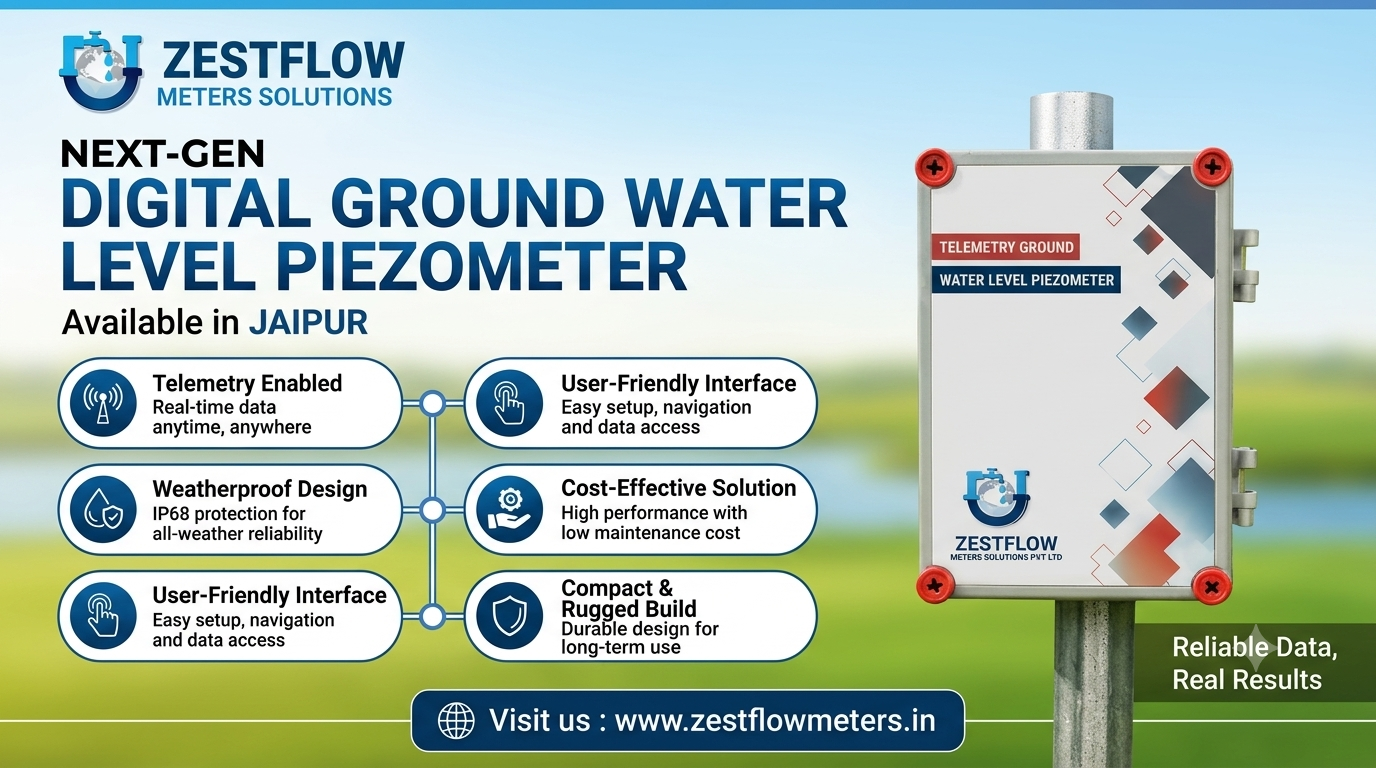
Buy Digital Ground Water Level Piezometer in Jaipur | Zestflow Meters Solutions
Introduction
Groundwater is an essential natural resource for agriculture, industries, infrastructure development, construction projects, and residential water supply. With increasing demand for water and changing groundwater conditions, monitoring underground water levels has become an important part of responsible water resource management. Accurate measurements help organizations understand groundwater fluctuations, evaluate water availability, and make informed decisions about water consumption.
If you are looking to Buy Digital Ground Water Level Piezometer in Jaipur, Zestflow Meters Solutions offers groundwater monitoring solutions designed to help users measure and record water level variations. A digital groundwater level piezometer can be an effective choice for projects that require reliable measurements, organized data collection, and improved visibility into groundwater conditions.
Whether you manage an industrial facility, a borewell, a construction project, or a groundwater monitoring station, choosing a suitable water level monitoring instrument can improve operational planning and support long-term resource management.
What Is a Digital Ground Water Level Piezometer?
A digital groundwater level piezometer is an instrument used to measure groundwater levels or pore water pressure, depending on its configuration and application. Modern systems may combine a submersible pressure sensor, a digital data logger, and a communication interface to record measurements at selected intervals.
In a typical digital groundwater level recorder, a pressure sensor is installed below the water surface inside a monitoring well or piezometer. The sensor measures hydrostatic pressure, which is converted into water level information. The connected logger records the readings for later analysis or remote monitoring, depending on the system’s available features.
Unlike manual measurement methods that require repeated visits to a monitoring point, an automated instrument can provide more frequent readings and help users identify trends over time.
For product-specific details, you can explore the Digital Groundwater Level Recorder from Zestflow Meters Solutions.
Why Is Groundwater Level Monitoring Important in Jaipur?
Jaipur and the surrounding areas of Rajasthan depend on groundwater for a variety of residential, agricultural, commercial, and industrial applications. Groundwater conditions can change because of rainfall, seasonal recharge, pumping activity, and local geological characteristics.
Regular monitoring helps organizations understand these changes rather than relying only on occasional observations.
Some important reasons for groundwater monitoring include:
Water resource management: Understand changes in groundwater levels over time.
Borewell performance assessment: Observe how water levels respond to pumping and recovery.
Construction projects: Monitor groundwater conditions where excavation, foundations, or underground structures may be affected.
Environmental monitoring: Collect measurements that support groundwater assessments and technical studies.
Industrial water planning: Use reliable records to support water management decisions.
Seasonal analysis: Compare groundwater readings before and after rainfall or during periods of increased extraction.
The Central Ground Water Board explains that groundwater levels depend on factors such as hydrogeological conditions, recharge, and groundwater extraction. This makes consistent measurement valuable for understanding local groundwater behavior.
Key Features of a Digital Ground Water Level Piezometer
When planning to buy a digital groundwater level piezometer in Jaipur, it is important to evaluate the specifications of the proposed instrument rather than choosing a product based on its name alone.
1. Digital Water Level Measurement
A digital groundwater monitoring system converts sensor readings into useful water level information. Depending on the model, readings may be displayed, stored, or transferred to a connected monitoring platform.
2. Automatic Data Recording
A compatible data logger can record groundwater measurements at predefined intervals. This helps build a historical record that can be used to analyze seasonal variations, pumping effects, and longer-term trends.
3. Pressure Sensor Technology
Many groundwater monitoring instruments use submersible pressure transducers. These sensors measure pressure at the installation depth, and the measured pressure can be converted into water level or pressure-head information using the appropriate reference and calibration.
4. Remote Monitoring Options
Depending on the selected configuration, the system may support communication technologies such as GSM, GPRS, or other telemetry options. Remote monitoring can reduce the need for frequent manual visits and help authorized personnel review readings from another location.
5. Data Storage and Analysis
Stored readings can help engineers, consultants, and project managers compare water levels across different dates. This information is useful when evaluating recharge patterns, groundwater drawdown, and recovery after pumping.
6. Application-Specific Configuration
The required sensor range, cable length, measurement interval, installation depth, and communication method depend on the project. Selecting these specifications carefully is essential for obtaining useful results.
Always confirm the actual features, measurement accuracy, memory capacity, and communication options offered with the particular model.
Applications of Digital Groundwater Level Piezometers
A digital groundwater level piezometer can support a variety of groundwater monitoring activities.
Industrial Facilities
Industries that use groundwater may monitor water levels to understand changes in their supply sources. Recorded measurements can support internal water management reviews and help identify unusual fluctuations.
Construction and Infrastructure Projects
Groundwater measurements may be required around foundations, excavation sites, tunnels, retaining structures, and other infrastructure projects. Depending on the engineering design, piezometers can help monitor groundwater conditions or pore water pressure.
Agriculture and Irrigation
Farmers, agricultural consultants, and water resource specialists can use groundwater measurements to understand seasonal changes and support irrigation planning. Groundwater monitoring should be considered alongside rainfall, soil conditions, crop requirements, and pumping records.
Environmental and Hydrogeological Studies
Environmental consultants and hydrogeologists may install monitoring wells to evaluate groundwater conditions over time. Digital recording systems can make it easier to collect consistent datasets for technical analysis.
Borewell and Groundwater Surveys
Monitoring instruments can help assess water level fluctuations in borewells and dedicated observation wells. The correct instrument must be selected according to the well geometry, groundwater conditions, and monitoring objective.
Benefits of Buying a Digital Groundwater Level Piezometer
Investing in a suitable digital groundwater monitoring system can provide several operational benefits.
Improved measurement consistency: Automated readings collected at planned intervals can reduce inconsistencies associated with irregular manual observations.
Better trend identification: Historical data makes it easier to compare measurements and identify groundwater level changes.
Reduced routine monitoring effort: Automatic logging and supported telemetry can reduce the need for repeated site visits, although installation and maintenance remain important.
More informed decisions: Reliable readings can help project teams assess water availability, investigate unexpected changes, and plan further technical evaluations.
Support for documentation: Organized records can assist with project reporting, groundwater studies, and internal water management reviews.
Potential for remote access: Instruments with compatible communication features can make monitoring information available without requiring personnel to visit the installation site for every reading.
These benefits depend on correct installation, instrument calibration, suitable monitoring intervals, and proper interpretation of the recorded data.
How to Choose the Right Piezometer in Jaipur
Before purchasing a digital groundwater level piezometer, consider the following factors.
Measurement Range and Installation Depth
Determine the expected groundwater level and the maximum depth at which the sensor must operate. Select a measurement range appropriate for the well or monitoring point.
Accuracy and Resolution
Accuracy describes how close a measurement is to the actual value, while resolution describes the smallest change the instrument can display or record. Check both specifications against your project’s requirements.
Sensor and Cable Compatibility
Confirm that the sensor, cable, connectors, and protective materials are suitable for the installation environment. Consider groundwater chemistry, temperature, moisture exposure, and the intended service life.
Data Logger Capacity
If your project requires continuous monitoring, review the available memory, sampling intervals, power requirements, and method of retrieving recorded data.
Communication Requirements
Decide whether readings will be collected locally or need to be transmitted remotely. Confirm network availability and compatibility before selecting a telemetry-enabled model.
Installation and Technical Support
Ask about installation guidance, commissioning, calibration, operating instructions, warranty conditions, and maintenance requirements.
Budget and Total Ownership Cost
Compare quotations based on the complete system configuration rather than the initial instrument price alone. Include installation, accessories, communication charges, servicing, and data management where applicable.
Why Consider Zestflow Meters Solutions?
Zestflow Meters Solutions provides industrial measurement and instrumentation products, including a digital groundwater level recorder listed on its official website. The company also offers other measurement solutions for industrial and water-related applications.
When evaluating Zestflow for your project in Jaipur, discuss your specific monitoring requirements and request confirmation of the suitable model and available features.
Before placing an order, ask for:
A product datasheet with measurement range and accuracy.
Details of the sensor and data logger configuration.
Available telemetry and remote monitoring options.
Recommended installation procedures.
Calibration and maintenance information.
Warranty, delivery, and after-sales support details.
A quotation that identifies all included accessories.
These checks help ensure that the selected equipment is appropriate for your project instead of relying on assumptions about standard features.
Visit the official website: https://zestflowmeters.in/
Steps to Buy Digital Ground Water Level Piezometer in Jaipur
Purchasing the right instrument becomes easier when you follow a structured process.
Step 1: Define your application. Identify whether you need groundwater level measurement, pore pressure monitoring, or both.
Step 2: Collect site information. Record the monitoring well depth, expected water level, installation conditions, and environmental requirements.
Step 3: Specify your monitoring needs. Decide how often readings are required and whether automatic recording or remote transmission is necessary.
Step 4: Contact the supplier. Share the project details with Zestflow Meters Solutions and request a suitable technical recommendation.
Step 5: Verify specifications. Compare the offered instrument against your requirements, including range, accuracy, logging capability, communication, and power supply.
Step 6: Review the quotation. Confirm pricing, taxes, delivery timelines, installation responsibilities, warranty, and service availability.
Step 7: Arrange installation and verification. Follow the manufacturer’s installation instructions and check the readings against an appropriate reference before relying on the data.
This process can help buyers avoid selecting equipment that is incompatible with their monitoring site or reporting requirements.
Installation and Maintenance Best Practices
Correct installation is essential for meaningful groundwater measurements. The sensor should be positioned according to the manufacturer’s instructions, and the reference elevation or measuring point should be documented. Changes in the reference point can create misleading comparisons between readings.
Protect cables and connectors against mechanical damage and moisture ingress. Check the instrument periodically for sensor drift, damaged cables, communication failures, and power-related issues.
Where possible, compare digital readings with an independent measurement method at suitable intervals. Maintain a record of calibration checks, installation changes, servicing, and unusual readings.
For projects that monitor pore water pressure rather than the water level in an open well, ensure that the piezometer design and installation method match the intended geotechnical application. Not all groundwater level recorders are interchangeable with every type of pore-pressure instrument.
Frequently Asked Questions (FAQs)
1. What is a digital groundwater level piezometer used for?
It is used to measure groundwater level or pore water pressure, depending on the instrument design. Digital models may also record measurements automatically for trend analysis and reporting.
2. Where can I buy a digital ground water level piezometer in Jaipur?
You can contact Zestflow Meters Solutions through its official website at https://zestflowmeters.in/ to inquire about the digital groundwater level recorder, product specifications, availability, and delivery to Jaipur.
3. How does a digital groundwater level recorder work?
Many systems use a submerged pressure sensor to measure hydrostatic pressure. The instrument converts the sensor output into water level information using the appropriate calibration and reference measurements.
4. Can groundwater levels be monitored remotely?
Yes, if the selected instrument supports compatible telemetry and the necessary communication infrastructure is available. Confirm the specific connectivity options with the supplier.
5. What factors affect the accuracy of groundwater measurements?
Sensor accuracy, calibration, installation depth, reference elevation, temperature effects, instrument condition, and the method used to convert pressure into water level can all influence measurement quality.
6. Is a groundwater level recorder suitable for construction projects?
It may be suitable for monitoring groundwater levels in observation wells. Projects that require pore water pressure measurements for geotechnical analysis may need a specifically designed piezometer and an appropriate installation method.
7. What information should I provide when requesting a quotation?
Provide the required measurement range, well depth, expected water level, monitoring interval, data logging requirements, communication preferences, installation location, and quantity.
8. Does every digital piezometer include remote monitoring?
No. Remote access depends on the specific model and configuration. Some instruments store readings locally, while others offer telemetry or connected monitoring options.
9. How often should groundwater levels be recorded?
The ideal interval depends on the purpose of monitoring. Long-term studies may use periodic readings, while projects affected by pumping or rapidly changing conditions may require more frequent measurements.
10. Why is regular groundwater monitoring important?
Regular measurements help identify changes in groundwater levels, understand seasonal variations, assess pumping effects, and support more informed water resource management.
Conclusion
Groundwater monitoring is an important part of sustainable water management, engineering assessment, and infrastructure planning. A suitable digital groundwater level piezometer can help organizations collect consistent measurements, maintain historical records, and understand changes in groundwater conditions.
If you plan to Buy Digital Ground Water Level Piezometer in Jaipur, consider Zestflow Meters Solutions as a supplier to contact for product information and a project-specific quotation. Review the technical datasheet, measurement range, accuracy, data logging features, communication options, installation requirements, and service terms before making your decision.
Choose an instrument that matches your site’s actual conditions and monitoring objectives. With appropriate equipment, careful installation, and regular verification, groundwater level data can become a valuable resource for better planning and responsible groundwater management.