
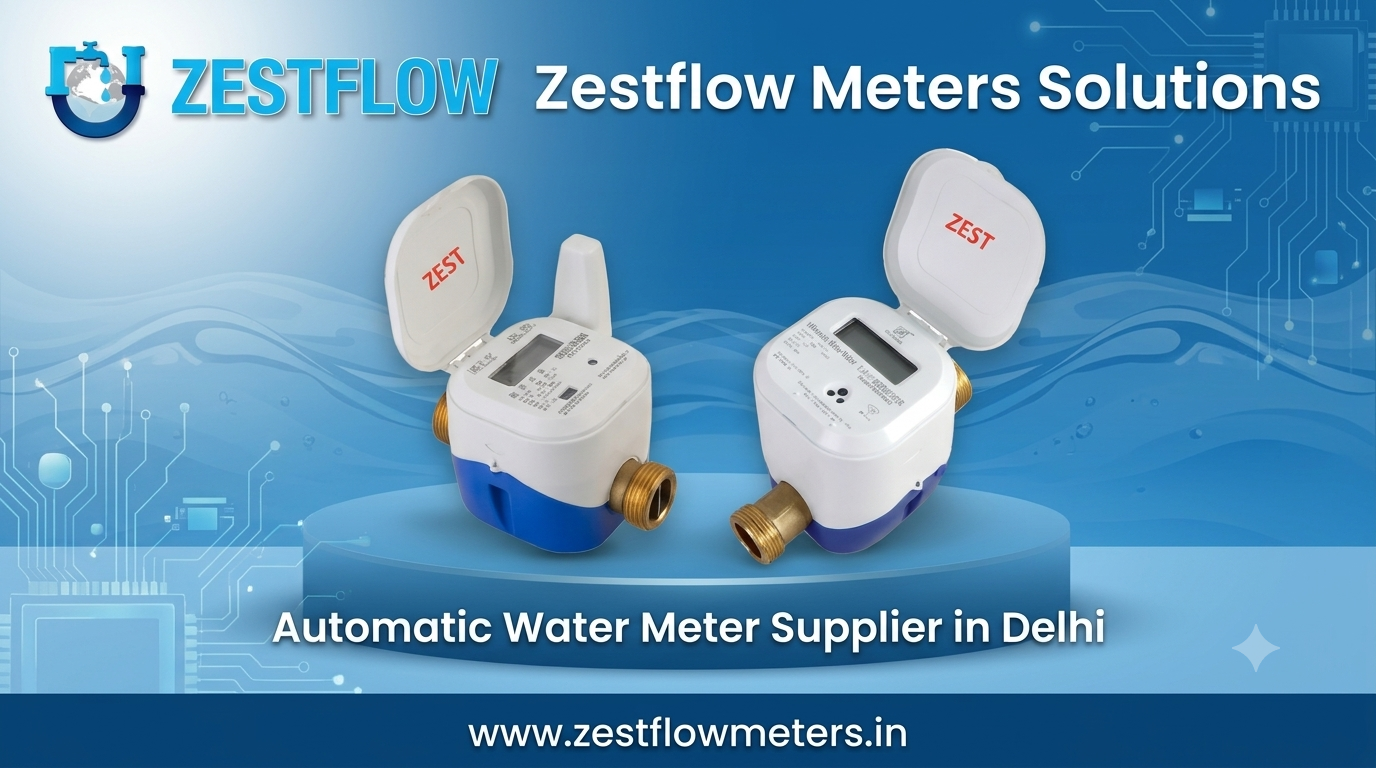
Automatic Water Meter Supplier in Delhi: Smart Water Management Solutions by Zestflow Meters Solutions
Water is one of the most valuable resources for residential buildings, commercial properties, industries, and infrastructure projects. With increasing demand and the need to reduce water wastage, accurate water measurement has become essential. Businesses and property managers need reliable systems to monitor consumption, identify unusual usage, and improve water distribution.
Automatic water meters offer a practical solution by measuring water consumption and, depending on the model, transmitting readings electronically. These systems reduce the need for manual meter readings and help users monitor water usage more efficiently.
If you are searching for an Automatic Water Meter Supplier in Delhi, Zestflow Meters Solutions is a company to consider for water measurement and flow monitoring requirements. Selecting the right water meter can help improve billing accuracy, support water conservation, and simplify consumption monitoring across different applications.
In this blog, we will explain how automatic water meters work, their benefits, common applications, important selection factors, and how to choose a suitable solution for your requirements.
What Is an Automatic Water Meter?
An automatic water meter is a measuring device designed to record the volume of water passing through a pipeline. Depending on its technology, the meter can display readings electronically, transmit data to a monitoring system, or support remote consumption monitoring.
Traditional water meters generally require someone to visit the installation site and record the displayed reading. Automatic and smart metering systems can reduce this manual work by making consumption data available electronically.
Some automatic water meters support communication technologies that allow readings to be collected remotely. Advanced systems may also integrate with building management software, industrial monitoring platforms, or centralized water management systems.
However, not every electronic water meter provides automatic remote reading. The actual functionality depends on the meter model, communication interface, and monitoring equipment installed with it.
For industries, commercial buildings, and water distribution networks, selecting an appropriate meter helps maintain reliable consumption records and improves visibility into water usage.
Why Choose an Automatic Water Meter Supplier in Delhi?
Delhi has a wide range of residential complexes, commercial buildings, manufacturing facilities, institutions, and infrastructure projects. These applications often require dependable water measurement to manage consumption and control operating expenses.
Working with a suitable automatic water meter supplier in Delhi can help you identify equipment that matches your pipeline specifications, water conditions, measurement requirements, and monitoring objectives.
Here are some important reasons to consider automatic water metering.
1. Accurate Water Consumption Measurement
Accurate measurement helps users understand how much water passes through a pipeline over a particular period. This information is useful for consumption analysis, billing, operational planning, and resource management.
The actual measurement accuracy depends on the meter technology, installation conditions, flow range, and maintenance practices.
2. Reduced Manual Reading Requirements
Automatic reading and remote monitoring capabilities can reduce the need for staff to visit multiple locations to record meter readings.
This is particularly helpful for large residential societies, commercial properties, industrial facilities, and water distribution networks with numerous metering points.
3. Better Water Conservation
Regular monitoring helps identify unusual consumption patterns that may indicate leakage, excessive usage, or operational problems.
When readings are available frequently enough, facility managers can investigate abnormal water consumption sooner and take corrective action.
4. Improved Billing and Consumption Records
Reliable water consumption data supports transparent billing and internal cost allocation.
In residential complexes, separate meters can help monitor individual units. In commercial and industrial facilities, meters can track water consumption across departments, production lines, or utility systems.
5. Convenient Monitoring
Depending on the selected model, users may be able to access readings through a digital display, data logger, communication interface, or centralized monitoring platform.
The right configuration makes it easier to collect and review consumption data without depending entirely on manual processes.
Types of Automatic Water Meters Available for Different Applications
Before contacting an automatic water meter supplier in Delhi, it is important to understand the different technologies available. Each type has specific advantages, and the right choice depends on your application.
1. Ultrasonic Water Meters
Ultrasonic water meters use sound waves to measure water flow. They determine flow by analysing the travel time of ultrasonic signals through the water.
These meters are useful for applications requiring electronic measurement, low maintenance, and integration with remote monitoring systems. Since many ultrasonic designs have no moving parts in contact with the water, they can reduce certain mechanical wear issues.
Common applications include:
- Commercial buildings and residential complexes.
- Smart water metering projects.
- Industrial water monitoring.
- Utility and water distribution systems.
- Applications requiring electronic data collection.
The required measurement range, water quality, installation conditions, and communication features should be checked before selecting a model.
2. Electromagnetic Flow Meters
Electromagnetic flow meters measure the flow of electrically conductive liquids using the principle of electromagnetic induction.
They are commonly used in industrial water applications, wastewater treatment plants, and process monitoring systems. Depending on the model, they can provide digital outputs for connection to control systems and data acquisition equipment.
These meters are particularly useful for applications involving conductive liquids where the pipeline and process conditions suit electromagnetic measurement.
3. Mechanical Water Meters with Automatic Reading
Mechanical water meters measure water consumption using internal moving components. Some models can be equipped with pulse outputs or compatible electronic reading modules.
When connected to a suitable automatic meter reading system, they can support remote collection of consumption data.
These meters may be appropriate for residential and commercial installations where the required measurement specifications, approved meter models, and communication arrangements are satisfied.
4. Smart Water Meters with AMR or AMI Connectivity
Smart water meters can support electronic data collection and communication with external systems.
Two common terms in this field are:
- AMR (Automatic Meter Reading): A system that collects meter readings electronically, often without requiring a person to read the meter manually.
- AMI (Advanced Metering Infrastructure): A more integrated system that can support two-way communication between meters and a central platform, depending on the configuration.
Smart metering solutions can help utilities and facility managers collect consumption data, improve billing processes, and analyse water usage.
When choosing a meter, verify whether remote reading equipment, communication modules, software, and installation services are included or need to be purchased separately.
Applications of Automatic Water Meters in Delhi
Automatic water meters can serve a wide range of residential, commercial, industrial, and infrastructure applications.
Residential Apartments and Housing Societies
Large residential complexes often need to monitor water consumption across individual flats, common facilities, and utility connections.
Automatic water metering can simplify data collection and support more organised consumption records. Where compatible systems are installed, property managers can collect readings without visiting every meter individually.
Separate metering can also help housing societies allocate water expenses according to recorded consumption, subject to the applicable billing arrangements.
Commercial Buildings and Offices
Offices, shopping centres, hotels, and business parks consume water for washrooms, kitchens, cooling systems, and other facilities.
Installing suitable water meters helps facility managers compare consumption across different areas and identify unusual usage patterns.
Automatic reading can make regular monitoring more convenient, especially when a building has several water connections.
Manufacturing and Industrial Facilities
Manufacturing facilities often use water for production processes, equipment cooling, cleaning, and utilities.
Automatic water meters help track water usage at different stages of operations. This information can support resource planning, internal cost allocation, and water conservation initiatives.
For industrial applications, the selected meter must be compatible with the liquid, flow rate, operating pressure, temperature, and pipeline conditions.
Hotels, Hospitals, and Institutions
Hotels, hospitals, educational institutions, and large campuses may have multiple buildings and substantial water requirements.
Automatic water metering can help maintenance teams monitor consumption across separate blocks, kitchens, laundry facilities, cooling systems, and other utilities.
More frequent access to readings can help identify unexpected changes in consumption and investigate possible leaks.
Water Treatment and Distribution Systems
Water treatment plants and distribution networks require dependable measurement to monitor water movement through pipelines.
Suitable flow measurement instruments can help operators record flow rates, evaluate distribution performance, and monitor water transfer between different sections of a system.
For larger pipelines and industrial processes, the meter should be selected according to the required flow range, pipe diameter, liquid characteristics, and control-system requirements.
Key Features to Consider When Buying an Automatic Water Meter
Choosing the right product involves more than comparing prices. The following factors can help you identify a suitable meter for your installation.
1. Meter Size and Pipeline Diameter
The meter size should match the pipeline and expected flow conditions. A meter that is unsuitable for the actual flow range may not deliver the desired measurement performance.
Provide the supplier with the pipe diameter, minimum flow, normal operating flow, and maximum expected flow whenever possible.
2. Measurement Accuracy
Check the manufacturer’s stated accuracy, measurement range, applicable standards, and testing documentation.
For billing applications, verify any relevant approval or certification requirements before purchasing a meter. Accuracy requirements may differ between domestic connections, industrial processes, and utility projects.
3. Automatic Reading and Connectivity
If remote monitoring is important, confirm the communication options available with the meter.
Depending on the model, these may include pulse output, wired communication, or wireless connectivity. Ensure that the selected interface is compatible with your existing data logger, gateway, or monitoring platform.
4. Material and Water Compatibility
The meter’s wetted materials should be suitable for the water being measured.
Consider the water temperature, operating pressure, chemical characteristics, and installation environment. The material requirements for clean water may differ from those for industrial process water or wastewater.
5. Power Supply and Battery Life
Some meters operate using an external power supply, while others use internal batteries.
For remote installations, battery life and replacement requirements may be important. For powered systems, check the available voltage, power consumption, and backup requirements.
6. Installation and Maintenance
Correct installation is essential for reliable measurement. Follow the manufacturer’s instructions regarding mounting position, straight pipe requirements, flow direction, grounding where applicable, and environmental protection.
Also consider access for inspection, maintenance, testing, and future replacement.
7. Budget and Long-Term Operating Costs
The initial purchase price is only one part of the total cost.
Consider installation, communication equipment, software, calibration or verification, maintenance, battery replacement, and data management where applicable.
Comparing the complete cost of ownership can help you select a suitable solution for your long-term requirements.
Why Consider Zestflow Meters Solutions?
When searching for an Automatic Water Meter Supplier in Delhi, buyers should consider product suitability, technical support, documentation, and the requirements of the intended application.
Zestflow Meters Solutions provides a starting point for exploring water measurement and flow monitoring products for industrial and commercial requirements.
Before finalising a purchase, discuss the application with the company and confirm the availability and specifications of the required automatic water meter.
Here are some points to consider when evaluating a supplier:
- Product suitability: Confirm that the proposed meter matches your water measurement requirements.
- Technical specifications: Request information about flow range, accuracy, pressure rating, materials, and available outputs.
- Communication options: Check whether the meter supports the remote reading or monitoring system you intend to use.
- Documentation: Ask for relevant technical datasheets, test certificates, and approval documents where required.
- Installation guidance: Clarify installation requirements and the availability of technical assistance.
- After-sales support: Understand the arrangements for troubleshooting, maintenance, and replacement parts.
- Quotation and delivery: Confirm pricing, lead time, warranty conditions, and the scope of supply.
These checks help you compare options based on performance and suitability instead of relying only on the lowest quoted price.
Important: If you need a water meter for Delhi Jal Board billing or another regulated utility application, independently verify that the exact make and model meets the authority’s current requirements. Do not assume that every automatic or smart water meter is approved for billing purposes.
How to Choose the Right Automatic Water Meter for Your Business
Selecting a suitable meter becomes easier when you prepare your technical requirements before requesting a quotation.
Step 1: Identify the application. Decide whether the meter is for a residential connection, commercial building, industrial process, water treatment plant, or distribution pipeline.
Step 2: Confirm the water conditions. Identify whether the application involves clean water, treated water, or another liquid. Note any relevant temperature and pressure conditions.
Step 3: Share the pipeline details. Provide the nominal pipe diameter, connection type, and expected flow range.
Step 4: Decide how readings will be collected. Determine whether a local digital display is sufficient or whether you need remote reading, data logging, or integration with a central monitoring system.
Step 5: Check the required approvals. For billing or regulated installations, confirm applicable standards and approval requirements before ordering.
Step 6: Compare quotations. Review the meter specifications, accessories, communication modules, installation requirements, warranty, and delivery schedule.
Step 7: Plan installation and maintenance. Follow the manufacturer’s installation instructions and establish a suitable inspection and maintenance schedule.
Providing these details helps the supplier recommend a meter that matches your requirements and reduces the risk of purchasing an unsuitable product.
Benefits of Automatic Water Metering for Water Conservation
Water conservation requires both accurate measurement and timely action. Automatic water meters can contribute to this process by making consumption information easier to collect and analyse.
For example, a commercial building may compare its daily water consumption with previous readings. If consumption increases unexpectedly, the maintenance team can investigate leaking taps, faulty valves, tank overflows, or equipment problems.
Similarly, an industrial facility can monitor water use across production areas to identify processes with unusually high consumption.
When connected to a compatible monitoring platform, some systems can generate alerts for selected conditions. However, leakage alerts, tamper notifications, and real-time reporting are not standard features of every meter. Their availability depends on the model, connected sensors, software, and system configuration.
The value of automatic metering therefore comes from combining suitable measurement equipment with consistent monitoring and effective maintenance practices.
Automatic Water Meter Supplier in Delhi: What Should Buyers Verify?
Before placing an order, check the supplier’s product information and confirm the exact specifications of the offered meter.
For domestic or utility billing, verify the required meter type, nominal size, applicable Indian or international standards, model approval, and any authority-specific conditions.
For industrial monitoring, focus on measurement technology, flow range, process compatibility, output signals, and integration requirements.
For smart metering projects, also confirm communication coverage, data security, software compatibility, and the recurring costs associated with connectivity or platform services.
It is useful to request a written quotation that clearly identifies the model, technical specifications, accessories, delivery terms, and warranty conditions.
Taking these precautions can help businesses, contractors, and property managers make informed purchasing decisions.
Conclusion
Automatic water meters are useful tools for improving water measurement, monitoring consumption, and supporting more efficient water management. With suitable electronic reading and communication features, they can reduce manual data collection and make consumption records easier to analyse.
For residential societies, commercial properties, industrial facilities, and water distribution projects, selecting the right meter requires careful consideration of pipeline size, flow range, measurement accuracy, connectivity, installation conditions, and approval requirements.
If you are looking for an Automatic Water Meter Supplier in Delhi, explore the available solutions from Zestflow Meters Solutions and discuss your technical requirements before making a purchase.
Choosing a meter that matches your application can help you maintain reliable water consumption records, improve operational visibility, and support long-term water conservation efforts.