
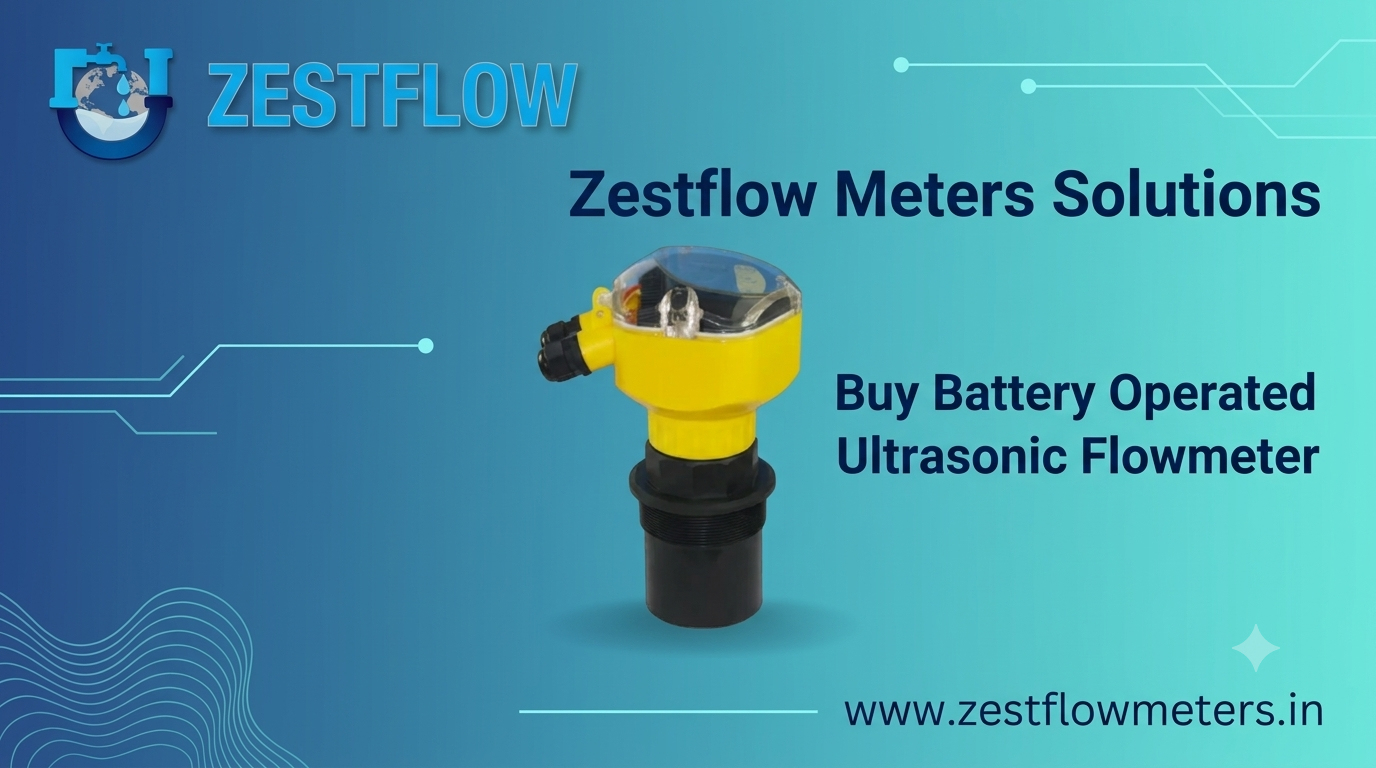
Buy Battery Operated Ultrasonic Flowmeter | Zestflow Meters Solutions
Accurate flow measurement is essential for industries that depend on efficient water management, liquid distribution, process monitoring, and resource conservation. Whether you manage a water treatment plant, an industrial facility, an agricultural irrigation system, or a commercial building, selecting the right flow measurement instrument can help improve operational control and reduce unnecessary water loss. If you are looking to buy a battery operated ultrasonic flowmeter, Zestflow Meters Solutions is a supplier worth considering for your flow measurement requirements.
A battery operated ultrasonic flowmeter combines ultrasonic measurement technology with battery-powered operation to measure liquid flow without always depending on an external electrical supply. Depending on the model, it may offer digital readings, accumulated flow measurement, and communication features for monitoring water consumption and supporting process management.
In this guide, we explain how a battery operated ultrasonic flowmeter works, its advantages, common applications, important selection criteria, and how to choose a suitable solution for your facility.
What Is a Battery Operated Ultrasonic Flowmeter?
A battery operated ultrasonic flowmeter is an instrument designed to measure the flow of liquids using ultrasonic signals. Its battery-powered design makes it suitable for installations where access to a continuous electrical supply is limited or where low-power operation is desirable.
Ultrasonic flowmeters generally use one of two common measurement methods: transit-time measurement or Doppler measurement. The appropriate method depends on the liquid characteristics and the intended application.
Transit-time ultrasonic flowmeters measure the difference in the travel time of ultrasonic signals moving with and against the direction of flow. The instrument uses this difference to calculate liquid velocity and, when the pipe dimensions are known, determine volumetric flow rate.
Doppler ultrasonic flowmeters use frequency shifts in reflected ultrasonic signals to estimate flow velocity. They are generally selected for liquids containing suitable suspended particles or bubbles.
Battery operation is a power-supply feature, not a separate measurement principle. Therefore, buyers should verify the actual sensing technology, installation method, and liquid compatibility of the specific model before purchasing.
Why Buy a Battery Operated Ultrasonic Flowmeter?
Choosing a battery operated ultrasonic flowmeter can be beneficial when reliable flow monitoring is needed in locations where conventional power connections are inconvenient.
1. Battery-Powered Operation
One of the main advantages is the ability to operate without a permanent mains power connection, depending on the instrument design. This can simplify installation in remote water distribution points, agricultural locations, utility networks, and other areas where electrical infrastructure is limited.
Battery life varies according to the battery type, measurement frequency, communication activity, ambient conditions, and operating settings. Always confirm the expected service life and replacement requirements with the supplier.
2. Efficient Water Monitoring
Flow measurement provides useful information about water consumption, distribution, and operational performance. By monitoring flow rates and totalized volume, facility operators can identify unusual consumption patterns and investigate possible leakage or process inefficiencies.
A suitable meter can also support routine reporting and help businesses compare water usage across different operating periods.
3. Digital Measurement and Readability
Depending on the model, an ultrasonic flowmeter may include a digital display that shows instantaneous flow rate, accumulated volume, and other measurement information. Clear readings help operators check system performance and record consumption more conveniently.
Before ordering, verify which values appear on the display and whether the required units of measurement are supported.
4. Potentially Lower Installation Requirements
Some ultrasonic flowmeters use external clamp-on transducers that attach to the outside of a compatible pipe. These models can measure flow without cutting the pipe or inserting a measuring element into the liquid.
However, not every battery operated ultrasonic flowmeter is clamp-on. Inline and dedicated ultrasonic water meter designs are also available. Confirm the construction and installation requirements of the selected model.
5. Support for Better Resource Management
Reliable flow data can help organizations improve water accountability, evaluate operating conditions, and plan maintenance. In facilities with multiple measurement points, a suitable flow monitoring strategy can help identify abnormal usage and prioritize corrective action.
The benefits depend on proper sizing, correct installation, suitable liquid conditions, and periodic verification.
Applications of Battery Operated Ultrasonic Flowmeters
Battery operated ultrasonic flowmeters can serve a range of applications when the selected instrument is compatible with the liquid, pipe, pressure, temperature, and operating environment.
Water Treatment Plants
Water treatment facilities need to monitor water movement through different treatment and distribution stages. A suitable ultrasonic flowmeter can help measure flow and support operational records at selected measurement points.
Agricultural Irrigation
Farmers and irrigation system operators can use suitable battery-powered water meters to monitor water distribution across pipelines and irrigation networks. Flow data can help assess water consumption and support more informed irrigation planning.
Industrial Manufacturing
Industrial facilities often need to monitor water and compatible process liquids for production, cooling, washing, and other operations. The correct flowmeter can provide useful measurements for process supervision and resource management.
Commercial Buildings and Utilities
Commercial buildings, campuses, and utility installations may benefit from flow monitoring at locations where electrical power is inconvenient to provide. The selected meter should meet the required measurement range and installation conditions.
Remote Water Distribution Networks
Remote monitoring points can be difficult to equip with continuous electrical power. Battery-operated instruments may offer a practical option when their power consumption, enclosure protection, and maintenance requirements suit the site.
Environmental and Infrastructure Projects
Water infrastructure and field projects may require flow readings at temporary or permanent locations. Depending on the model, a portable battery-powered meter or a dedicated battery-operated water meter may be appropriate.
Always confirm whether the intended product is designed for continuous installation, temporary measurements, or both.
How to Choose the Right Battery Operated Ultrasonic Flowmeter
Before you buy a battery operated ultrasonic flowmeter, evaluate the following technical and operational requirements.
1. Identify the Liquid
Start by identifying the liquid you need to measure. Water, treated wastewater, oils, and industrial liquids can have different acoustic properties and compatibility requirements.
For transit-time models, clean liquids with suitable acoustic transmission are generally preferred. Doppler models may be more suitable for certain liquids containing suspended particles or bubbles. Do not assume that one model works with every liquid.
2. Check the Pipe Diameter and Material
The meter must be compatible with your pipe size and construction. Pipe diameter, wall thickness, lining, and material can influence ultrasonic signal transmission and measurement performance.
Provide accurate pipe information when requesting a quotation. For clamp-on equipment, ask about the required straight pipe length and sensor mounting arrangement.
3. Confirm the Flow Range
Select a meter that covers both the expected minimum and maximum flow rates. A meter that is oversized or unsuitable for low-flow conditions may not provide the performance required by your application.
Consider normal operating flow, peak flow, possible reverse flow, and the measurement units needed for reporting.
4. Review Accuracy and Repeatability
Accuracy describes how closely a reading corresponds to the actual flow under specified conditions. Repeatability describes the ability to produce consistent readings under the same conditions.
Check the manufacturer’s specifications and understand the conditions under which the stated performance applies. Installation quality, pipe conditions, fluid properties, and calibration can all affect actual results.
5. Evaluate Battery Life
Ask about battery chemistry, rated operating life, replacement procedures, battery status indications, and the effects of communication or frequent measurement on energy consumption.
For remote installations, long battery life and straightforward maintenance can be particularly important.
6. Check Display and Communication Features
Determine whether you need only local readings or also require data logging, pulse output, an analog signal, or digital communication such as RS485 or Modbus.
These features vary by model and may not all be available on a battery-powered unit. Confirm the exact configuration before ordering.
7. Verify Environmental Protection
Outdoor and industrial installations may require protection against dust, water ingress, temperature extremes, vibration, or corrosive surroundings.
Check the enclosure protection rating and operating temperature limits of the complete instrument, including sensors and electronics where applicable.
8. Consider Installation and Maintenance
Ask whether the meter is inline, clamp-on, or designed as a dedicated water meter. Confirm installation clearances, commissioning requirements, service access, and availability of replacement batteries or accessories.
A suitable meter should fit both your technical requirements and your long-term maintenance plan.
Why Consider Zestflow Meters Solutions?
When choosing an industrial flow measurement supplier, product suitability and technical support are important considerations. Zestflow Meters Solutions lists flow measurement products, including ultrasonic flowmeter offerings, through its online presence and product listings.
Potential buyers can explore the company’s available products and request details about the battery operated ultrasonic flowmeter that best fits their application.
Before placing an order, request confirmation of the following:
Available model and measurement technology.
Supported liquid types and pipe sizes.
Flow range and stated accuracy.
Battery type and expected operating life.
Display, totalizer, and communication features.
Enclosure protection and operating conditions.
Price, warranty, delivery, and after-sales support.
You can visit the Zestflow Meters Solutions website to explore its flow measurement range and contact the supplier for product-specific information.
Benefits of Buying the Right Flowmeter
The value of a flowmeter goes beyond the initial purchase. A properly selected instrument can help improve visibility into water usage, provide consistent operating records, support maintenance planning, and identify possible flow abnormalities.
For example, an unexpected increase in recorded water consumption may prompt an operator to investigate leakage, a faulty valve, or a change in production demand. Similarly, flow records can help compare usage between shifts or operating periods.
These are potential operational benefits rather than guaranteed savings. The results depend on the accuracy of the measurement system, data quality, installation conditions, and how the information is used.
Installation and Maintenance Tips
Correct installation is essential for reliable flow measurement.
First, follow the manufacturer’s installation instructions and verify the recommended sensor position. For clamp-on transit-time instruments, ensure the pipe surface is suitable, the transducers are properly aligned, and the required coupling material is applied where specified.
Second, enter the correct pipe diameter, wall thickness, pipe material, and liquid information into the instrument when required. Incorrect configuration can lead to inaccurate readings.
Third, check for stable signal quality and compare readings with a suitable reference method during commissioning. Record the initial readings and installation details for future comparison.
Fourth, inspect the meter periodically. Check the battery status, display, sensor connections, enclosure condition, and any signs of water ingress or mechanical damage. Replace batteries according to the manufacturer’s instructions.
Finally, arrange verification or calibration at intervals appropriate to the application’s accuracy requirements and quality procedures.
Buy Battery Operated Ultrasonic Flowmeter: Request a Quotation
If your facility needs a practical solution for monitoring liquid flow, a battery operated ultrasonic flowmeter may be worth evaluating. The right choice depends on your application, liquid type, pipe dimensions, expected flow range, required accuracy, and available installation space.
Contact Zestflow Meters Solutions with your technical requirements and ask for a suitable model recommendation. Request a datasheet and a formal quotation before making your purchasing decision.
Providing complete application details can help the supplier identify a compatible configuration and clarify the features, delivery terms, and support available for your project.
Frequently Asked Questions (FAQs)
1. What is a battery operated ultrasonic flowmeter?
It is a flow measurement instrument that uses ultrasonic signals to determine liquid flow and operates using a battery rather than relying solely on a permanent external power supply.
2. How does an ultrasonic flowmeter measure liquid flow?
Transit-time models calculate flow using the difference in the travel time of ultrasonic signals moving with and against the liquid flow. Doppler models estimate flow from frequency shifts in reflected signals.
3. Can a battery operated ultrasonic flowmeter measure water?
Yes, suitable models can measure water. However, the selected instrument must match the water quality, pipe configuration, flow range, pressure, and temperature requirements.
4. Can ultrasonic flowmeters be installed without cutting the pipe?
Some clamp-on ultrasonic flowmeters attach to the outside of the pipe and do not require cutting it. Inline meters and dedicated ultrasonic water meters have different installation requirements.
5. How long does the battery last?
Battery life depends on the model, battery capacity, measurement frequency, communication features, and operating conditions. Obtain the manufacturer’s rated battery life for the specific instrument.
6. What industries use battery operated ultrasonic flowmeters?
Potential applications include water utilities, agriculture, irrigation, industrial manufacturing, commercial facilities, and remote water distribution networks, provided the selected model is suitable for the application.
7. What should I check before purchasing an ultrasonic flowmeter?
Check the liquid type, pipe diameter and material, flow range, accuracy, battery life, installation method, environmental protection, display, communication features, warranty, and service availability.
8. Where can I buy a battery operated ultrasonic flowmeter?
You can contact Zestflow Meters Solutions through its official website to inquire about available ultrasonic flowmeter models, specifications, pricing, and delivery.
9. Are battery operated ultrasonic flowmeters suitable for outdoor use?
Some models are designed for outdoor installations, but suitability depends on the enclosure rating, operating temperature, moisture exposure, and environmental conditions. Confirm the product specifications before installation.
10. How do I obtain the price of a battery operated ultrasonic flowmeter?
Request a quotation from the supplier and provide your required pipe size, liquid, flow range, installation type, and preferred features. Pricing depends on the selected model and configuration.
Conclusion
A battery operated ultrasonic flowmeter can be a useful choice for water and compatible liquid measurement where dependable monitoring and reduced reliance on permanent electrical power are important. With appropriate technology, correct sizing, and proper installation, it can help organizations monitor consumption, maintain operating records, and make more informed resource management decisions.
If you plan to buy a battery operated ultrasonic flowmeter, evaluate your technical requirements carefully and compare them with the manufacturer’s specifications. Zestflow Meters Solutions is a potential supplier to contact for available ultrasonic flowmeter options and product-specific guidance.