
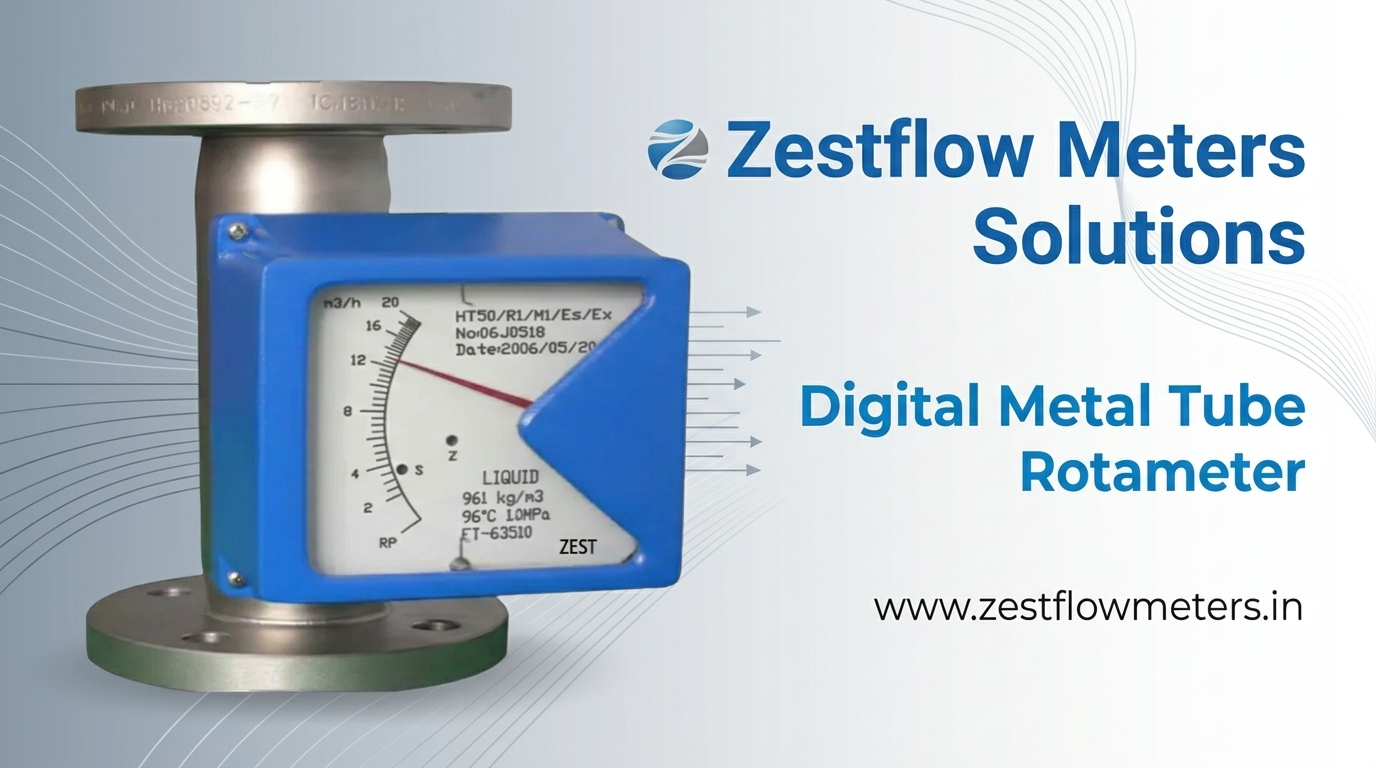
Digital Metal Tube Rotameter: Features, Benefits & Applications
Introduction
In modern industrial processes, accurate flow measurement is essential for maintaining product quality, improving efficiency, and controlling operating costs. Industries dealing with water, chemicals, gases, oil, pharmaceuticals, and other process fluids require reliable instruments that can provide consistent and easy-to-read flow measurements. A Digital Metal Tube Rotameter is one such flow measurement solution designed for applications where durability, accuracy, and clear digital monitoring are important.
If you are planning to buy a Digital Metal Tube Rotameter, choosing the right manufacturer and understanding the instrument’s features, applications, and benefits can help you make a better purchasing decision. Zestflow Meters Solutions provides industrial flow measurement solutions designed to meet the requirements of different process industries.
What Is a Digital Metal Tube Rotameter?
A Digital Metal Tube Rotameter is a variable-area flow meter used to measure the flow rate of liquids or gases through a pipeline. Unlike conventional glass-tube rotameters, metal-tube models are constructed with a robust metal measuring tube, making them suitable for demanding industrial environments.
The instrument generally works by allowing the process fluid to pass vertically through a tapered measuring tube. A float inside the tube moves according to the flow rate. As the flow increases, the float rises; when the flow decreases, the float moves downward.
The position of the float corresponds to the flow rate. In a digital metal tube rotameter, electronic components can provide digital indication and, depending on the model, additional output or monitoring capabilities.
Why Buy a Digital Metal Tube Rotameter?
Selecting the right flow meter is important because flow measurement directly affects process control and operational efficiency. A Digital Metal Tube Rotameter can provide several advantages for industrial applications.
1. Reliable Flow Measurement
The instrument is designed to measure the flow of different process media with consistent performance. This makes it useful for applications where monitoring flow is an important part of the production process.
2. Robust Metal Construction
The metal tube construction provides greater mechanical strength than many conventional transparent-tube flow meters. This makes metal-tube rotameters suitable for industrial environments where equipment may be exposed to vibration, pressure, temperature variations, or harsh operating conditions.
3. Digital Display
A digital indication system makes it easier for operators to monitor flow readings. Digital displays can reduce the difficulty associated with reading traditional analogue scales, particularly in industrial installations.
4. Suitable for Industrial Applications
Digital Metal Tube Rotameters can be used across various industries, including chemical processing, water treatment, pharmaceuticals, food processing, oil and gas, and general manufacturing.
5. Easy Flow Monitoring
A clear flow indication allows operators to quickly identify changes in the process flow rate. This can help with process monitoring and operational adjustments.
6. Compact and Practical Design
Rotameters generally have a relatively straightforward construction and can be integrated into different process piping arrangements depending on the selected model and connection configuration.
How Does a Digital Metal Tube Rotameter Work?
The working principle of a rotameter is based on the variable-area flow measurement principle.
When the process fluid enters the meter, it flows upward through the tapered metal tube. A float inside the tube is lifted by the fluid flow. Three primary forces influence the float:
- Upward force generated by the flowing fluid
- Downward gravitational force acting on the float
- Drag force created by the fluid
As the flow increases, the float rises. The area around the float increases as it moves upward through the tapered tube. Eventually, the forces acting on the float reach equilibrium.
The float’s position corresponds to a particular flow rate, which can then be displayed digitally depending on the instrument configuration.
This simple operating principle makes the rotameter a practical solution for many flow measurement applications.
Applications of Digital Metal Tube Rotameters
Digital Metal Tube Rotameters can be used in numerous industrial processes where accurate flow monitoring is required.
- Water Treatment Plants
Flow measurement is essential in water treatment systems for monitoring water movement through filtration, dosing, purification, and other processes.
- Chemical Industries
Chemical processing plants often need reliable flow measurement for liquids and gases. A suitable metal tube rotameter can be used to monitor process media according to the application’s pressure, temperature, and material compatibility requirements.
- Pharmaceutical Industry
Pharmaceutical manufacturing requires controlled process conditions. Flow meters can help monitor the movement of liquids and gases during different stages of production.
- Food and Beverage Processing
Flow measurement can be important in processes involving water, cleaning solutions, ingredients, and other fluids.
- Oil and Gas Industry
Industrial flow measurement instruments may be used for monitoring compatible liquids and gases in various process applications.
- Manufacturing Plants
General manufacturing facilities can use flow meters for utility water, compressed air, gases, cooling systems, and other process requirements.
- HVAC and Cooling Systems
Flow monitoring can help operators evaluate water circulation through cooling and heat-transfer systems.
Key Factors to Consider Before You Buy a Digital Metal Tube Rotameter
Before purchasing a Digital Metal Tube Rotameter, it is important to select a model according to the actual process requirements.
1. Type of Fluid
Identify whether you need to measure water, oil, chemical liquids, air, gases, or another medium. Fluid properties can influence meter selection and calibration.
2. Flow Range
Determine the minimum and maximum flow rates that need to be measured. Selecting the appropriate flow range helps ensure useful readings throughout the operating range.
3. Operating Pressure
Check the maximum operating pressure of the pipeline and ensure that the selected flow meter is suitable for the application.
4. Operating Temperature
Process temperature can affect both measurement performance and material selection. Always check the instrument’s specified temperature range.
5. Process Connection
The connection size and type should match the existing piping system or planned installation.
6. Material Compatibility
The wetted materials should be compatible with the process fluid, particularly when measuring corrosive chemicals or aggressive media.
7. Digital Output Requirements
If the meter needs to communicate with a control system, PLC, SCADA, or other monitoring equipment, check the available electronic outputs and communication options.
8. Installation Conditions
Consider the available installation space, pipeline orientation, accessibility, and surrounding environmental conditions before selecting the meter.
Benefits of Choosing the Right Flow Meter
A properly selected flow meter can contribute to better process management. Some important benefits include:
- Better process monitoring
- Improved operational control
- Easy flow-rate observation
- Reduced measurement uncertainty
- Reliable industrial operation
- Support for process optimization
- Compatibility with different industrial applications
- Better control of fluid consumption
However, actual performance depends on the instrument specifications, installation conditions, fluid properties, and calibration.
Why Choose Zestflow Meters Solutions?
Zestflow Meters Solutions focuses on providing flow measurement products and solutions for industrial applications. If you are looking to buy a Digital Metal Tube Rotameter, Zestflow Meters Solutions can help you identify a suitable product according to your application requirements.
When selecting an industrial flow meter, it is important to consider more than just the product price. The measuring range, process conditions, construction material, connection type, accuracy requirements, and installation environment should all be evaluated.
You can explore the company’s flow measurement solutions through the Zestflow Meters Solutions website.
Conclusion
A Digital Metal Tube Rotameter can be a practical solution for industries that require dependable flow measurement, robust construction, and convenient digital indication. Its variable-area operating principle provides a straightforward method of monitoring liquid or gas flow, while the metal construction makes it suitable for many industrial environments.
If you are planning to buy a Digital Metal Tube Rotameter, make sure you evaluate your application’s flow range, process media, pressure, temperature, connection requirements, and digital monitoring needs before selecting a model.
For industrial flow measurement requirements, Zestflow Meters Solutions offers flow measurement solutions designed for a wide range of applications. Visit the company’s website to explore available products and discuss your specific flow measurement requirements.