Buy IoT Based Water Meter in Delhi – Smart Water Management Solutions by Zestflow Meters Solutions
Water is one of the most important resources for residential, commercial and industrial activities. With increasing urban development, population growth and rising demand for water, proper water management has become essential. In a city like Delhi, where residential societies, commercial buildings, industries and infrastructure projects require a continuous water supply, monitoring water consumption is important for reducing wastage and improving distribution.
Traditional water meters provide basic consumption readings, but they often require manual inspection and meter reading. This process can be time-consuming, particularly when managing multiple water connections across large buildings, housing societies or industrial facilities. Smart water metering technology offers a more convenient way to monitor water consumption through digital communication and automated data collection.
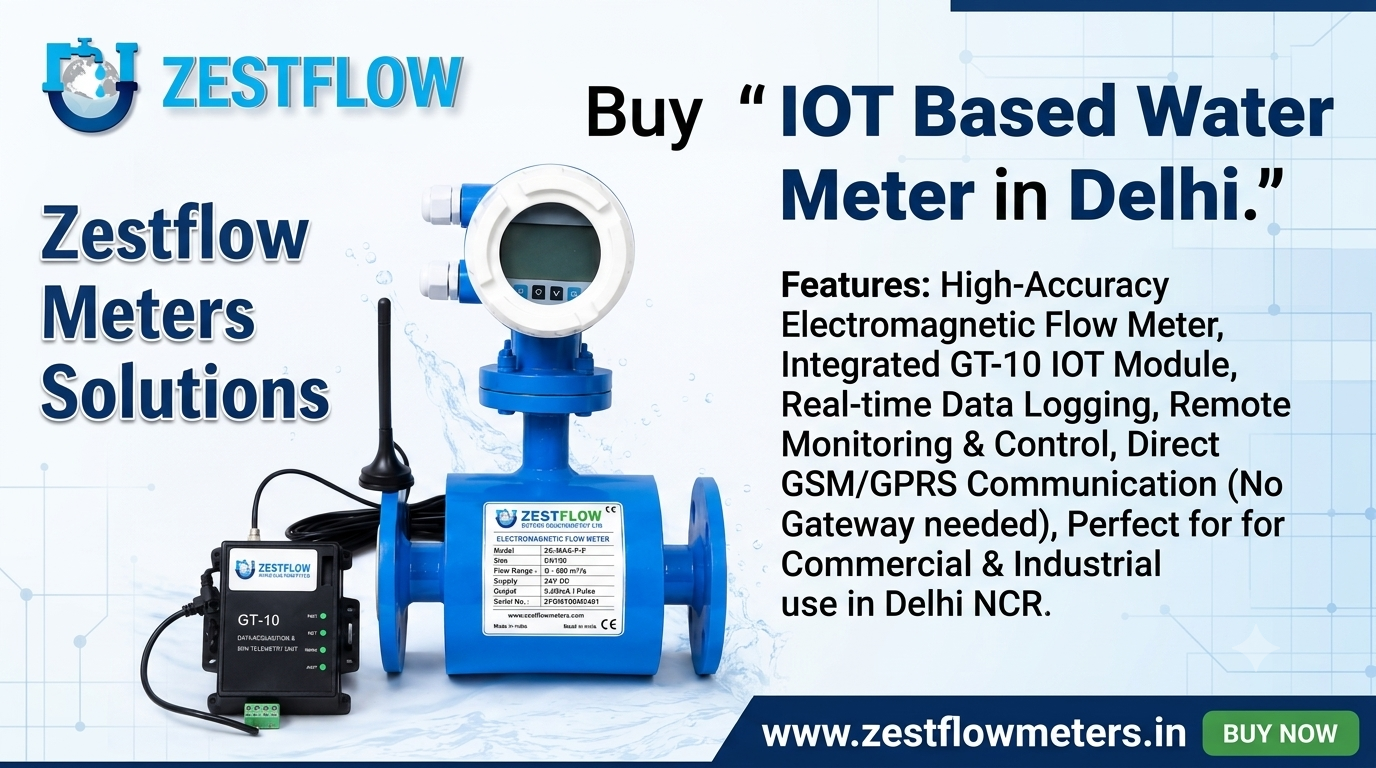
If you are planning to Buy IoT Based Water Meter in Delhi, Zestflow Meters Solutions offers water measurement and monitoring solutions designed to support modern water management requirements. IoT-based water meters combine digital measurement technology with communication capabilities, helping users access consumption information and improve monitoring processes.
Let’s understand how IoT-based water meters work, their advantages, applications and important factors to consider before choosing a suitable solution.
What Is an IoT Based Water Meter?
An IoT-based water meter is a smart water measurement device that uses Internet of Things technology to collect and communicate water consumption data. Unlike conventional meters that generally require manual readings, IoT-enabled meters can transmit measurement information through supported communication technologies.
These meters help users monitor water consumption remotely, depending on the communication system and software integration available with the device.
An IoT water metering system generally consists of:
Water Flow Measurement Unit: Measures the volume of water passing through a pipeline.
Digital Processing Unit: Processes the measurement data and generates consumption readings.
Communication Module: Transfers data through supported technologies such as GSM, GPRS, NB-IoT, LoRaWAN or other communication protocols.
Monitoring Platform: Displays consumption information through a compatible dashboard or software.
Power Supply: Provides the required power through a battery or external power source, depending on the model.
These components work together to provide better visibility into water consumption and help users make informed water management decisions.
Why Buy IoT Based Water Meter in Delhi?
Delhi has a wide range of water consumption requirements across residential, commercial and industrial sectors. From apartment complexes and shopping centres to manufacturing facilities and institutional buildings, different users need reliable water measurement systems.
An IoT-based water meter can make water monitoring more efficient by reducing dependence on manual meter reading and supporting remote access to consumption information.
Here are some important reasons to consider smart water metering solutions in Delhi.
1. Remote Water Consumption Monitoring
One of the major advantages of an IoT-based water meter is remote monitoring. Users can access water consumption readings through a compatible monitoring platform without physically visiting every meter installation.
This feature is particularly useful for housing societies, commercial properties and industrial facilities where multiple water meters are installed at different locations.
2. Accurate Digital Measurement
Digital water meters are designed to measure water flow and consumption according to their specified operating range and accuracy class. Reliable measurement helps property managers and facility operators understand how much water is being consumed.
The actual accuracy depends on the meter technology, installation conditions, calibration and product specifications.
3. Reduced Manual Meter Reading
Traditional water meter reading requires personnel to visit individual installations and record consumption data. This can become difficult when hundreds of meters are installed across different buildings.
IoT-based systems can automate data collection and communication, reducing the need for routine manual readings where the system supports automatic reporting.
4. Better Water Leakage Monitoring
Unusual water consumption patterns can indicate possible leakage or unexpected water usage. By reviewing consumption data regularly, users may identify abnormal flow conditions and investigate potential problems.
Some advanced monitoring platforms also support configurable alerts for unusual consumption or continuous flow. However, leakage detection depends on the meter, software and available monitoring features.
5. Improved Water Distribution Management
Smart water metering helps facility managers understand water consumption across different sections of a property. This information can support better planning, water distribution and resource management.
For example, a residential society can monitor water usage in individual blocks and compare consumption patterns to identify areas where water-saving measures may be required.
6. Better Data Collection and Reporting
IoT-enabled water meters can provide consumption records at configured intervals, depending on their communication and storage capabilities.
These records can help organisations analyse usage trends, prepare reports and improve water management decisions.
Applications of IoT Based Water Meters
IoT water meters can be used in several sectors where water consumption monitoring and measurement are important.
Residential Apartments and Housing Societies
Large residential societies in Delhi often have multiple water connections and distribution lines. Managing water consumption manually can create additional work for maintenance teams.
Smart water meters can help housing societies monitor individual connections, track consumption and improve transparency in water usage records.
They can also support consumption-based billing when integrated with a suitable billing system.
Commercial Buildings and Offices
Shopping malls, office complexes, hotels and commercial buildings consume water for different activities, including sanitation, cleaning, cooling and general operations.
IoT-based water metering solutions can help facility managers monitor consumption across different areas and identify opportunities to improve water efficiency.
Industrial Facilities
Manufacturing units and industrial plants use water in production processes, cooling systems, cleaning operations and utility management.
Smart metering can help industrial operators monitor water consumption at different stages and maintain better records of water usage.
Depending on the application, suitable meter technology should be selected according to pipe size, flow rate, water quality and operating conditions.
Hotels and Hospitals
Hotels and hospitals require continuous water supply for daily operations. Monitoring water consumption helps facility managers understand usage patterns and investigate unexpected changes.
IoT-enabled metering systems can provide useful consumption information for maintenance and resource planning.
Infrastructure and Construction Projects
Construction sites and infrastructure projects may require water for concrete preparation, dust suppression, cleaning and other activities.
Digital water meters with IoT communication can support consumption tracking and help project managers maintain water usage records.
Municipal Water Distribution
Municipal water management systems involve monitoring water supply across multiple distribution points. Smart water meters can support digital monitoring initiatives when integrated with compatible communication networks and management platforms.
How Does an IoT Water Meter Work?
An IoT-based water metering system combines water measurement with digital communication.
The basic working process includes the following steps:
Step 1: Water Flow Measurement
Water passes through the meter installed in the pipeline. The measurement unit detects the flow and calculates the quantity of water consumed.
Step 2: Data Processing
The electronic unit processes the measurement signals and generates consumption readings.
Step 3: Data Transmission
The communication module transfers the recorded information to a monitoring platform using the supported communication technology.
Step 4: Remote Monitoring
Authorised users can access the readings through a compatible dashboard, application or software interface.
Step 5: Data Analysis
Users can review consumption history, compare readings and identify unusual changes in water usage.
This process helps improve the visibility of water consumption and reduces the effort involved in collecting readings manually.
Important Features to Consider Before Buying an IoT Based Water Meter
Selecting the right water meter is important for achieving reliable measurement and long-term performance. Before choosing an IoT-based water meter in Delhi, consider the following factors.
1. Meter Technology
Different water measurement technologies are available, including electromagnetic, ultrasonic and mechanical measurement systems.
The appropriate technology depends on the water quality, pipe diameter, flow range and application requirements.
2. Pipe Size and Flow Range
Check the pipeline diameter and expected minimum, normal and maximum flow rates before selecting a meter. Choosing a suitable meter size helps support reliable measurement.
3. Communication Technology
Confirm which communication technology is supported by the meter. Common options include GSM, GPRS, NB-IoT and LoRaWAN.
The communication method should be compatible with the network coverage and monitoring infrastructure at the installation location.
4. Data Monitoring Platform
Check whether the meter supports a compatible dashboard or software platform. The system should provide convenient access to water consumption readings and historical records.
5. Battery and Power Requirements
Battery-powered models can be useful for installations where an external power connection is difficult. Check the expected battery life, reporting frequency and replacement requirements.
6. Installation Requirements
Correct installation is essential for accurate water measurement. Consider pipeline conditions, straight pipe requirements, flow direction, mounting position and operating pressure.
7. Maintenance and Technical Support
Choose a solution with suitable documentation, installation guidance and technical assistance. Regular inspection and maintenance can help maintain reliable operation.
Benefits of Smart Water Metering for Delhi
Smart water metering can support more responsible water management across Delhi’s residential and commercial infrastructure.
Some of its major benefits include:
Better visibility into water consumption.
Reduced dependence on manual meter reading.
Easier monitoring of multiple water connections.
Improved consumption reporting.
Identification of unusual usage patterns.
Support for water conservation initiatives.
Better planning for water distribution.
Integration possibilities with suitable digital management systems.
These benefits make IoT-based water metering an important option for organisations looking to modernise their water management infrastructure.
Why Choose Zestflow Meters Solutions?
When selecting a water measurement solution, it is important to work with a company that understands industrial measurement and monitoring requirements.
Zestflow Meters Solutions provides solutions related to water flow measurement, digital metering and monitoring applications. Its product range and technical offerings can help customers explore suitable measurement options for different applications.
Customers looking to Buy IoT Based Water Meter in Delhi should evaluate their installation requirements and discuss important specifications before selecting a product.
Zestflow Meters Solutions can be considered for water measurement requirements involving:
Digital water flow measurement.
Smart water metering applications.
Industrial water monitoring.
Flow measurement for commercial facilities.
Digital measurement and monitoring solutions.
Water management applications.
To explore available products and solutions, visit the official website: Zestflow Meters Solutions.
Before placing an order, customers should confirm the available IoT communication options, monitoring platform compatibility, meter specifications and technical support requirements.
How to Select the Right IoT Water Meter for Your Application
The best water meter depends on how and where it will be installed. A meter designed for a residential apartment may not be suitable for a large industrial pipeline.
Consider these practical steps before purchasing:
Identify the purpose of water measurement.
Check the pipeline diameter.
Calculate the expected water flow range.
Understand the water quality and operating conditions.
Select the required communication technology.
Confirm compatibility with the monitoring platform.
Review accuracy, operating pressure and environmental specifications.
Discuss installation and maintenance requirements.
For example, a residential society may require individual consumption monitoring and automated reporting, while an industrial plant may need continuous monitoring of water flow across multiple production areas.
Defining these requirements before purchasing can help avoid compatibility issues and ensure that the selected solution meets operational expectations.
The Future of IoT-Based Water Metering in Delhi
The demand for digital infrastructure is increasing as cities adopt smarter approaches to resource management. Water monitoring is an important part of this development.
IoT-based water meters can contribute to smart water management by connecting measurement devices with digital systems. This connectivity can help property managers, industries and water distribution operators access useful consumption information.
Future developments may include advanced analytics, automated billing integration, predictive maintenance and improved water leakage monitoring.
As communication networks and digital monitoring technologies continue to develop, smart water metering is expected to play an increasingly important role in modern water management systems.
For residential complexes, commercial properties and industrial facilities in Delhi, adopting suitable smart metering solutions can be a practical step towards better water consumption management.
Frequently Asked Questions (FAQs)
1. What is an IoT-based water meter?
An IoT-based water meter is a digital measurement device that records water consumption and communicates the readings to a compatible monitoring platform through supported communication technologies.
2. Where can I Buy IoT Based Water Meter in Delhi?
You can explore water measurement and monitoring solutions from Zestflow Meters Solutions through its official website at https://zestflowmeters.in/. Confirm product availability and specifications before purchasing.
3. How does an IoT water meter work?
It measures water flowing through a pipeline, processes the consumption data and transmits the readings to a compatible monitoring system using an available communication network.
4. What communication technologies are used in IoT water meters?
Depending on the model, IoT water meters may support GSM, GPRS, NB-IoT, LoRaWAN or other communication technologies.
5. Can IoT water meters monitor water consumption remotely?
Yes. Models with compatible communication and monitoring platforms can send consumption readings to authorised users for remote monitoring.
6. Are IoT water meters suitable for residential societies?
Yes. They can be used in residential apartments and housing societies to monitor individual connections, collect consumption data and support automated reporting.
7. Can an IoT water meter help identify water leakage?
It can help identify unusual consumption patterns and continuous flow conditions. Advanced systems may also provide alerts, depending on their software capabilities.
8. Are IoT-based water meters suitable for industrial applications?
Yes. Suitable models can be installed in industrial facilities for monitoring water consumption, provided their flow range, material, pressure and measurement technology match the application.
9. What should I check before purchasing an IoT water meter?
Check the pipe size, flow range, measurement accuracy, communication technology, power requirements, monitoring software compatibility and installation conditions.
10. Why is smart water metering important?
Smart water metering improves access to consumption data, supports remote monitoring, reduces manual reading work and helps organisations make better water management decisions.
Conclusion
Smart water management is becoming increasingly important for residential societies, commercial buildings, industries and infrastructure projects in Delhi. Traditional water meters provide basic consumption information, but IoT-based solutions offer additional capabilities through digital communication and remote monitoring.
If you are planning to Buy IoT Based Water Meter in Delhi, consider the measurement technology, pipeline requirements, communication options and monitoring platform before making a decision.
Zestflow Meters Solutions offers water measurement and monitoring solutions for different applications. Explore its official website to learn more about available products and identify a suitable solution for your water management requirements.