
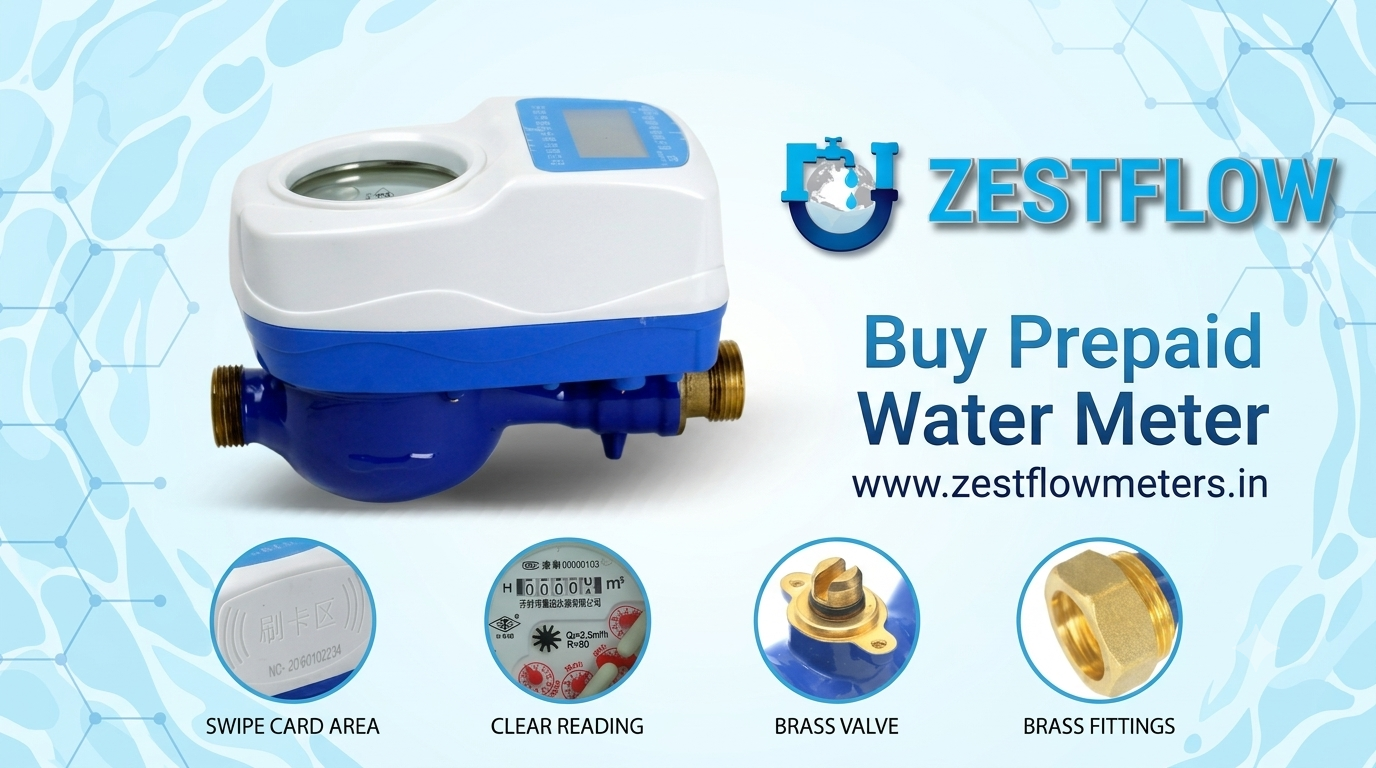
Prepaid Water Meter in India: A Smarter Approach to Water Management | Zestflow Meters Solutions
Introduction
Water is one of our most valuable natural resources, and managing it efficiently has become increasingly important for homes, residential societies, commercial buildings, industries, and public water utilities. As cities grow and water demand increases, accurate measurement, transparent billing, and responsible consumption are essential for sustainable water management.
A Prepaid Water Meter in India offers a modern approach to monitoring water consumption and managing payments. Instead of relying exclusively on traditional billing after water has been consumed, a prepaid system allows users to pay in advance and monitor their available water credit, depending on the system’s design.
Zestflow Meters Solutions focuses on the importance of smart metering approaches that can support better water monitoring, improve accountability, and encourage responsible water usage. By understanding prepaid water metering technology, property owners, facility managers, and water service providers can make more informed decisions about their water management requirements.
What Is a Prepaid Water Meter?
A prepaid water meter is a device designed to measure water consumption while operating with a prepayment mechanism. Users add credit to an account, card, or connected system before consuming water. The meter records the volume of water used and deducts the corresponding amount or units from the available balance according to the configured tariff.
Depending on the model, a prepaid water meter may use an electronic display, smart card, keypad, mobile application, online recharge platform, or communication technology to manage credit and consumption information.
Unlike a conventional meter that primarily measures consumption for periodic billing, a prepaid water meter can combine measurement with advance payment management. Some models also provide remote monitoring, consumption reports, low-credit alerts, and automated valve control.
The precise features depend on the selected product, communication infrastructure, software, and installation requirements.
Why Is a Prepaid Water Meter in India Becoming an Important Solution?
India faces diverse water management challenges, including growing urban populations, pressure on local water resources, distribution inefficiencies, and the need for reliable consumption records. Residential communities, commercial properties, and industrial facilities increasingly need practical ways to understand where water is being consumed and how charges are calculated.
Prepaid Water Meter in India can support these objectives by connecting measured consumption with a defined payment system.
For apartment complexes, it can help manage individual consumption across multiple flats. Commercial establishments can use metering to improve visibility into water usage across their premises. Industrial facilities may benefit from monitoring water consumption in different operational areas, subject to suitable meter specifications.
For utilities and property managers, prepaid metering can also support more structured collection processes and reduce certain administrative tasks associated with conventional billing.
However, prepaid water metering is not a universal replacement for every existing billing arrangement. Its suitability depends on local regulations, the water supply model, tariff policies, infrastructure, and the needs of the end users.
Key Benefits of Prepaid Water Meters
1. Better Control Over Water Consumption
One of the most useful benefits of prepaid water metering is improved awareness of consumption. When users can see how much water they have consumed or how much credit remains, they may become more conscious of everyday usage.
This visibility can encourage practical habits such as repairing leaking taps, avoiding unnecessary water use, and choosing water-efficient fixtures.
For property managers, consumption records may help identify unusual usage patterns that deserve further investigation.
2. Transparent Payment Management
Traditional billing systems may require users to wait until a billing cycle ends before they understand their total charges. A prepaid system can provide a clearer connection between available credit, measured consumption, and payment activity.
Depending on the tariff and software, users may be able to review their balance, recharge history, and consumption records.
This transparency can improve communication between property managers and residents, particularly in multi-occupancy buildings where individual water usage needs to be tracked.
3. Convenient Recharge Options
Depending on the model and service arrangement, users may be able to recharge through an online portal, mobile application, smart card, authorized payment point, or another supported method.
Convenient recharge options can reduce the need for manual payment collection and make balance management easier for residents and facility teams.
Before choosing a meter, buyers should verify the supported payment methods, transaction processing time, service availability, and procedures for resolving unsuccessful recharges.
4. Improved Billing and Record Keeping
Prepaid water metering can simplify some billing and accounting processes by linking measured consumption with credit transactions.
Digital records can help authorized administrators review consumption, payment history, and account activity. Where multiple meters are installed, a compatible management platform may also make it easier to organize information by apartment, tenant, building, or operational unit.
The extent of automation depends on the metering and software solution selected.
5. Reduced Manual Administration
Manual meter reading, spreadsheet-based records, payment follow-ups, and billing disputes can create administrative work for property managers.
A suitable prepaid metering system may reduce some of these tasks through electronic readings, automated records, and supported monitoring features.
Nevertheless, periodic inspections, meter maintenance, account reconciliation, and customer support may still be required.
6. Support for Responsible Water Use
Water conservation requires more than installing a meter. Users also need access to understandable information and practical ways to improve their habits.
A prepaid water meter can make consumption more visible, helping households and organizations recognize patterns that may otherwise go unnoticed.
When combined with leak detection, plumbing maintenance, efficient fixtures, and awareness programs, metering can become part of a broader water conservation strategy.
How Does a Prepaid Water Meter Work?
The operating process varies by product, but most prepaid water metering systems follow a similar sequence.
Step 1: Meter installation
A suitable meter is installed on the designated water supply connection. The meter’s size, flow range, pressure rating, material, and installation orientation should match the intended application and site conditions.
Step 2: Account or user configuration
The user or property manager receives an account, card, identifier, or another method of accessing the prepaid system.
Step 3: Adding prepaid credit
The user purchases or adds credit through a supported recharge channel. The system records the transaction and updates the available balance after successful processing.
Step 4: Measuring water consumption
As water passes through the meter, the device measures the volume consumed. The system applies the configured charging rules to calculate the corresponding usage or deduction.
Step 5: Monitoring the remaining balance
Depending on the features available, users may check their remaining credit or consumption through a display, application, card reader, or management platform.
Step 6: Low-credit management
Some systems provide warnings when the available balance becomes low. Models with automatic valve control may restrict the supply when credit is exhausted, subject to their configuration and applicable operating rules.
Buyers should confirm how emergency credit, reconnection, power failures, communication interruptions, and disputed readings are handled before installation.
Applications of Prepaid Water Metering
Residential Apartments and Housing Societies
Large residential communities often need a practical way to track individual water consumption. Prepaid water meters can help property managers allocate consumption-based charges and give residents better visibility into their usage.
They may be particularly useful where individual apartments have separate connections and the plumbing arrangement supports accurate measurement.
Commercial Buildings
Offices, retail complexes, hotels, hostels, and other commercial properties may use separate meters to monitor consumption across tenants or different areas of a building.
Prepaid systems can help establish clearer payment arrangements when supported by the property’s management policies and local rules.
Industrial Facilities
Factories and industrial facilities may require water monitoring for cleaning, cooling, processing, or other operational activities.
A suitable meter can help track consumption by department or process. Industrial buyers should pay particular attention to flow capacity, water quality, operating pressure, durability, and compatibility with the site’s monitoring system.
Institutional Properties
Schools, colleges, hospitals, and institutional campuses may benefit from structured water monitoring across buildings or facilities.
However, any prepaid arrangement in essential-service environments must be assessed carefully to ensure that water access, public health requirements, and applicable policies are protected.
Commercial Water Distribution and Managed Supply Systems
Where permitted and appropriately designed, prepaid metering can support controlled water distribution arrangements. The system should provide clear information about tariffs, payment procedures, maintenance responsibilities, and service continuity.
How to Choose the Right Prepaid Water Meter in India
Selecting a meter requires more than comparing purchase prices. The right choice should reflect the water supply conditions, intended users, operating environment, and long-term maintenance requirements.
1. Check measurement accuracy. Review the manufacturer’s specifications, approved testing information, applicable standards, and suitability for the intended flow range.
2. Select the correct meter size. A meter must suit the pipe connection and expected water demand. An incorrectly sized meter may perform poorly under actual operating conditions.
3. Understand the technology. Compare mechanical, electronic, card-based, and connected options according to the required features. Confirm whether remote communication is necessary or optional.
4. Review recharge facilities. Ensure that the supported payment channels are convenient for users and that the recharge process has clear transaction records.
5. Evaluate software compatibility. If the meter will connect to a building management platform, billing application, or central monitoring system, verify compatibility before purchasing.
6. Ask about maintenance. Check service arrangements, warranty terms, spare parts, installation support, and procedures for meter testing or replacement.
7. Consider total ownership cost. Compare the purchase price alongside installation, communication charges, software fees, servicing, and expected operating costs.
8. Review local requirements. Confirm that the proposed metering and charging arrangement is permitted under applicable water supply rules, tenancy arrangements, and local authority requirements.
Why Consider Zestflow Meters Solutions?
Zestflow Meters Solutions is the brand featured in this article for readers exploring modern metering approaches and water management solutions.
When evaluating Zestflow Meters Solutions or any other supplier, prospective customers should focus on the suitability of the proposed equipment, clarity of technical information, installation guidance, after-sales support, and compatibility with their operational requirements.
A reliable selection process should begin with a clear understanding of the application. Residential societies may prioritize individual consumption records and easy account management, while commercial and industrial customers may need greater monitoring capabilities and integration with existing systems.
Customers should request the relevant product specifications, supported prepaid technologies, applicable certifications, warranty information, and a detailed quotation before making a purchasing decision.
By comparing these details carefully, buyers can identify a solution that aligns with their water management goals instead of choosing a meter based on price alone.
Installation and Maintenance Best Practices
Correct installation is essential for dependable metering performance. Before installation, inspect the pipework, confirm the meter’s flow and pressure requirements, and follow the manufacturer’s instructions for positioning and commissioning.
Where required by the design, ensure that suitable strainers, valves, fittings, and protective enclosures are installed. The meter should remain accessible for inspection, reading, testing, and servicing.
After installation, verify that the device registers water flow correctly and that the prepaid balance updates as intended. Test the recharge process and confirm that the user interface displays understandable information.
Property managers should maintain records of installation dates, meter identifiers, maintenance activities, and reported faults. Periodic inspections can help identify leakage, damaged components, unusual consumption, or communication problems.
Users should also know how to report a suspected meter fault, request a reading check, and resolve payment or account issues.
The Future of Smart Water Management in India
Digital metering is one component of the wider movement toward more efficient resource management. As connected devices, digital payment services, and data monitoring platforms develop, water managers have more opportunities to improve consumption visibility and administrative efficiency.
Prepaid water metering may become useful in applications where advance payment, individual accountability, and consumption tracking align with the needs of the property and the applicable regulatory framework.
Future improvements may include better remote monitoring, easier recharge interfaces, more detailed consumption reports, and integration with leak detection or building management systems. These capabilities depend on the product, communications infrastructure, and service provider.
Technology alone cannot solve water scarcity. Sustainable outcomes also require reliable infrastructure, fair tariffs, responsible maintenance, public awareness, and policies that protect equitable access to essential water services.
For this reason, choosing a prepaid meter should be part of a wider water management plan rather than an isolated equipment purchase.
Frequently Asked Questions (FAQs)
1. What is a prepaid water meter in India?
A prepaid water meter measures water consumption and connects usage with a prepaid credit system. Users add credit in advance, and the system tracks consumption according to its configured charging rules.
2. What are the main benefits of prepaid water meters?
Potential benefits include better consumption visibility, more transparent payment records, convenient recharge options, improved administration, and greater awareness of water usage. Actual benefits depend on the system and its implementation.
3. Where can prepaid water meters be installed?
Depending on the product and local requirements, they may be suitable for apartments, housing societies, commercial buildings, selected industrial applications, and institutional properties.
4. Can a prepaid water meter be recharged online?
Some models support online recharge through a website, mobile application, or integrated payment platform. Buyers should confirm which recharge methods are available for their selected system.
5. Do prepaid water meters automatically stop the water supply?
Some models include an electronically controlled valve that can restrict the supply when credit is exhausted. Other meters only measure consumption or require a different operating arrangement. Confirm the product specifications and applicable service rules.
6. How much does a prepaid water meter cost in India?
The cost depends on meter size, measurement technology, communication features, valve functionality, software, installation, and service requirements. Request a quotation based on the specific application rather than relying on a generic price estimate.
7. Are prepaid water meters suitable for apartment societies?
They can be suitable where individual connections, plumbing layouts, management policies, and local regulations support separate metering and prepaid payment arrangements.
8. What should I check before buying a prepaid water meter?
Review accuracy specifications, flow capacity, pipe size, recharge options, software compatibility, installation requirements, warranty, service support, and compliance with applicable rules.
9. How does a prepaid water meter encourage conservation?
By making consumption and remaining credit more visible, it can encourage users to pay closer attention to water usage and identify avoidable waste. Conservation outcomes also depend on user behavior and infrastructure quality.
10. How can I enquire about prepaid water meter solutions from Zestflow Meters Solutions?
Contact Zestflow Meters Solutions through its verified official business channels. Share your application, required meter size, expected flow range, installation location, and preferred monitoring or recharge features to obtain suitable product information and a quotation.
Conclusion
A Prepaid Water Meter in India can offer a practical way to combine water consumption measurement with advance payment management. By improving consumption visibility, supporting clearer payment records, and simplifying selected administrative processes, prepaid metering can help residential communities, commercial properties, and suitable industrial facilities manage water more systematically.
The right solution depends on measurement requirements, installation conditions, technology, operating costs, user needs, and local regulations. Buyers should evaluate these factors carefully and confirm the capabilities of the specific product before proceeding.
Zestflow Meters Solutions is a relevant brand to consider when researching water metering options. Prospective customers should request verified technical specifications, installation details, warranty terms, and service information to determine whether a proposed solution meets their requirements.
With appropriate equipment, responsible implementation, and consistent maintenance, prepaid water metering can contribute to more informed water use and better-managed water services across India.
Explore your water metering requirements with Zestflow Meters Solutions and take an informed step toward smarter water management.