
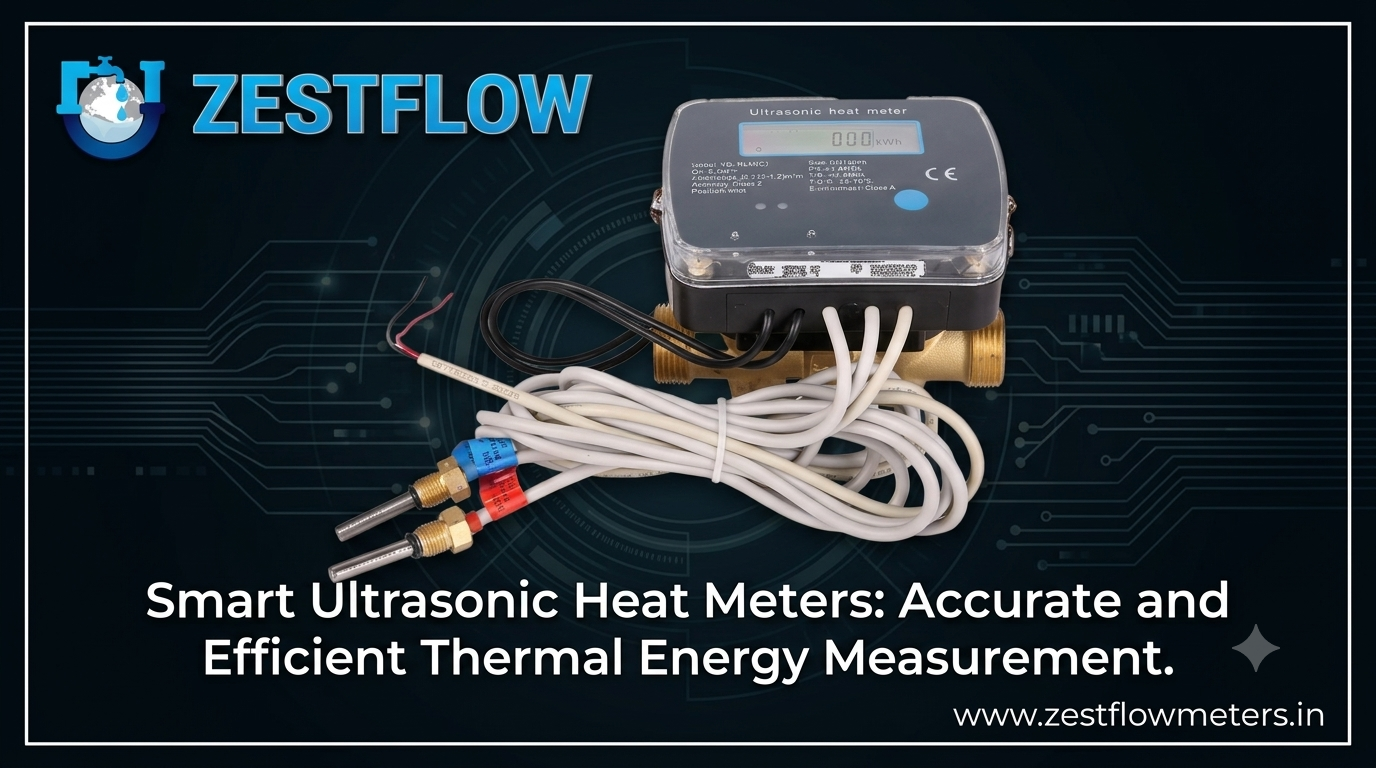
Smart Ultrasonic Heat Meters: Accurate and Efficient Thermal Energy Measurement
Introduction
Accurate measurement of thermal energy is important for modern heating, cooling, commercial, residential, and industrial systems. As businesses focus more on energy efficiency and better resource management, conventional measurement methods are increasingly being replaced by advanced digital technologies. Smart Ultrasonic Heat Meters provide an intelligent solution for measuring thermal energy while offering reliable flow and temperature data.
Zestflow Meters Solutions provides advanced instrumentation and measurement solutions for industrial and utility applications. Its product portfolio includes ultrasonic flow meters, ultrasonic heat meters, digital water flow meters, IoT-based water meters, and other process measurement instruments.
A smart ultrasonic heat meter combines flow measurement with temperature measurement to determine the amount of thermal energy transferred through a system. This makes it useful for heating, cooling, energy monitoring, and consumption management applications.
What Are Smart Ultrasonic Heat Meters?
Smart Ultrasonic Heat Meters are electronic thermal energy measuring devices designed to calculate the amount of heat or cooling energy transferred through a fluid-based system.
Unlike a basic flow meter that primarily measures the volume or flow rate of a fluid, a heat meter uses multiple measurements. It generally combines the flow rate with supply and return temperature measurements and calculates the thermal energy transferred over time.
The ultrasonic technology measures fluid flow without relying on traditional mechanical moving parts. Temperature sensors measure the difference between the supply and return lines. The meter’s calculator then processes these measurements to determine the energy transferred.
This makes ultrasonic heat metering useful where operators need more than simple flow information.
How Does a Smart Ultrasonic Heat Meter Work?
The operating principle of a smart ultrasonic heat meter involves three major measurement functions:
1. Flow measurement
2. Supply and return temperature measurement
3. Thermal energy calculation
Ultrasonic sensors send and receive ultrasonic signals through the flowing fluid. The difference in transit time of the ultrasonic signals can be used to determine the flow characteristics.
At the same time, temperature sensors measure the temperature of the fluid entering and leaving the heating or cooling system.
The meter uses the measured flow and temperature difference to calculate thermal energy. In simple terms, the greater the quantity of fluid and the temperature difference, the greater the amount of thermal energy transferred.
Because heat metering depends on both flow and temperature measurements, correct sensor installation, configuration, and system selection are important for reliable results.
Key Features of Smart Ultrasonic Heat Meters
Smart Ultrasonic Heat Meters can provide several useful features for modern energy management systems.
1. Ultrasonic Flow Measurement
Ultrasonic technology provides non-mechanical flow measurement. This can reduce concerns associated with mechanical wear in applications where continuous measurement is required.
2. Thermal Energy Measurement
The primary purpose of a heat meter is to calculate the thermal energy transferred through a heating or cooling circuit. This makes the instrument useful for energy monitoring and consumption analysis.
3. Temperature Difference Measurement
The meter uses temperature measurements from the supply and return lines. The temperature difference, often called Delta T, is an important part of thermal energy calculation.
4. Digital Data
Smart electronic meters can provide digital information for monitoring and data collection. Depending on the selected configuration, communication capabilities can help integrate measurement systems with automation or monitoring platforms.
Zestflow’s broader instrumentation portfolio includes digital and IoT-enabled measurement solutions designed for data monitoring and integration with automation systems.
5. Low Mechanical Wear
Since ultrasonic measurement does not depend on a traditional mechanical impeller for flow sensing, there are fewer mechanical components involved in the measurement process.
6. Smart Monitoring
Modern thermal energy meters can be incorporated into building or industrial monitoring systems, helping operators collect information about energy consumption and system performance.
Benefits of Using Smart Ultrasonic Heat Meters
Choosing the right thermal energy measurement technology can help organizations improve their understanding of energy usage.
- Improved Energy Monitoring
A heat meter provides information about the thermal energy transferred through a system. This helps facility managers identify consumption patterns and monitor energy usage.
- Better System Management
By monitoring flow and temperature differences, operators can gain useful information about heating and cooling system performance.
- Reduced Manual Monitoring
Digital measurement reduces dependence on manual readings. Data can be monitored electronically, depending on the meter’s communication and system configuration.
- Supports Energy Efficiency
Accurate energy measurement is an important part of energy management. When users understand where and how thermal energy is being consumed, they can identify opportunities for improving system efficiency.
- Suitable for Modern Automation
Smart measurement systems can be connected with building management systems, industrial automation platforms, data acquisition systems, or other monitoring infrastructure when compatible communication interfaces are available.
Zestflow also offers IoT-based metering technology that can collect sensor data and communicate it through digital interfaces and cloud-connected systems.
Applications of Smart Ultrasonic Heat Meters
Smart Ultrasonic Heat Meters can be used in several applications where thermal energy measurement is required.
- Commercial Buildings
Commercial buildings with centralized heating or cooling systems can use thermal energy meters to monitor energy consumption across different zones or facilities.
- Residential Buildings
Multi-unit residential buildings can use heat metering for consumption monitoring and energy management. Heat meters are commonly associated with district heating and shared hydronic heating systems.
- District Heating Systems
District heating networks distribute thermal energy from a central source to multiple buildings. Heat meters can help measure the energy delivered to individual buildings or users.
- HVAC Systems
Heating, ventilation, and air-conditioning systems can benefit from thermal energy measurement for performance monitoring and energy management.
- Industrial Plants
Industrial facilities often use heating and cooling systems as part of their manufacturing processes. Thermal energy measurement can help operators understand energy consumption and monitor process performance.
- Chiller and Cooling Systems
Heat meters can also be used to measure cooling energy in suitable hydronic systems. Thermal energy monitoring can help operators evaluate the performance of cooling systems.
- Solar Thermal Systems
Heat meters can be used in suitable solar thermal installations to measure the amount of thermal energy generated or transferred by the system.
Why Choose Zestflow Meters Solutions?
Zestflow Meters Solutions focuses on industrial instrumentation and process measurement technologies. Its product portfolio includes electromagnetic flow meters, digital water flow meters, ultrasonic flow meters, ultrasonic heat meters, water meters, IoT-based flow meters, level measurement instruments, and analytical instruments.
Zestflow emphasizes precision measurement, automation, customization, technical support, and application-specific solutions.
For businesses searching for Smart Ultrasonic Heat Meters, selecting a supplier that understands flow measurement and industrial instrumentation can make the product selection process easier.
The correct meter should match the application’s measurement requirements rather than simply being selected based on price.
How to Select the Right Smart Ultrasonic Heat Meter
Before purchasing a Smart Ultrasonic Heat Meter, consider the following factors:
- Pipe Size
Select a meter compatible with the existing pipeline size and installation arrangement.
- Flow Range
The expected minimum, normal, and maximum flow rates should be considered to ensure appropriate measurement performance.
- Temperature Range
Check the operating temperature of the heating or cooling fluid before selecting the meter and temperature sensors.
- Measurement Medium
Confirm that the meter is suitable for the fluid being measured and the intended heating or cooling application.
- Installation Conditions
Proper installation is important for accurate flow and temperature measurement. Follow the manufacturer’s installation instructions and ensure the temperature sensors are correctly positioned.
- Communication Requirements
If the meter needs to communicate with a monitoring or automation system, check for available communication interfaces and protocols before purchase.
- Application Requirements
A meter intended for building energy monitoring may have different requirements from an industrial process application or a regulated billing system.
Installation and Maintenance Considerations
Correct installation is essential for obtaining reliable thermal energy measurements. Flow sensors and temperature sensors should be installed according to the manufacturer’s instructions.
Temperature sensors are particularly important because incorrect sensor positioning, mismatched sensors, or incorrect configuration can affect the calculated energy value.
Operators should also periodically inspect the installation, electrical connections, communication interfaces, and sensor condition. Regular checks can help identify measurement problems before they affect energy monitoring.
Why Smart Heat Metering Matters for Energy Management
Energy costs are an important operating expense for many commercial and industrial facilities. Without accurate measurements, it can be difficult to understand where thermal energy is being consumed.
Smart heat meters provide measurement data that can support better energy management decisions. Operators can compare consumption over different periods, identify unusual changes, monitor system performance, and use measurement data as part of broader energy-efficiency programs.
When combined with digital monitoring and automation, thermal energy measurement can become part of a larger smart building or industrial energy management system.
Future of Smart Ultrasonic Heat Meters
The future of thermal energy measurement is increasingly connected with digitalization, remote monitoring, automation, and data analysis.
Smart meters can become part of integrated monitoring systems where flow, temperature, pressure, energy consumption, and other parameters are collected in one platform.
Zestflow’s existing IoT metering solutions demonstrate how sensor data can be collected through interfaces such as RS-485 and communicated to connected systems.
As businesses continue to focus on energy efficiency and data-driven operations, smart thermal energy measurement will become increasingly important.
Conclusion
Smart Ultrasonic Heat Meters provide an advanced approach to thermal energy measurement by combining ultrasonic flow measurement with supply and return temperature monitoring. They can help businesses, building operators, and industrial facilities understand thermal energy consumption and improve system monitoring.
From commercial buildings and district heating systems to HVAC and industrial applications, accurate thermal energy measurement can support better energy management and operational visibility.
Zestflow Meters Solutions offers a broad range of flow and measurement technologies, including ultrasonic heat meters, ultrasonic flow meters, digital water flow meters, IoT-based metering systems, and other industrial instrumentation solutions.
If you are planning to install or upgrade a thermal energy measurement system, evaluate the required flow range, temperature range, installation conditions, communication requirements, and application specifications before selecting a meter. Contact Zestflow Meters Solutions to discuss your Smart Ultrasonic Heat Meter requirements and identify a suitable measurement solution for your application.