
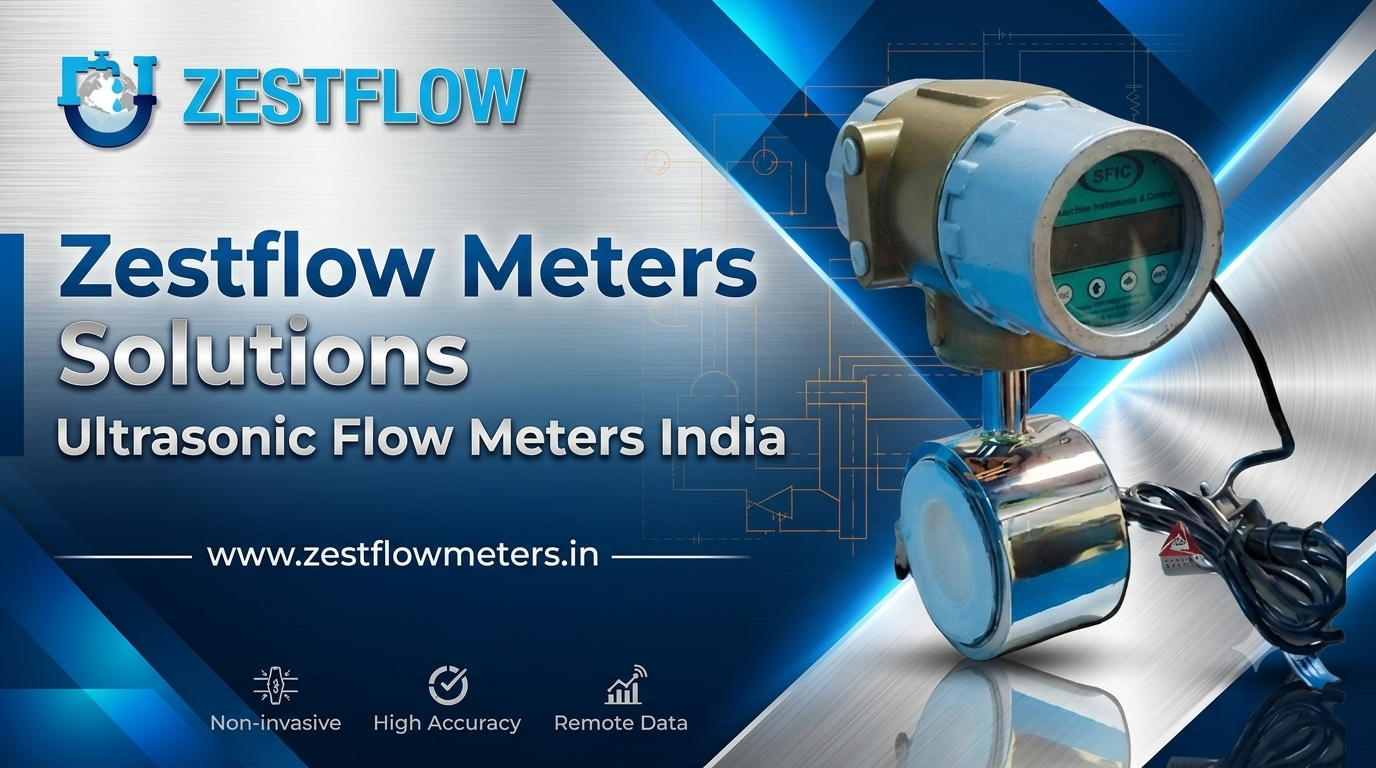
Zestflow Meters Solutions: Your Guide to Ultrasonic Flow Meter Technology in India
Introduction: Reliable Flow Measurement for Modern Industries
Accurate flow measurement is essential for businesses that depend on the movement and management of liquids. From water treatment plants and manufacturing facilities to chemical processing units and commercial buildings, reliable measurement helps organizations monitor consumption, improve process control, and manage resources efficiently.
With the advancement of industrial automation, ultrasonic flow meters have become an important option for applications requiring dependable liquid flow monitoring. These instruments use ultrasonic sound waves to measure liquid velocity and calculate flow rates without necessarily placing mechanical components inside the pipeline.
Zestflow Meters Solutions can help businesses explore modern flow measurement technologies by focusing on application suitability, measurement requirements, and practical installation considerations.
For organizations searching for an Ultrasonic flow meter manufacturer in India, understanding how ultrasonic technology works, where it can be used, and what to consider before purchasing a meter is essential. This guide explains the key features, applications, benefits, and selection criteria associated with ultrasonic flow measurement.
What Is an Ultrasonic Flow Meter?
An ultrasonic flow meter is an electronic instrument designed to measure the movement of liquid through a pipeline using ultrasonic signals. By analyzing how sound waves travel through or interact with a flowing liquid, the instrument determines flow velocity and calculates the flow rate.
Unlike many traditional mechanical flow meters, ultrasonic models can operate without moving parts in the liquid flow path. Some models are installed directly in a pipeline, while clamp-on models attach to the outside of compatible pipes.
The two commonly used ultrasonic measurement technologies are transit-time and Doppler.
1. Transit-Time Ultrasonic Flow Meters
Transit-time ultrasonic flow meters measure the difference between the travel times of ultrasonic signals moving with and against the direction of liquid flow.
When liquid moves through a pipe, the signal traveling with the flow generally takes less time than the signal traveling against it. The instrument uses this difference to calculate liquid velocity.
Transit-time technology is commonly used for clean liquids and other applications that meet the meter’s specifications.
2. Doppler Ultrasonic Flow Meters
Doppler ultrasonic flow meters analyze frequency changes in ultrasonic signals reflected by suspended particles or gas bubbles in a liquid.
This technology can be suitable for selected applications involving liquids with sufficient suspended material to produce measurable reflections. The suitability depends on the liquid’s properties and the instrument’s design.
Understanding these measurement methods helps buyers identify a suitable meter for their operating conditions.
Why Consider Zestflow Meters Solutions for Flow Measurement?
Choosing a flow measurement solution requires evaluating more than the initial purchase price. Businesses should consider technical specifications, installation conditions, measurement requirements, operating costs, and after-sales support.
Zestflow Meters Solutions can communicate its value to customers by emphasizing the following considerations.
Reliable Measurement
Accurate flow information supports operational planning, liquid consumption monitoring, and industrial process control. A meter selected for the correct application and installed according to its manufacturer’s instructions can provide useful and consistent measurement data.
Modern Measurement Technology
Ultrasonic flow meters use electronic sensing technology to measure liquid flow. Depending on the model, features may include a digital display, programmable settings, analog outputs, pulse outputs, or digital communication.
Flexible Installation
Clamp-on ultrasonic flow meters can be attached externally to compatible pipelines. Because these instruments do not need to penetrate the pipe, they may reduce installation disruption and help avoid interrupting an existing process.
However, pipe material, wall thickness, lining, liquid characteristics, and sensor configuration must be suitable for the selected meter.
Reduced Mechanical Wear
Many ultrasonic flow meters do not contain moving parts in direct contact with the liquid. This can reduce wear associated with mechanical components and may simplify maintenance in suitable applications.
Application-Specific Guidance
Different industries have different measurement requirements. A suitable meter should be selected based on the liquid type, expected flow range, pipe diameter, temperature, pressure, installation environment, and required output signals.
A supplier that provides clear technical information can help customers evaluate these factors before choosing a product.
Ultrasonic Flow Meter Manufacturer in India: What Buyers Should Know
India has diverse industrial and infrastructure requirements, including water distribution, wastewater treatment, manufacturing, building management, and process industries. These sectors often require flow measurement instruments that suit their specific operating conditions.
Businesses looking for an Ultrasonic flow meter manufacturer in India may compare manufacturers, distributors, product specifications, pricing, installation methods, and technical support before making a purchasing decision.
For Zestflow Meters Solutions, providing helpful information about these considerations can help potential customers understand what to look for when evaluating flow measurement products.
Before selecting a manufacturer or supplier, consider the following factors:
Product specifications: Check the stated accuracy, measurement range, and operating limits.
Pipeline compatibility: Confirm pipe diameter, material, wall thickness, and lining requirements.
Liquid compatibility: Ensure the selected technology is suitable for the fluid being measured.
Installation requirements: Review sensor mounting instructions and the recommended installation conditions.
Output options: Determine whether the meter supports the signals and communication protocols required by your control system.
Technical documentation: Look for product manuals, wiring diagrams, calibration information, and operating instructions.
After-sales support: Verify the availability of installation guidance, troubleshooting, warranty service, and replacement parts.
Manufacturer verification: Confirm whether the business manufactures the instrument directly or supplies products manufactured by another company.
These checks help buyers make informed decisions and reduce the risk of choosing an instrument that does not meet their application requirements.
Major Industrial Applications of Ultrasonic Flow Meters
Ultrasonic flow meters are used in a range of industries where monitoring liquid movement is important. The appropriate technology depends on the fluid, pipe conditions, measurement range, and required performance.
1. Water Supply and Distribution
Water utilities and commercial facilities use flow measurement to monitor water consumption, manage distribution, and assess system performance.
Suitable ultrasonic flow meters can measure water movement in compatible pipelines. Clamp-on instruments may be particularly useful when businesses need to monitor an existing pipeline without cutting into it.
Flow data can help operators investigate unusual consumption patterns and plan water distribution more effectively.
2. Wastewater Treatment
Wastewater treatment facilities handle liquids with varying concentrations of suspended solids, air bubbles, and other materials.
Ultrasonic flow measurement can support selected wastewater applications when the technology is appropriate for the liquid and installation conditions. Doppler meters, for example, may be suitable for certain liquids containing sufficient suspended particles or bubbles.
Engineers should evaluate the fluid composition and operating environment before choosing a meter.
3. Chemical Processing
Chemical manufacturing facilities require flow measurement to support process monitoring and operational control.
When selecting an ultrasonic flow meter for a chemical application, engineers should consider fluid properties, temperature, pipe material, and the acoustic characteristics of the liquid.
A compatible clamp-on meter can provide external measurement without direct contact between the sensor and the process liquid. However, not every chemical or pipeline configuration is suitable for this approach.
4. Pharmaceutical and Food Processing
Pharmaceutical and food manufacturing processes may require precise monitoring of liquid movement during production, cleaning, and distribution.
Meter selection should account for hygiene standards, cleaning procedures, process compatibility, and any applicable industry requirements. Buyers should verify whether the chosen instrument meets the necessary sanitary specifications and certifications.
5. HVAC and Building Management
Heating, ventilation, and air-conditioning systems circulate water for cooling and heating.
Ultrasonic flow meters can monitor chilled-water and heating-water circulation in compatible installations. This information can help facility managers evaluate system performance, investigate imbalances, and improve monitoring of building utilities.
Some systems also combine flow and temperature measurements to calculate thermal energy consumption.
6. Manufacturing and Industrial Production
Manufacturing facilities use liquids for cooling, cleaning, production, and other industrial processes.
Flow meters help operators monitor consumption, assess production conditions, and identify unexpected changes in liquid movement. Electronic measurement data can also support automation and reporting when integrated with compatible systems.
7. Agriculture and Irrigation
Agricultural operations use water measurement to manage irrigation systems and monitor distribution across pipelines.
Suitable ultrasonic flow meters can help measure water flow where the pipe material, water quality, and operating conditions meet the instrument’s specifications. Proper measurement can support water-use monitoring and operational planning.
Key Benefits of Ultrasonic Flow Meters
Understanding the benefits of ultrasonic technology can help businesses determine whether it is appropriate for their measurement requirements.
Non-Invasive Measurement Options
Clamp-on ultrasonic flow meters attach to the outside of compatible pipes. They can measure flow without opening the pipeline or exposing the sensor directly to the liquid.
This can reduce installation disruption and may be useful when the pipeline must remain in operation.
No Moving Parts in Many Designs
Many ultrasonic meters use electronic sensing without moving components in the liquid flow path. This can reduce mechanical wear and some maintenance requirements.
Electronic Monitoring and Integration
Depending on the model, ultrasonic flow meters may provide digital displays, analog signals, pulse outputs, and communication interfaces.
These features can help transfer flow data to industrial control systems, monitoring equipment, and building management platforms.
Potentially Lower Installation Disruption
Clamp-on meters may be installed without cutting the pipeline, provided the pipe and fluid are suitable. Correct sensor positioning and configuration are still essential for dependable results.
Improved Resource Monitoring
Flow measurement provides information about liquid consumption and distribution. When businesses review this information regularly, they can identify unusual patterns and investigate potential inefficiencies.
Long-Term Operational Value
A meter’s value depends on more than its purchase price. Installation, maintenance, calibration, accuracy, system integration, and expected service life should all be considered when comparing available options.
How to Choose the Right Ultrasonic Flow Meter
Selecting the right meter is an important step toward achieving reliable measurement results.
1. Identify the Liquid
Determine whether the application involves clean water, wastewater, chemicals, oil, or another liquid. Different liquids have different acoustic properties, so the measurement technology must be appropriate for the application.
2. Check Pipe Material and Dimensions
Record the pipe diameter, material, wall thickness, lining, and general condition. These details help determine whether the selected sensor can transmit and receive ultrasonic signals effectively.
3. Determine the Flow Range
Identify the minimum, normal, and maximum expected flow rates. Select a meter whose specified measurement range accommodates the application’s operating conditions.
4. Verify Operating Conditions
Check the temperature and pressure limits of the instrument. Ensure that the meter can operate within the actual environmental and process conditions.
5. Assess the Installation Location
Nearby valves, elbows, pumps, vibration, and insufficient straight pipe lengths may affect measurement performance. Follow the manufacturer’s installation recommendations and evaluate whether the proposed location is appropriate.
6. Review Output and Connectivity
Determine whether the system needs a local display, pulse output, 4–20 mA signal, or digital communication. Confirm compatibility with existing monitoring and control equipment.
7. Evaluate Support and Documentation
Review the availability of installation manuals, commissioning guidance, calibration information, troubleshooting assistance, and warranty service.
Taking these steps before purchase can help businesses select a flow meter that matches their actual requirements.
Why Consider Zestflow Meters Solutions?
Zestflow Meters Solutions can help businesses explore flow measurement requirements by emphasizing clear technical information, application suitability, and informed product selection.
When evaluating a potential flow measurement partner, customers should look for accurate specifications, relevant product documentation, transparent warranty conditions, and appropriate technical assistance.
Businesses should also confirm which products, services, installation support, and manufacturing capabilities the company actually offers before making a purchase.
Whether you need to monitor water consumption, evaluate an industrial process, or improve visibility into a liquid distribution system, choosing the right flow measurement technology begins with understanding your application.
Contact Zestflow Meters Solutions to discuss your requirements and explore suitable options for your installation.
Conclusion
Ultrasonic flow meters provide a modern method of measuring liquid flow across industrial, commercial, and utility applications. Depending on the model, they can offer non-invasive installation, reduced mechanical wear, electronic monitoring, and integration with compatible control systems.
Choosing the right instrument requires careful consideration of the liquid, pipeline, operating conditions, flow range, and system requirements.
For businesses searching for an Ultrasonic flow meter manufacturer in India, understanding these factors is essential when comparing available products and suppliers.
Zestflow Meters Solutions can build customer confidence by providing clear product information, application-focused guidance, and support appropriate to its actual capabilities.
Looking for a suitable flow measurement solution? Contact Zestflow Meters Solutions to discuss your requirements and explore the available options for your application.