
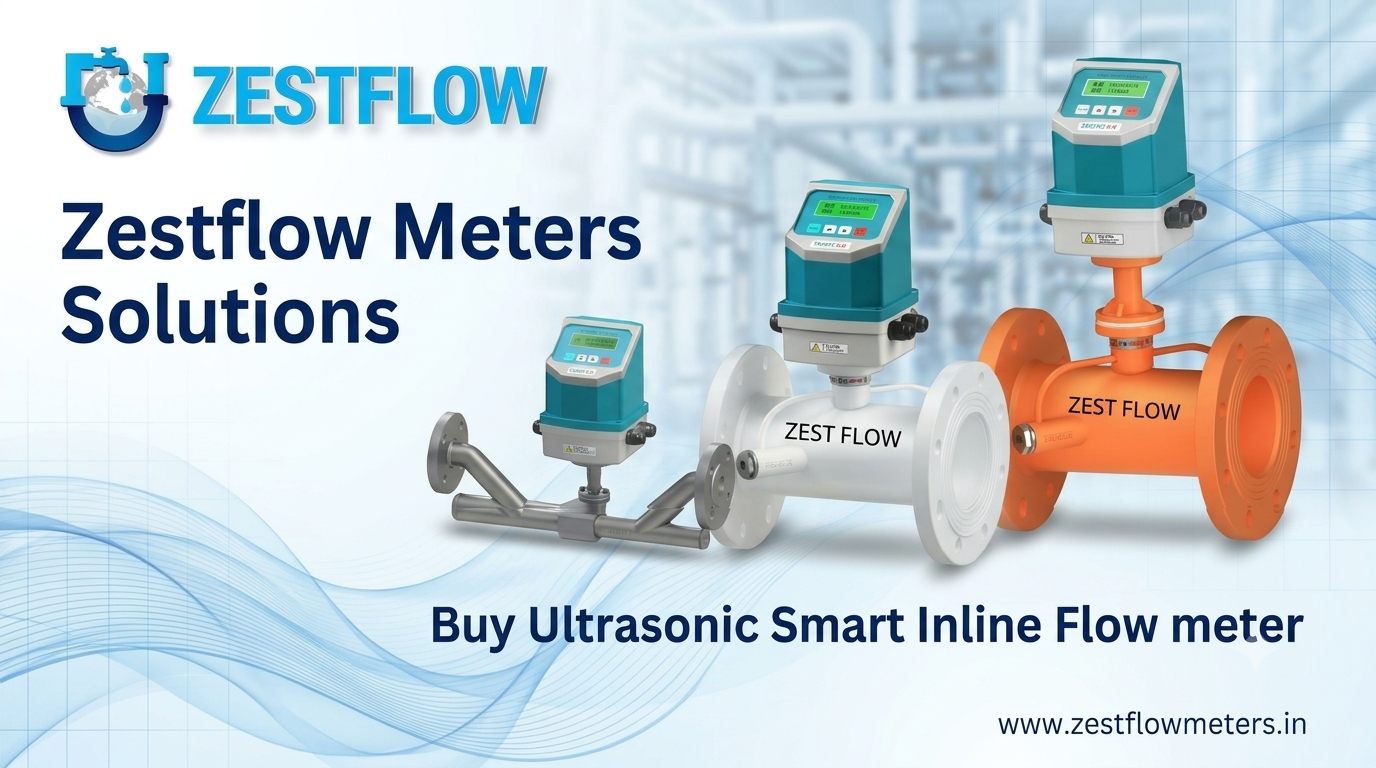
Ultrasonic Smart Inline Flow Meter: A Smart Solution for Accurate Flow Measurement
Accurate flow measurement is essential for industries that depend on water, liquids, and other process fluids. From water treatment plants to manufacturing facilities, businesses need reliable instruments to monitor fluid movement, improve operational efficiency, and control resource consumption. Modern flow measurement technology helps industries collect valuable data, reduce measurement errors, and make better operational decisions.
An Ultrasonic Smart Inline Flow Meter is a modern instrument designed to measure fluid flow using ultrasonic technology. Depending on its design, it uses ultrasonic signals to determine the movement or velocity of a liquid passing through a measuring section. Smart features can support digital monitoring, data communication, and integration with industrial automation systems.
Businesses looking for advanced flow measurement solutions can explore the products and services offered by Zestflow Meters Solutions. Selecting the right flow meter can help industries improve process monitoring, manage water consumption, and maintain consistent operations.
In this blog, we will explain how an ultrasonic smart inline flow meter works, its major benefits, industrial applications, important selection factors, and how to choose a suitable solution for your requirements.
What Is an Ultrasonic Smart Inline Flow Meter?
An ultrasonic smart inline flow meter is a flow measurement instrument that uses ultrasonic technology to measure the flow rate of a liquid through a pipe. The term “inline” generally indicates that the meter is installed directly within the pipeline, while “smart” commonly refers to electronic processing, digital displays, communication capabilities, or monitoring functions.
Unlike conventional mechanical flow meters, ultrasonic instruments use sound waves to measure fluid movement. Depending on the technology, the instrument may calculate flow by comparing the travel time of ultrasonic signals moving with and against the direction of the fluid, or by measuring changes in ultrasonic signals caused by moving particles or bubbles.
The exact measurement method depends on the meter’s design. Inline ultrasonic meters typically have a measuring section integrated into the pipeline, allowing the instrument to measure flow without relying on a traditional rotating mechanical measuring element.
These meters can be useful in applications where operators need dependable flow data and convenient access to measurement readings. However, their suitability depends on the liquid properties, pipe conditions, installation requirements, and the specifications of the selected model.
How Does an Ultrasonic Smart Inline Flow Meter Work?
Understanding the working principle helps businesses select the correct flow measurement technology for their applications.
1. Ultrasonic Signal Generation
The meter contains ultrasonic transducers that generate and receive high-frequency sound signals. These signals travel through the liquid according to the instrument’s measurement principle.
2. Flow Detection
In transit-time models, ultrasonic signals travel between transducers along a measurement path. The meter compares the time required for signals to travel with and against the direction of the fluid.
When the liquid moves through the pipe, the difference between these travel times changes. The meter uses this difference to calculate the fluid’s velocity.
Other ultrasonic designs use the effect of moving particles or bubbles on ultrasonic signals. Therefore, the appropriate working principle depends on the liquid and the particular meter design.
3. Flow Rate Calculation
After determining the fluid velocity, the instrument calculates the volumetric flow rate using the internal pipe area and the measured velocity, with appropriate corrections based on its design and calibration.
The resulting measurement can help operators understand how much liquid passes through a pipeline during a particular period.
4. Digital Display and Data Processing
Smart models may include electronic processing and a digital display for viewing flow readings. Depending on the available features, the instrument may also provide totalized flow, configurable measurement units, alarms, or communication outputs.
5. Monitoring and Automation
Some models support integration with industrial control systems, programmable logic controllers (PLCs), supervisory control and data acquisition (SCADA) systems, or remote monitoring platforms.
These capabilities allow businesses to use flow measurements for process monitoring, water management, and automated control when the selected model supports the required interfaces.
Key Benefits of an Ultrasonic Smart Inline Flow Meter
Industries need flow measurement instruments that provide dependable readings and fit their operating requirements. An ultrasonic smart inline flow meter offers several potential advantages.
1. Accurate Flow Measurement
Accurate flow data helps operators monitor liquid movement and maintain process consistency. Properly selected and installed ultrasonic flow meters can provide reliable readings across their specified operating range.
Actual measurement performance depends on factors such as meter design, fluid characteristics, calibration, pipe conditions, and installation quality.
2. No Traditional Moving Measuring Parts
Many ultrasonic flow meters do not use rotating mechanical elements to measure flow. This can reduce wear associated with moving measuring components and may lower certain maintenance requirements.
However, the instrument still requires appropriate inspection, electrical maintenance, and performance verification according to the manufacturer’s recommendations.
3. Digital Monitoring Capabilities
Smart flow meters can make measurement data easier to read and use. Digital displays and supported communication outputs help operators monitor flow readings and, where available, transfer information to other systems.
This can improve visibility into industrial processes and simplify routine monitoring.
4. Better Water Management
Water-intensive industries need to track consumption and identify unusual changes in flow. An ultrasonic smart inline flow meter can help operators measure water usage at important points throughout a facility.
When readings are reviewed regularly, businesses can identify unexpected consumption patterns, investigate potential leakage, and improve water management practices.
5. Integration With Automation Systems
Industrial facilities increasingly use automation to monitor equipment and control production processes. Compatible flow meters can supply flow-rate and totalizer data to control systems.
This helps operators use measured flow information when adjusting processes, tracking resource consumption, or investigating operational problems.
Communication compatibility must be verified before purchasing a meter for an existing automation system.
6. Support for Process Efficiency
Consistent flow monitoring can help businesses maintain required process conditions. For example, a treatment plant may need to monitor the volume of water moving between treatment stages, while a manufacturing facility may track liquid consumption during production.
Reliable flow information supports informed decisions, although the instrument alone does not guarantee improved productivity or lower operating costs.
7. Flexible Measurement Options
Ultrasonic flow meters are available in different configurations for various pipe sizes, flow ranges, liquid types, and operating conditions.
An inline model can be suitable where a dedicated measuring section can be installed in the pipeline. The final selection should account for installation space, pressure requirements, fluid compatibility, and maintenance access.
Industrial Applications of Ultrasonic Smart Inline Flow Meters
Ultrasonic flow measurement can support a wide range of industrial and commercial applications. The suitability of a particular model depends on its specifications and the liquid being measured.
1. Water Treatment Plants
Water treatment facilities need to monitor flow at different stages of treatment and distribution.
An ultrasonic smart inline flow meter can help operators measure incoming water, track flow between process stages, and monitor treated-water movement. These measurements can support operational planning and resource management.
2. Wastewater Treatment Plants
Wastewater treatment facilities measure liquid flow to monitor incoming wastewater, treatment processes, and discharge volumes.
Suitable ultrasonic meters can help operators collect flow data for process control and operational reporting. However, wastewater applications require careful consideration of suspended solids, air bubbles, fouling, and the meter’s measurement principle.
3. Manufacturing Industries
Manufacturing plants use liquids in production, cooling, cleaning, and other processes. Monitoring these flows helps businesses understand resource consumption and maintain process consistency.
A properly selected ultrasonic inline meter can measure compatible liquids in pipelines and provide readings for routine operational monitoring.
4. Chemical Processing
Chemical facilities often require flow measurement for process liquids and compatible chemical solutions.
Before selecting a meter, operators must confirm wetted-material compatibility, liquid properties, operating pressure, temperature limits, and the required measurement performance. Not every ultrasonic flow meter is suitable for every chemical.
5. Pharmaceutical and Food Processing
Food, beverage, and pharmaceutical facilities may require accurate flow monitoring for ingredients, water, cleaning fluids, and process liquids.
Applications involving hygiene requirements need instruments designed for the relevant sanitary standards. Operators should verify the meter’s wetted materials, cleanability, connection type, and applicable certifications before installation.
6. HVAC and Cooling Systems
Commercial buildings and industrial facilities use water in chilled-water, heating, and cooling circuits.
Compatible ultrasonic flow meters can help operators measure water movement through these systems. When combined with temperature measurements and suitable calculations, flow data can also support thermal performance monitoring.
7. Irrigation and Agricultural Water Management
Agricultural operations depend on effective water distribution. Flow meters can help monitor water delivered through pipelines and identify variations in consumption.
An ultrasonic inline flow meter may be appropriate for suitable irrigation pipelines when its flow range, installation requirements, and water-quality limitations match the application.
8. Industrial Water Distribution
Factories, commercial complexes, and infrastructure projects often need to monitor water supplied to different sections of a facility.
Installing suitable flow meters at selected pipeline locations helps operators compare consumption, maintain records, and investigate unexpected changes in water use.
Important Factors to Consider Before Buying an Ultrasonic Smart Inline Flow Meter
Choosing a flow meter based only on its price or advertised features can result in poor measurement performance. Businesses should evaluate the following factors before purchasing.
1. Type of Liquid
Identify whether the application involves clean water, wastewater, a chemical solution, or another liquid.
Liquid composition, conductivity, suspended solids, gas bubbles, and viscosity can affect measurement suitability. Share these details with the supplier before selecting a model.
2. Pipe Size and Connection Type
Check the pipeline’s nominal diameter and the connection arrangement required for installation.
The meter must match the pipeline and provide the necessary mechanical connections. Also, consider available installation space and the need for maintenance access.
3. Flow Rate Range
Determine the minimum, normal, and maximum expected flow rates.
The selected meter should operate within its specified measurement range. A meter that is poorly matched to the application’s normal flow rate may not deliver the required performance.
4. Operating Pressure and Temperature
Confirm the maximum and minimum operating pressure and temperature.
The meter body, seals, transducers, and other wetted components must be suitable for the operating conditions. These specifications are particularly important in industrial processes.
5. Required Accuracy
Different applications have different accuracy requirements. Process monitoring may require a different performance level from billing, custody transfer, or regulated measurement.
Check the manufacturer’s published accuracy specifications and applicable calibration information rather than assuming that all ultrasonic meters provide the same accuracy.
6. Communication and Output Options
Determine whether the meter needs a pulse output, analog signal, digital communication interface, or another supported connection.
If the instrument must communicate with a PLC, SCADA system, or building management platform, verify protocol compatibility and configuration requirements before ordering.
7. Installation Conditions
Correct installation is essential for reliable flow measurement. Depending on the meter design, the installation may require specific upstream and downstream straight-pipe lengths, correct orientation, a full pipe, or particular flow-profile conditions.
Follow the manufacturer’s installation instructions to reduce measurement errors.
8. Total Cost of Ownership
Consider the purchase price alongside installation, calibration, maintenance, operating requirements, and expected service life.
A suitable instrument should meet the application’s technical requirements while providing reasonable long-term operating costs.
Common Installation and Maintenance Considerations
Even a high-quality flow meter may produce unreliable readings if it is installed incorrectly.
Before installation, verify that the pipeline and meter connections are compatible. Confirm the direction of flow where applicable, check the required pipe configuration, and ensure that the measuring section meets the manufacturer’s installation recommendations.
For transit-time ultrasonic meters, gas bubbles, unsuitable liquid conditions, deposits, or incorrect installation may affect signal quality and measurement performance. Other ultrasonic designs have different limitations, so the instrument’s operating principle must be considered.
After installation, check the displayed readings under known operating conditions where possible. Compare measurements with a suitable reference if the application requires verification.
Routine maintenance should follow the manufacturer’s instructions and may include checking electrical connections, inspecting for leakage, reviewing diagnostic indicators, and arranging calibration or performance checks when required.
Smart monitoring functions can make unusual readings easier to identify, but they do not replace correct installation and periodic verification.
Why Choose Zestflow Meters Solutions?
Selecting the right flow measurement equipment involves more than choosing a product name. Businesses need to understand their application requirements and identify an instrument that matches the operating conditions.
Zestflow Meters Solutions provides flow measurement and water monitoring solutions for industrial and commercial requirements.
When evaluating an ultrasonic smart inline flow meter, customers should discuss the following details with the supplier:
- Type and properties of the liquid being measured.
- Pipeline diameter and connection requirements.
- Minimum, normal, and maximum flow rates.
- Operating pressure and temperature.
- Required measurement accuracy.
- Digital display and totalizer requirements.
- Output signals and communication protocols.
- Installation environment and available space.
- Calibration, documentation, and maintenance expectations.
Providing accurate application information helps the supplier recommend an appropriate configuration.
Customers should also confirm the availability of specific ultrasonic inline models and their technical features directly with Zestflow Meters Solutions before placing an order.
How to Select the Right Ultrasonic Smart Inline Flow Meter for Your Business
A practical selection process helps reduce the risk of purchasing an unsuitable instrument.
Step 1: Define the application. Identify the process where flow measurement is required and explain why the measurement is needed.
Step 2: Collect pipeline information. Record the pipe diameter, material, operating pressure, temperature, and available installation space.
Step 3: Describe the liquid. Provide information about the liquid’s composition, cleanliness, conductivity, suspended solids, and possible gas content.
Step 4: Establish measurement requirements. Determine the required flow range, accuracy, display functions, totalization, and output signals.
Step 5: Verify technical compatibility. Compare the application’s requirements with the manufacturer’s specifications and installation instructions.
Step 6: Review support requirements. Ask about commissioning, calibration, technical documentation, maintenance, and after-sales support.
Following these steps helps businesses select an ultrasonic smart inline flow meter that fits their actual operating conditions instead of relying on general product descriptions.
Future of Smart Flow Measurement
Industrial measurement is increasingly connected to digital monitoring and automation. Modern facilities want to collect operational data, identify unusual conditions, and improve resource management.
Smart flow meters can contribute to these goals by providing digital readings and compatible communication outputs. When connected to suitable monitoring platforms, flow data can help operators compare consumption patterns, investigate process variations, and maintain operational records.
The growing use of industrial automation also increases the importance of compatible interfaces and dependable measurement data. However, advanced monitoring depends on the features supported by the instrument and the wider control system.
For businesses planning to upgrade their measurement infrastructure, evaluating digital flow meters alongside existing automation requirements can help create a more effective monitoring strategy.
Conclusion
An Ultrasonic Smart Inline Flow Meter can be a valuable solution for industries that need reliable liquid-flow measurements and convenient digital monitoring. Depending on its design, it can help businesses track water consumption, monitor industrial processes, and integrate flow data with compatible automation systems.
However, selecting the right instrument requires careful consideration of liquid properties, pipe dimensions, flow rates, operating pressure, temperature, accuracy requirements, and communication features. Correct installation and regular performance checks are also essential for dependable measurement results.
Businesses planning to upgrade their flow monitoring systems should evaluate their application requirements before choosing a meter. For product information and assistance with flow measurement requirements, visit Zestflow Meters Solutions and discuss the specifications needed for your application.