
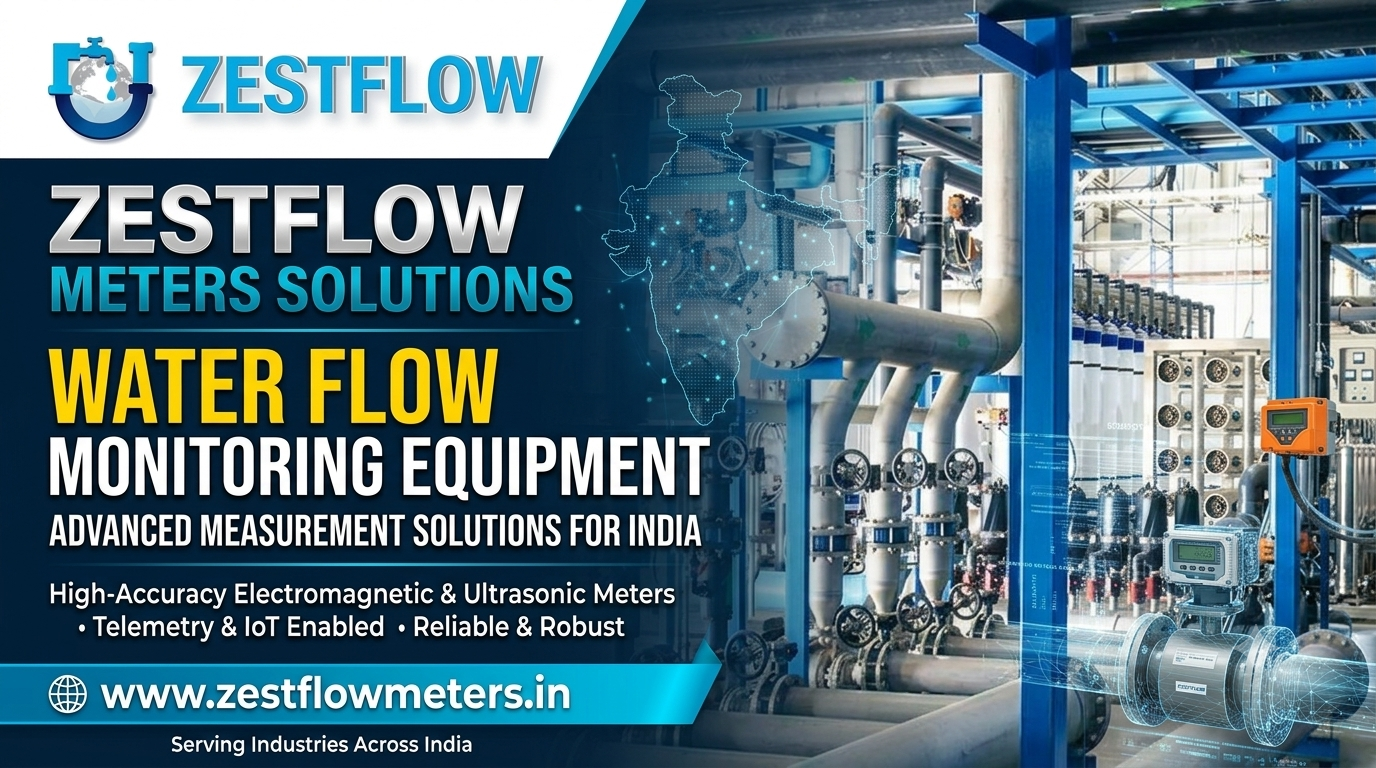
Water Flow Monitoring Equipment in India for Industrial Applications
Water is one of the most important resources for industrial production, infrastructure, agriculture, commercial facilities, and municipal operations. As industries continue to focus on water conservation, process efficiency, and automation, monitoring water flow has become an essential part of daily operations. Reliable flow monitoring helps businesses understand water consumption, identify irregularities, manage distribution, and improve the overall performance of their water systems.
The demand for water flow monitoring equipment in India is growing as manufacturing facilities, water treatment plants, infrastructure projects, and commercial establishments adopt digital measurement technologies. Modern flow monitoring equipment allows operators to measure water movement through pipelines, track consumption, and collect useful information for operational planning.
Zestflow Meters Solutions provides flow measurement solutions designed for water monitoring and industrial applications. Choosing the right flow measurement technology can help industries improve monitoring accuracy, manage water resources more efficiently, and make better decisions based on flow data.
What Is Water Flow Monitoring Equipment?
Water flow monitoring equipment refers to instruments and systems used to measure, monitor, and record the movement or quantity of water flowing through pipelines, channels, and distribution networks. These devices help users understand the volume of water passing through a particular point over a specific period.
Depending on the equipment and application, water flow monitoring instruments can display instantaneous flow rate, cumulative water volume, and other measurement parameters. Some systems also support data transmission, remote monitoring, automation, and integration with industrial control systems.
Water flow monitoring equipment is commonly used in:
Industrial water supply pipelines
Water treatment plants
Wastewater treatment facilities
Irrigation systems
Commercial buildings
Manufacturing plants
Cooling water systems
Municipal water distribution networks
Effluent treatment plants (ETP)
Sewage treatment plants (STP)
These instruments help operators monitor water usage, understand flow conditions, and maintain better control over water distribution.
Why Water Flow Monitoring Is Important for Industries
Industrial facilities often use water for cooling, manufacturing, cleaning, processing, boilers, utilities, and other operations. Without proper flow monitoring, businesses may find it difficult to track consumption or identify unexpected changes in water usage.
Installing reliable flow monitoring equipment offers several practical benefits.
1. Accurate Water Consumption Measurement
Flow monitoring equipment helps measure the quantity of water used in different areas of a facility. This information allows industries to compare consumption across production units, departments, or processes.
2. Detecting Water Leakage
Unexpected flow during periods when water consumption should be low may indicate leakage or unwanted water movement. Monitoring data helps operators investigate pipeline problems and take corrective action.
3. Better Resource Management
Water flow measurement allows businesses to understand their water usage patterns. This information can support planning, resource allocation, and conservation initiatives.
4. Improved Process Efficiency
Industries that depend on a consistent water supply can use flow data to maintain better process control. Monitoring water flow helps operators identify variations that may affect production or equipment performance.
5. Reduced Manual Monitoring
Digital flow meters reduce the need for repeated manual readings. Operators can check data on instrument displays or access readings through connected monitoring platforms, depending on the system configuration.
Key Features to Look for in Water Flow Monitoring Equipment
When purchasing water flow monitoring equipment, industries should evaluate the instrument’s measurement performance, construction, display options, and compatibility with their existing infrastructure.
Digital Display and Flow Readings
A digital display helps operators view water flow readings directly at the installation location. Depending on the instrument, it may show instantaneous flow rate, cumulative flow, measurement units, and other operating parameters.
Real-Time Monitoring
Real-time flow monitoring enables operators to observe changes in water movement as they occur. This is useful for identifying sudden variations in consumption, monitoring supply conditions, and maintaining consistent process operations.
Data Output and Communication
Modern flow meters may support pulse output, analog output, or digital communication protocols. These options allow flow data to be transferred to control panels, PLC systems, SCADA platforms, and other compatible monitoring systems.
Durable Industrial Construction
Industrial flow meters are available in different materials, pressure ratings, liners, and connection designs. Equipment should be selected according to the water quality, installation environment, pipeline conditions, and expected operating life.
Remote Monitoring Compatibility
Some flow monitoring solutions can be connected to remote data acquisition or telemetry systems. This can help users monitor water flow from a central location, particularly when meters are installed across multiple sites or pipelines.
Applications of Water Flow Monitoring Equipment in India
Industries and infrastructure projects across India require water flow monitoring for utility management, production operations, treatment processes, and water distribution. Flow measurement instruments are used in different sectors depending on their operating requirements.
1. Manufacturing Industries
Manufacturing facilities use water for cooling, processing, cleaning, and other industrial activities. Flow meters help monitor water consumption at individual production lines and utility sections.
2. Water Treatment Plants
Water treatment plants use flow monitoring instruments to measure raw water intake, filtration flow, treated water supply, and distribution. Measurement data helps operators understand the flow conditions at different treatment stages.
3. Wastewater and Sewage Treatment
Wastewater treatment plants require flow measurement to monitor incoming wastewater, treatment processes, and outgoing water. Flow data helps operators evaluate plant operations and track wastewater volumes.
4. Agriculture and Irrigation
Agricultural water distribution networks use flow meters to monitor water supplied to farms, irrigation channels, pumping systems, and pipelines. Monitoring can support better water allocation and usage planning.
5. Commercial Buildings and Residential Projects
Commercial complexes, housing projects, institutional buildings, and large campuses use flow monitoring equipment to track water consumption, monitor supply lines, and manage utility usage.
6. Chemical and Process Industries
Chemical manufacturing and process facilities use water and compatible liquids in various production operations. Flow meters support monitoring and control of liquid movement in pipelines and process systems.
7. Cooling Towers and HVAC Systems
Cooling towers and HVAC installations use water for heat transfer and temperature management. Flow monitoring helps operators maintain suitable water movement and identify changes in system performance.
Benefits of Installing Water Flow Monitoring Equipment
Installing suitable flow measurement instruments can support efficient industrial water management and improve visibility into pipeline operations.
Helps Reduce Water Wastage
Flow monitoring helps industries identify unusual water consumption and investigate possible leakage. By understanding where water is being used, businesses can plan corrective measures.
Supports Better Water Management
Flow data helps operators understand water demand across different departments, utility sections, and production processes. This can support more organized water management.
Improves Operational Decisions
Accurate flow data helps businesses make decisions related to water supply, process operation, consumption planning, and maintenance.
Reduces Manual Data Collection
Digital flow meters and connected monitoring systems can reduce the need for manual meter readings and repeated field inspections.
Supports Automation
Flow meters with compatible outputs can be connected to automation systems. This allows businesses to use flow information for monitoring, alarms, process control, and data recording.
Provides Consumption Records
Total flow measurement can help industries maintain water consumption records for internal analysis, utility management, and operational reporting.
How to Choose the Right Water Flow Monitoring Equipment
Selecting suitable equipment is essential for reliable measurement and long-term performance. Before purchasing a flow meter, consider the following factors.
Water Quality: Determine whether the application involves clean water, treated water, raw water, wastewater, or water containing suspended solids.
Pipe Diameter: Confirm the pipeline size, connection type, and available installation space.
Flow Rate: Identify the minimum, normal, and maximum expected flow rates to ensure the instrument can measure the required range.
Operating Pressure: Select a meter that meets the pressure requirements of the pipeline and installation.
Temperature: Check the operating water temperature and environmental conditions.
Accuracy Requirements: Decide the measurement accuracy required for monitoring, process control, consumption tracking, or other purposes.
Installation Conditions: Consider straight pipe lengths, orientation, grounding, accessibility, and potential disturbances in the pipeline.
Output and Connectivity: Check whether the flow meter requires a local display, pulse output, 4–20 mA, Modbus, or integration with PLC/SCADA systems.
Maintenance and Service: Consider calibration requirements, accessibility, service support, and replacement availability.
By evaluating these parameters, industries can choose water flow monitoring equipment that suits their actual application rather than selecting instruments based only on price.
Why Choose Zestflow Meters Solutions?
Zestflow Meters Solutions offers flow measurement solutions for industrial water monitoring, pipeline applications, and process requirements. Selecting the correct measurement technology helps customers monitor water usage and improve operational visibility.
Industries looking for water flow monitoring equipment in India should consider equipment that matches their pipeline specifications, water quality, flow range, measurement requirements, and communication needs.
Zestflow Meters Solutions caters to flow measurement requirements for applications such as:
Industrial water monitoring
Water supply pipelines
Wastewater treatment
Process water measurement
Irrigation water monitoring
Digital flow measurement
Industrial utility management
Pipeline flow monitoring
Choosing suitable flow measurement equipment can help businesses improve measurement practices, monitor water movement, and manage their water systems more effectively.
The Future of Water Flow Monitoring in India
Water monitoring technology is moving towards digital instruments, automation, smart communication, and centralized data collection. Industries are increasingly interested in systems that provide continuous flow information and allow operators to access readings without visiting every meter location.
Smart water management can combine digital flow meters, data loggers, telemetry systems, remote monitoring software, and automated alerts. Such setups can help monitor multiple locations, compare flow patterns, and identify unusual water movement.
As industries, infrastructure projects, and water utilities focus on efficiency and responsible water usage, reliable flow measurement will continue to play an important role in water management across India.
Frequently Asked Questions (FAQs)
1. What is water flow monitoring equipment?
Water flow monitoring equipment is used to measure the rate and quantity of water moving through pipelines or other water systems. It helps track consumption, monitor supply, and maintain flow records.
2. Which water flow monitoring equipment is used in industries?
Industries commonly use electromagnetic flow meters, ultrasonic flow meters, turbine flow meters, digital flow meters, and rotameters depending on water quality, pipe size, and operating conditions.
3. Why is water flow monitoring important?
Water flow monitoring helps measure consumption, identify unusual flow patterns, investigate potential leakage, improve process control, and manage water resources.
4. Can water flow monitoring equipment be connected to SCADA?
Yes. Many flow meters provide compatible analog, pulse, or digital communication outputs that can connect to SCADA or PLC systems, subject to instrument and system compatibility.
5. Where can water flow monitoring equipment be installed?
It can be installed in industrial pipelines, water treatment plants, wastewater facilities, irrigation systems, manufacturing units, cooling water systems, and commercial water distribution networks.
6. How can flow monitoring equipment help save water?
By measuring water flow and consumption, businesses can identify unusual usage, detect potential wastage, and take steps to improve water efficiency.
7. What factors affect the selection of a water flow meter?
Water quality, pipe diameter, flow rate, pressure, temperature, required accuracy, installation conditions, output signals, and maintenance requirements all affect meter selection.
8. Does Zestflow Meters Solutions provide water flow measurement solutions?
Zestflow Meters Solutions provides flow measurement solutions for industrial and water monitoring applications. The appropriate meter should be selected based on the specific application and technical requirements.
Conclusion
Water flow monitoring is essential for industries, infrastructure projects, water treatment facilities, manufacturing plants, and commercial water distribution systems. Reliable monitoring equipment helps businesses measure consumption, track pipeline flow, identify unusual conditions, and improve water management.
Choosing the right instrument requires understanding the water quality, pipeline size, flow range, pressure, accuracy requirements, and installation conditions. Modern digital flow meters also offer options for automation, data communication, and remote monitoring.
Zestflow Meters Solutions provides flow measurement solutions designed for industrial water monitoring and pipeline applications. Investing in suitable flow measurement technology can help organizations improve operational visibility, reduce water wastage, and support more efficient water management.
When searching for water flow monitoring equipment in India, businesses should prioritize reliable measurement, application suitability, technical specifications, and long-term performance to make the right decision.