Water Level Recorder with GSM: Smart Remote Water Monitoring Solutions | Zestflow Meters Solutions
Introduction
Water is one of the most valuable natural resources, making accurate monitoring of water levels essential across industries, agriculture, environmental management, and municipal water supply systems. Traditional methods of checking water levels require manual inspections, which are often time-consuming, expensive, and prone to human error.
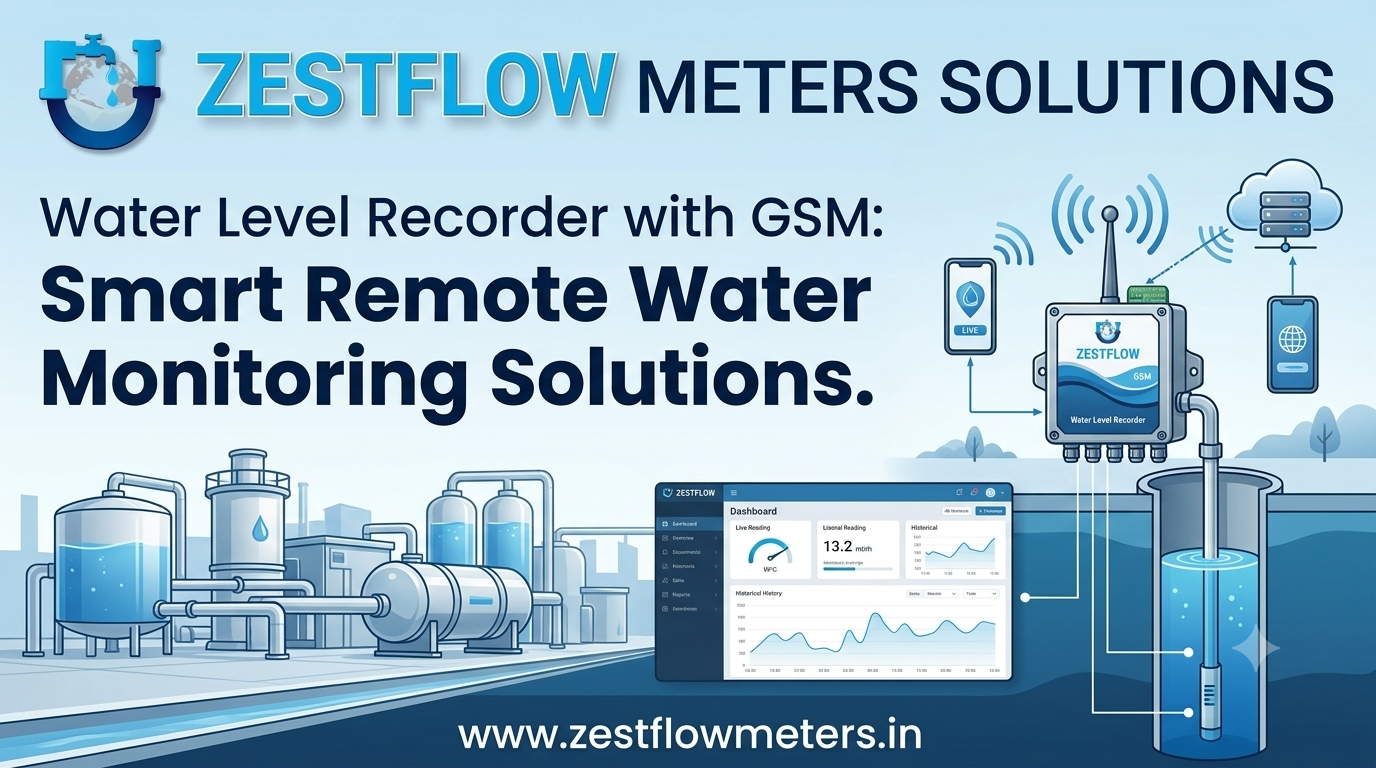
A Water Level Recorder with GSM offers a modern solution for remote water-level monitoring via GSM. It allows users to receive real-time data, alerts, and reports without visiting the monitoring site physically.
Zestflow Meters Solutions provides advanced Water Level Recorder with GSM systems designed to deliver accurate, reliable, and continuous water level monitoring. Whether it is groundwater observation wells, reservoirs, borewells, rivers, dams, or industrial water tanks, these smart monitoring systems ensure better water resource management and informed decision-making.
What is a Water Level Recorder with GSM?
A Water Level Recorder with GSM is an intelligent monitoring device that continuously measures water levels and transmits the collected data to a remote server or mobile device using GSM networks.
Unlike conventional water level measurement methods, GSM-enabled recorders automate the monitoring process, reducing manual efforts while improving accuracy and efficiency.
These systems typically include:
- High-precision water level sensor
- GSM communication module
- Data logger
- Rechargeable battery or solar power
- Cloud monitoring platform
- Mobile and web-based dashboard
The collected information can be accessed from anywhere, allowing users to monitor water resources in real time.
Why Choose a Water Level Recorder with GSM?
Modern industries and government agencies require reliable water monitoring solutions to manage water resources effectively. A GSM-enabled recorder provides numerous operational advantages.
- Real-Time Monitoring
Users can monitor water levels 24/7 without visiting remote locations.
- Remote Data Access
The recorded information is transmitted directly to cloud software where users can view live readings from computers or smartphones.
- Instant Alerts
The system can send SMS or email alerts whenever water levels exceed predefined limits.
- Accurate Measurements
Advanced sensors provide highly accurate readings suitable for scientific, industrial, and environmental applications.
- Reduced Operational Costs
Remote monitoring eliminates frequent field visits, reducing transportation and labor expenses.
- Historical Data Storage
All recorded data is stored securely for future analysis, reporting, and compliance.
Key Features of Water Level Recorder with GSM
A quality monitoring system should provide advanced functionality for long-term field operation.
- High Accuracy Sensors
Designed for precise water level measurement with minimal error.
- GSM-Based Communication
Reliable transmission of data through GSM networks.
- Data Logging
Automatically stores thousands of readings internally.
- Battery Backup
Supports long-duration field operations even during power failures.
- Solar Power Compatibility
Suitable for remote installations without electricity.
- Cloud Connectivity
Secure online access to live and historical monitoring data.
- Waterproof Construction
Engineered for harsh outdoor environments.
- Easy Installation
Simple deployment in wells, tanks, rivers, and reservoirs.
Applications of Water Level Recorder with GSM
The versatility of GSM-enabled monitoring systems makes them suitable for numerous industries.
- Groundwater Monitoring
Government agencies and environmental organizations use these devices to monitor groundwater depletion and recharge.
- Borewell Monitoring
Continuous borewell water level tracking helps optimize groundwater usage.
- Reservoir Management
Reservoir authorities can monitor changing water levels for better water distribution.
- Dam Monitoring
Real-time information improves dam safety and operational planning.
- Irrigation Systems
Farmers receive live updates regarding water availability, improving irrigation efficiency.
- Industrial Water Tanks
Industries monitor storage tanks to prevent overflow or dry running.
- Municipal Water Supply
Municipal authorities use GSM monitoring to ensure an uninterrupted water supply.
- Environmental Research
Researchers collect long-term hydrological data for environmental studies.
Benefits of Remote Water Monitoring
- Saves Time
Field engineers no longer need frequent site visits.
- Improves Decision Making
Real-time information enables faster operational decisions.
- Prevents Water Loss
Early alerts help prevent overflows and leakage.
- Enhances Water Conservation
Continuous monitoring supports sustainable water management.
- Better Compliance
Automatically generated reports simplify regulatory compliance.
- Increased Equipment Life
Timely monitoring prevents damage caused by dry pumps and overflow.
How Does a Water Level Recorder with GSM Work?
The working process is straightforward yet highly efficient.
Step 1
A submerged sensor continuously measures water depth.
Step 2
The data logger stores the readings at predefined intervals.
Step 3
The GSM module transmits recorded information to a secure cloud server.
Step 4
Users access live dashboards through computers or mobile applications.
Step 5
If water levels cross predefined limits, instant SMS and email alerts are generated automatically.
Industries That Use Water Level Recorder with GSM
Various sectors benefit from intelligent water monitoring solutions.
- Water Resource Departments
- Groundwater Monitoring Agencies
- Municipal Corporations
- Smart City Projects
- Agriculture
- Mining Industries
- Construction Companies
- Environmental Organizations
- Research Institutes
- Manufacturing Industries
- Irrigation Departments
- Water Treatment Plants
Why Choose Zestflow Meters Solutions?
When selecting a water monitoring partner, quality and reliability are critical.
Zestflow Meters Solutions offers cutting-edge monitoring solutions designed to meet the diverse requirements of industries and government organizations.
Advantages of Choosing Zestflow
- Advanced GSM technology
- Highly accurate sensors
- Reliable cloud platform
- Customized monitoring solutions
- Technical support
- Easy installation
- Long operational life
- Competitive pricing
- High-quality manufacturing standards
- Trusted by various industries
Our commitment to innovation ensures that customers receive dependable monitoring systems that improve operational efficiency while reducing maintenance costs.
Future of Water Level Monitoring
With the rise of IoT, Artificial Intelligence, and cloud computing, water monitoring systems are becoming increasingly intelligent.
Future Water Level Recorder with GSM solutions will include:
- AI-based predictive analytics
- Smart forecasting
- Automated reporting
- Integration with SCADA systems
- IoT connectivity
- Solar-powered operation
- Mobile applications with advanced analytics
- Remote diagnostics
These innovations will make water resource management more efficient and sustainable.
Conclusion
Efficient water management begins with accurate and reliable monitoring. A Water Level Recorder with GSM enables organizations to collect real-time water level data, receive instant alerts, reduce operational costs, and make informed decisions without frequent site visits. Whether for groundwater observation, irrigation, reservoirs, municipal water supply, or industrial applications, GSM-enabled monitoring systems provide a dependable solution for modern water resource management.
Zestflow Meters Solutions is committed to delivering advanced water monitoring technologies that combine precision, durability, and remote connectivity. By investing in a smart Water Level Recorder with GSM, businesses and government organizations can improve operational efficiency, support sustainable water conservation, and ensure long-term resource management with confidence.